Nashville is best known for its country music, but it’s also a fast‑growing gasoline and diesel market, uniquely positioned between the Gulf Coast and the Midwest. As the city rolls out massive plans for development — including an expanded entertainment complex and a new NFL stadium — space is getting tight along the Cumberland River, where several fuel terminals cluster. In today’s RBN blog, we’ll look at how Nashville’s rapid growth could reshuffle product flows and what that means for refiners, marketers and shippers.
Nashville has no refineries of its own but serves as a terminal and distribution hub for gasoline, diesel and jet fuel across Middle Tennessee — the state’s middle third — and into neighboring states, allowing it to play an outsized role in the regional refined products market. The 2.5‑MMb/d, 5,500-mile Colonial Pipeline system, in service since 1963, runs from Houston to Linden, NJ (just outside New York City), and has many stub lines that branch out to supply cities that aren’t on the main route. Nashville depends on those stub lines to move barrels from Gulf Coast refineries into Middle Tennessee, while Colonial’s mainlines continue on to serve Southeast and Mid‑Atlantic markets.
There are three Colonial stubs that extend northwest from the main pipeline’s Atlanta junction in northwestern Georgia to Chattanooga. From there, two parallel stub lines — one carrying only gasoline and the other batching diesel and jet fuel (blue lines in Figure 1 below) — extend northwest to Nashville, while the third (not shown) runs northeast to Knoxville. Nashville’s 10 large refined product terminals are primarily supplied by Colonial’s stub and spur lines. (In its documents, Colonial defines “stub lines” as those extending from the main line, while “spur lines” are for local delivery off the system.)

Figure 1. Nashville Refined Products Terminals and Development Projects. Source: RBN
Net Imports of Crude Oil Plummet to Record Low
According to the EIA’s Weekly Petroleum Status Report (WPSR) for the week ended April 10, U.S. crude balances snapped tighter in a hurry this week, with imports and exports moving in opposite directions like two gears suddenly misaligned.
About the song
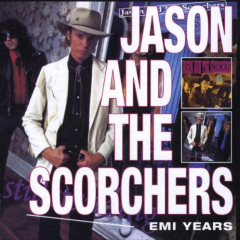
“Greetings From Nashville” was written by Tim Krekel and appears as the 20th song on Jason and the Scorchers' EMI Years compilation album and as a bonus track on the band’s second studio album, Still Standing. The song is about avoiding the cliches of Nashville songwriters sitting on a stool with an acoustic guitar, and juxtaposing that with loud, kickass cowpunk music that Jason and the Scorchers are known for. Personnel on the record were: Jason Ringenberg (lead vocals), Warner Hodges (guitars), Jeff Johnson (bass), and Perry Baggs (drums).
Still Standing was recorded in late 1985 at Cherokee in Hollywood and Scruggs Sound in Berry Hill, TN, and produced by Tom Werman. Released in January 1986, it went to #91 on the Billboard 200 Albums chart. One single was released from the LP.
Jason and the Scorchers are an American cowpunk rock band formed in Nashville in 1981 by vocalist Jason Ringenberg and guitarist Warner Hodges. After releasing an independent EP, Reckless Country Soul, in 1982, the band signed with EMI Records in 1983. They released 13 studio albums, two live albums, a compilation album, two EPs, and 19 singles. The band unofficially broke up in 1990 but has reunited several times since then. Twelve members have passed through the band since its formation, with Ringenberg and Hodges being the only constant members. Ringenberg still performs as a solo artist and as Farmer Jason, performing children's music. Hodges is a member of Dan Baird and Homemade Sin. Drummer Perry Baggs died in Nashville in July 2012 at 50. Bassist Jeff Johnson suffered a massive stroke in November 2024 and is working on his recovery.
"About the Song" -- written by Mickey McMahan , RBN Director of Musicology