


There’s a staggeringly large disconnect between the vast volumes of gasoline, diesel and jet fuel consumed within the six states in EIA’s PADD 1C subregion — Florida, Georgia, South Carolina, North Carolina, Virginia and West Virginia — and the truly paltry amounts of transportation fuels produced there. That dichotomy spurred a multi-decade buildout of what are now highly efficient pipeline, marine and trucking networks that now deliver about 1.3 MMb/d of refined products to what EIA refers to as the “Lower Atlantic” states. In today’s RBN blog, we’ll discuss these networks and explain how they keep the region running.
The half-dozen states in PADD 1C have a combined population of more than 60 million and a GDP of more than $4 trillion. That puts the Lower Atlantic region on par with the U.K. or France or Italy — in other words, a real economic powerhouse. But PADD 1C has only one small refinery within its borders, a 23-Mb/d facility at the northern tip of West Virginia’s panhandle that focuses on lubricant production and markets virtually all of its modest gasoline and diesel output very locally. That’s a roundabout way of saying that the region needs to pipe, truck, tanker or barge in more than 99.9% of the gasoline and diesel it consumes, as well as literally every drop of jet fuel. (Ergon Refining’s Newell, WV, refinery doesn't typically make any “jet,” as the refined, kerosene-based fuel is commonly referred to.)

The Future of Fuels bi-annual report by RBN's Refined Fuels Analytics provides an in-depth analysis of the U.S. and global refinery industries, focusing on crude oil and fuel market dynamics, supply and demand, alternative fuels, refinery capacities, and price forecasts to help stakeholders navigate the evolving energy landscape.
As we said in the introduction, the volumes that need to be hauled in are significant. Florida is the #3 consumer of gasoline in the U.S., behind only California and Texas, and Georgia (#5), North Carolina (#6) and Virginia (#11) aren’t far behind. It’s a similar story for diesel, with Florida trailing only Texas and California (in that order), and as for jet fuel, Florida — a top tourist destination with a slew of busy airports — is #2, bested only by California. (Ironically, as you’ll see, Florida is the only state in PADD 1C that depends almost entirely on barged-in and trucked-in volumes of refined products — its portfolio of pipelines is very limited.)
The vast majority of the refined products consumed in the Lower Atlantic states are produced at refineries in Texas and Louisiana and piped through the spine of PADD 1C through two pipeline systems: the Colonial Pipeline and the Products (SE) Pipeline, the latter of which used to be called the Plantation Pipeline. (Note: The latest edition of our Future of Fuels report, coming out in just a few days, provides a detailed forecast for how PADD-to-PADD movements are expected to change on an annualized basis out to 2050.)
The 2.5-MMb/d Colonial Pipeline, which started operating in 1963, is a roughly 5,500-mile system whose main route (dark-blue line in Figure 1 below) runs from Houston to Linden, NJ, and has several spurs or laterals (light-blue lines) that pipe fuel to key consumption areas. The main route consists of four distinct pipeline sections: two pipes from Houston to Greensboro, NC, and two pipes from Greensboro north — one that runs to the Baltimore area and another that terminates in northern New Jersey. Since July 2025, Colonial has been owned by Brookfield Infrastructure Partners, which paid previous co-owners KKR, Koch Industries, CDPQ (Quebec’s largest pension fund), Shell Midstream, and IFM Investors $9 billion for the massive asset.
About the song
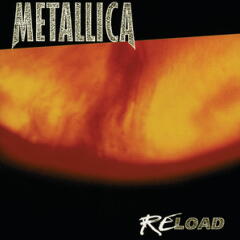
“Fuel” was written by James Hetfield, Lars Ulrich and Kirk Hammett. It appears as the first song on Metallica’s seventh album, Reload. The video for the song features several American muscle cars drag racing. Metallica’s James Hetfield is a muscle car enthusiast and has had several cars built by renowned “kustom” car builder Rick Dores. Both Hetfield and Dores are members of the Beatniks of Koolsville car club in California. Hetfield has donated some of his car collection to The Petersen Automotive Museum in Los Angeles. “Fuel” was used in television coverage of NASCAR events and in a 2016 television ad campaign for Dodge Chargers and Challengers. It was released as the third single from the album in June 1988 and went to #6 on the Billboard Mainstream Rock Singles chart. Personnel on the record were: James Hetfield (vocals, guitar), Kirk Hammett (lead guitar), Lars Ulrich (drums), and Jason Newsted (bass).
Reload was recorded from May 1995 to October 1997 at The Record Plant in Sausalito, CA, and produced by Bob Rock, James Hetfield and Lars Ulrich. It was the last Metallica studio album with bassist Jason Newsted. Released in November 1997, it went to #1 on the Billboard 200 Albums chart and has been certified 4X Platinum by the Recording Industry Association of America. Three singles were released from the LP.
Metallica is an American heavy metal band formed in Los Angeles in 1981 by James Hetfield and Lars Ulrich. It has been based in the San Francisco Bay Area since 1983. Eight members have passed through the group since its formation. Original members Hetfield and Ulrich were joined by guitarist Kirk Hammett in 1983 and bassist Robert Trujillo in 2003. They have released 11 studio albums, eight live albums, a soundtrack album, four EPs and 50 singles and have sold more than 125 million records worldwide. The band has won two American Music Awards, nine Grammy Awards and two MTV Video Music Awards, and was inducted into the Rock and Roll Hall of Fame in 2009. Their last release was the studio album 72 Seasons, in April 2023. They still tour and will begin playing dates in Europe in May.
"About the Song" -- written by Mickey McMahan , RBN Director of Musicology






Comments
Housley - wow! Well written, comprehensive and a great view on supply in the SE USA. You know the jet fuel supply chain very well, especially Florida. You point out that jet fuel distribution in Florida is relatively efficient. While that is true, the biggest headache is when there is a hiccup in ship movements into Port Ev or Hookers Point. Ships are delayed mostly due to weather, but not always. And when deliveries get delayed, the angst around fuel days on hand at airports can lead to expensive options like trucking. It would have been great when Colonial proposed running a refined products line into Florida - but Governor Bush said no at the time (very short sighted).
Thanks again for a well written story!