For the past several years, a potent combination of market developments has incentivized PADD 2/Midwest refiners — and their midstream partners — to move increasing volumes of gasoline and diesel east into Pennsylvania and other states in the Northeast. The limiting factors have been eastbound pipeline capacity and the concerns PADD 1/East Coast refiners have expressed to regulators about the potentially negative impacts of the shift in product flows. In today’s RBN blog, we’ll discuss what’s been happening lately on this front and how it’s affecting refiners.
High-cycle salt cavern storage in Southeast Texas, strategically located near major interstate and intrastate pipelines to provide firm storage service connecting Permian supply with LNG, power generation, utility, industrial, and Gulf Coast end-use markets.
Contact: Edmund Knolle - [email protected]
We’ll start with a brief, big-picture review of refining and refined-product flows in the Midwest and Northeast. Since 2000, there’s been a substantive buildup in refining capacity in PADD 2 — a 17% gain in overall capacity and a 33% increase in delayed coking capacity. This has been driven primarily by the growing availability of favorably priced heavy sour crude being piped in from Western Canada. The Midwest now has more than 4.2 MMb/d of refining capacity, including 1.5 MMb/d in the four PADD 2 states closest to PADD 1 (Indiana, Kentucky, Michigan and Ohio), and produces more refined products than it consumes. Over the same 25-year period, refining capacity in the Northeast (almost all of it in Delaware, New Jersey and southeastern Pennsylvania) has fallen by half, to about 800 Mb/d. Most of the decline in PADD 1 refining can be tied to economics — including the lack of pipeline access to U.S. shale oil — but part of it is due to events, such as the devastating June 2019 fire at Philadelphia Energy Solutions’ 330-Mb/d refinery in Philadelphia, which led the facility’s owner to shut it down.
The fall-off in PADD 1 refining capacity has increased the Northeast’s reliance on gasoline and diesel that is shipped in from elsewhere — waterborne imports for sure, but also piped-in volumes from refineries in PADD 2 and PADD 3/Gulf Coast. While Gulf Coast refineries have provided the majority of these domestic movements, the economics of making refined products in the eastern Midwest and piping them east into PADD 1 are becoming more compelling.
Over the past 15 years, several refineries in Indiana, Kentucky, Michigan and Ohio made significant investments in the delayed cokers and other equipment that enable them to break down price-discounted low-API, high-sulfur Canadian crude into valuable refined products. Much of the time, the cost of making those products and piping them east into the Northeast is lower than the cost PADD 1 refiners and other suppliers there can offer — sometimes considerably so, especially for gasoline. Also contributing to these economics is the trend toward an overall surplus of refined products in PADD 2 as in-region demand stagnates and refiners look to new markets. (Note: A detailed forecast of regional supply/demand and resulting inter-regional product flows through 2050 is included in RBN’s latest Future of Fuels report, which will be coming out in early February.)
But while that “arb” encourages the eastbound movement of Midwest-sourced refined products into PADD 1, those flows are limited not just by the capacity of the eastbound pipes but also by how far east the flows can go.
About the song
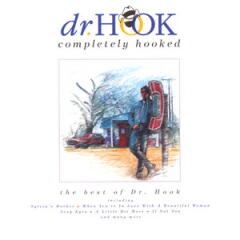
“A Little Bit More” was written by Bobby Gosh and appears as the second song on side one of Dr. Hook’s fifth studio album of the same name. The romantic love song was released as a single in June 1976 and went to #11 on the Billboard Hot 100 Singles chart. The song was originally recorded by its author, Bobby Gosh, who released it on his third studio album, Sitting in the Quiet, where it appeared as the second song on side one. That album was released in February 1973. Personnel on the Dr. Hook single were: Dennis Locorriere (lead vocals), Ray Sawyer (backing vocals), Rik Elswit (lead guitar), Jance Garfat (bass), Billy Francis (keyboards) and John Wolters (drums).
The Dr. Hook album, A Little Bit More, was recorded in early 1976 at Glaser Bros. Studio in Nashville and produced by Ron Haffkine. Released in June 1976, it went to #75 on the Billboard 200 Albums chart. Two singles were released from the LP.
Dr. Hook (also known as Dr. Hook & the Medicine Show) is an American country rock band formed in Union City, NJ, in 1969 by Ray Sawyer, George Cummings, Billy Francis and Dennis Locorriere They signed a production deal with producer Ron Haffkine, who had placed two of their songs in the 1970 hit motion picture Who Is Harry Kellerman and Why Is He Saying These Terrible Things About Me? This caught the eye of CBS Records executive Clive Davis, who signed the band to his label in 1971. The band hooked up with writer Shel Silverstein, who wrote the songs for their first two studio albums. They released 11 studio albums, one live album, 23 compilation album and 30 singles and have sold more than 10 million albums worldwide. The original band broke up in 1985, but Locorriere retains the right to use the name. Thirteen members have passed through the band since its formation. Drummer John Wolters died in June 1997 at 52, bassist Jance Garfat died in November 2006 at 62, keyboardist Billy Francis died in May 2010 at 68, vocalist Ray Sawyer died in December 2018 at 81, and guitarist George Cummings died in December 2024 at 86. Singer Dennis Locorriere has pursued a solo career since 1985, sometimes using the Dr. Hook name. He has released three solo albums, one live album, two compilation albums and three singles. He lives in Nashville and has written songs for Bob Dylan, Crystal Gayle, BJ Thomas, Willie Nelson, Jerry Lee Lewis and Olivia Newton-John.
"About the Song" -- written by Mickey McMahan , RBN Director of Musicology