2019 is slated to be a watershed year for U.S. LNG export projects vying to catch the second wave — the first wave being the slew of liquefaction trains already operational or in the process of being commissioned or constructed. As expected, regulatory and commercial activity has heated up around the two dozen or so longer-term proposals to add liquefaction capacity along the U.S. coastlines over the next decade. Last week, the Federal Energy Regulatory Commission (FERC) approved two of those projects — Tellurian’s Driftwood LNG and Sempra’s Port Arthur LNG — and several others, including Driftwood and NextDecade’s Rio Grande LNG, also have made progress on the commercial front. Many of these projects are targeting a final investment decision (FID) this year. Today, we continue a series highlighting the second-wave projects’ latest developments.
We started our update of the “second-wave” LNG export projects in Part 1 with a discussion of the key hurdles that LNG export projects must clear before developers will take FID, i.e., make the full financial commitment to build these multibillion-dollar terminals. It’s not a quick or linear process, with different projects taking different routes to reach that point depending on their location and business model, but, generally speaking, conditions must align in two or three areas in order for project developers to pull the financial trigger: regulatory approvals, commercial agreements, and supply or pipeline capacity arrangements. On the regulatory front, U.S. projects must secure environmental approval from FERC, in addition to approvals from the Department of Energy (DOE) for exporting to free-trade-agreement (FTA) and/or non-FTA countries (or, in the case of Canadian projects, for example, from the National Energy Board or NEB). And when it comes to offshore projects, approvals from the U.S. Maritime Administration (MARAD) also come into play. On the commercial front, developers look to lock in third-party financial commitments to help finance the terminal and spread the risk. This may come in the form of offtaker sales and purchase agreements (SPAs) for LNG supply, project financing and/or equity partnerships. (As a general rule of thumb, developers aim to “pre-sell” about 75% of their liquefaction capacity, which can then attract additional investors to join the project.) And, finally, the projects (or their offtakers) must be able to secure the feedgas supply and the firm pipeline capacity to physically move it to the terminal for liquefaction and export. This may involve signing up for firm transport on existing or new third-party pipeline routes or developing their own pipeline to supply the terminal. Some may also opt to underpin their projects with upstream positions.
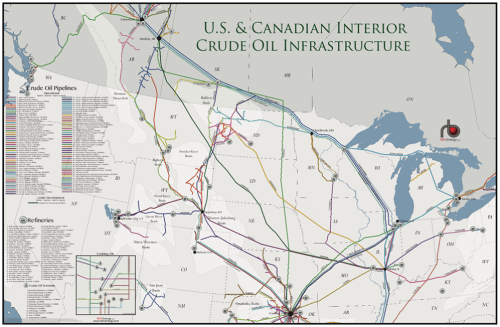
RBN's US & Canadian Interior Crude Oil Infrastructure Map features pipelines, refineries, and terminals that are new, existing, and under development from Canada to the Bakken Shale to Cushing.
The bottom line is that these capital-intensive, highly regulated projects involve a lot of moving parts and there’s a great deal of uncertainty around them. Yet they hold the potential to shape how the gas market balances over the next decade, not only in North America but globally (see Living in the Wild, Wild West for how U.S. LNG export demand already has spurred big shifts in the market.) It’s so significant a driver, in fact, that we developed a report — the LNG Voyager Quarterly — to closely track the early milestones that could provide clues about each project’s prospects for crossing the finish line. (A good portion of our xPortCon conference in Houston on May 21 also will be dedicated to the subject.)
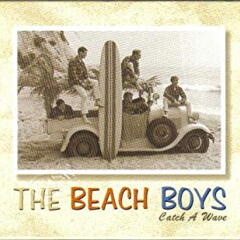
About the song
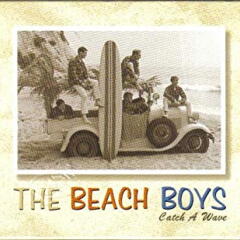
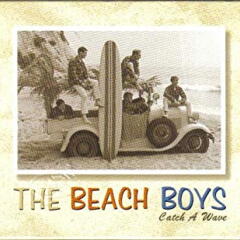
“Catch a Wave” was written by Brian Wilson and Mike Love, and appears as the second cut on the Beach Boys’ third album, Surfer Girl. The song was recorded at Western Studios in Los Angeles in July 1963, and released in September of the same year. Surfer Girl is the first album on which Beach Boy Brian Wilson was given full production credit — he maintained the producer's role for the band for a few more years, and many hit records.
An interesting side note about “Catch a Wave” is that Beach Boy friends Jan & Dean had Brian Wilson rework the song with new lyrics by Roger Christian. They released it as the Jan & Dean single “Sidewalk Surfin’,” which went to #25 on the Billboard Hot 100 chart in October 1964.
The Surfer Girl LP went to #7 on the Billboard Top 200 Albums chart. The album cover photo is an outtake from the Beach Boys’ first album, with the boys holding the same surfboard and wearing the same Pendleton shirts and wheat jeans, minus the tiki-trimmed Ford Model A pickup truck. Personnel on the record were: Brian Wilson (lead and harmony vocals, bass, piano, organ, and hand claps), Carl Wilson (lead guitar, harmony vocals, and hand claps), Dennis Wilson (drums, lead and harmony vocals, and hand claps), Mike Love (lead and harmony vocals, saxophone, and hand claps), Al Jardine (harmony vocals, bass, and hand claps), David Marks (rhythm guitar, and hand claps), and Maureen Love (harp).
The Beach Boys are an American rock band formed in Hawthorne, CA, in 1961. They have released 29 studio albums and nine archival albums. The band has sold over 100 million records worldwide to date, and has won two Grammy Awards; three of their songs are in the Grammy Hall of Fame. The Beach Boys were inducted into the Rock and Roll Hall of Fame in 1988. Brian Wilson still records and tours to this date. Mike Love fronts a touring version of the Beach Boys that is currently touring the U.S.