


The incremental pipeline capacity built to move more natural gas from the Marcellus to the New York City region over the past two or three years has reduced—but not eliminated--delivery constraints and wintertime gas-price premiums at the New York City pricing hub on Zone 6 of the Transco pipeline and other pipes feeding the area. Given the Big Apple’s significant and growing gas demand, midstream companies are exploring whether to add still more pipeline capacity, and developer Liberty Natural Gas is lining up approvals for its proposed fix: an offshore LNG terminal that would inject gas when demand spikes. Today, we begin an examination of the economics of using LNG to supplement wintertime gas supplies, and how Greater New York might benefit from an LNG shot-in-the-arm.
Often new gas pipeline capacity doesn’t permanently solve a takeaway/delivery problem; instead, the new capacity only helps to ease a constraint, or to make things better for a while. Increasing demand or supply can then make it necessary to add still more capacity —maybe through the installation of new compressor stations or looping (adding a parallel line). That seems to be the case regarding recent projects in and near New York City and its Long Island suburbs, whose still-rising demand for low-cost gas from close-by Marcellus production has spurred several pipeline expansions. Many of these efforts were detailed in Another Gassy Day In New York City; the most noteworthy may have been Spectra Energy’s $1.2 billion New Jersey-New York Expansion Project (online in November 2013), which augmented the Texas Eastern Transmission Co. (TETCO) and Algonquin Gas Transmission pipelines with (among other things) a 16-mile extension of TETCO’s existing Staten Island line to lower Manhattan, and the replacement of five miles of existing pipeline in New Jersey and New York with larger-diameter pipe. (The Spectra project doubled to 700 MMcf/d the gas-delivering capacity of TETCO-Staten Island.) More recently (in mid-May 2015), Williams brought online its new Rockaway Lateral Project (Figure 1), a short (3.2-mile) but important new connector (blue line; capacity 600 MMcf/d) to the mainland from Transcontinental (Transco) Pipeline’s existing Lower New York Bay Lateral (black line), an undersea line off the southern coast of Brooklyn and Queens, which like Manhattan and Staten Island are among New York City’s five boroughs—‘da Bronx, as it’s pronounced locally, is the fifth borough.) The new Rockaway Lateral connects to a new National Grid pipeline (red line).
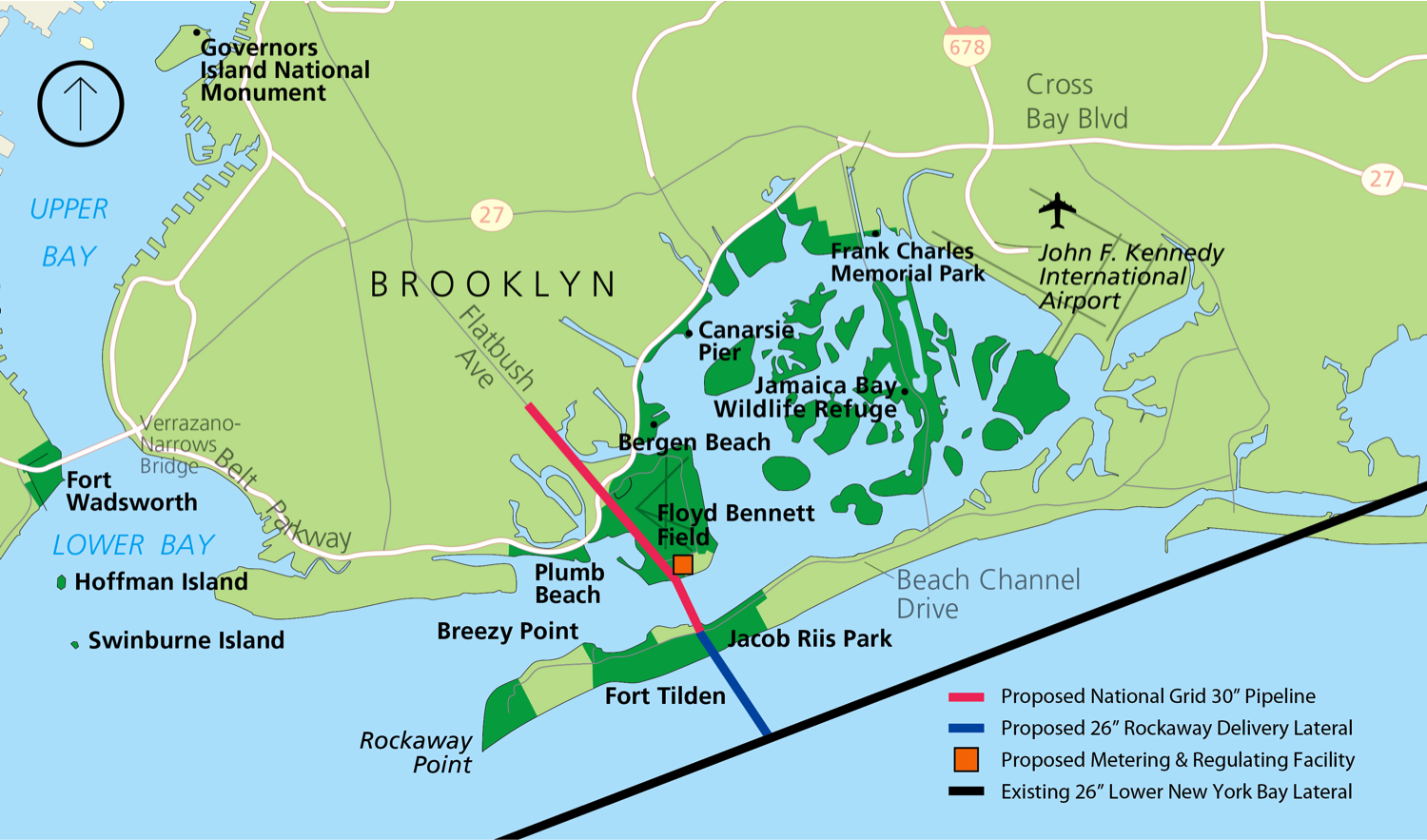
Figure 1; Rockaway Lateral Project; Source: Williams
You’d think that the Spectra and Williams projects (and several other capacity-boosting projects between the Marcellus and New York City) would be enough, but they haven’t been—especially during peak winter demand periods, when the city’s and suburbs’ gas demand for electricity generation and residential and commercial space heating spikes, spot prices for gas soar, and operators of gas-fired power plants struggle to secure the gas they need. As we said in Living In Forward Curves - Transco Z6 NY, despite burgeoning production growth in the Marcellus, the Transco Zone 6 basis (or price premium versus the Henry Hub, LA U.S. gas market benchmark) can be very spikey indeed: during the Polar Vortex in early 2014 the basis jumped as high as $117/MMBtu. And while a look at the forward curve for the next few years shows a slightly negative basis at Transco Zone 6 during milder and warmer months (April through October), the forward basis rises to several dollars/MMBtu during the dead of each winter. In other words, the market anticipates a lot more gas-price volatility during cold-weather periods, mostly due to ongoing pipeline capacity constraints into New York City.
As we’ve seen in New England (in the Please Come To Boston blog series), pipeline constraints and price spikes get midstream companies, power generators and others thinking about mitigation—that is, cost-effective ways to reduce the constraints and the number (and severity) of the price spikes. In New England, the mitigation is coming in the form of pipeline expansions (Spectra’s Algonquin Incremental Market and Access Northeast, for example), new pipelines (Kinder Morgan’s Northeast Energy Direct), and liquefied natural gas (LNG) supplies that supplement piped-in gas during peak demand periods. That LNG is either produced and stored locally at peak-shaving plants scattered throughout the region or imported through one of three LNG import terminals near Boston: GDF Suez North America’s land-based Distrigas Terminal (which can regasify up to 715 MMcf/d for distribution into the Tennessee Gas Pipeline and Algonquin Gas Transmission pipeline systems), and offshore buoy terminals Northeast Gateway (Excelerate Energy is the owner) and Neptune (owned by GDF Suez). With gas pipeline capacity into and through New England far short of what’s needed to meet wintertime needs for space heating, power generation and other demand, injections of LNG-sourced gas have proved critical, even during a relatively uneventful winter like the one in 2014-15. Figure 2 shows daily gas demand in New England last winter for power generation (red bar segments) and space heating and other “non-power” uses (blue bar segments), as well as the contribution to overall gas supplies from LNG (gray line); note that on many higher-demand days, LNG provided more than 500 MMcf/d, enough to meet most or all of what the power sector consumed.

About the song
“When I Need You” was a hugely successful recording by UK-born singer Leo Sayer. The song (released right after Sayer’s first hit, the disco-styled “You Make Me Feel Like Dancing”), topped the charts in both the U.S. and the UK in 1977. Here’s a link to a video: https://www.youtube.com/watch?v=NsMqb9RQWGE.






Comments
New York Governor Andrew Cuomo on November 12 (2015) vetoed the Liberty Natural Gas/Port Ambrose project. In a statement, the governor’s office said the project “posed inherent and unanswered security risks,” and that “[t]he potential for catastrophic impacts during extreme weather events was also found to be unacceptable.” The statement also said the project “posed significant disruptions to commercial and recreational maritime activities," and would have interfered with a critical off-shore wind power project” proposed for a site nearby.