Given the frothy targets to reduce U.S. carbon emissions set by the 2016 Paris Agreement and an anticipated expanding role in that process for low-carbon-intensity (LCI) hydrogen that is barely being produced in 2024, it’s hard to believe there’s a path forward. Yet one recent study from industry participants in the National Petroleum Council (NPC), commissioned by the Department of Energy (DOE), provides detailed projections of how and where LCI hydrogen will develop, including regional variations. In today’s RBN blog we review that analysis.
This is the third installment of a series covering the practical and economic viability of increased utilization of LCI hydrogen to reduce carbon emissions — ultimately to help meet the U.S. meet its net-zero-by-2050 goals. In Part 1, we introduced an NPC study commissioned by the DOE to help define potential pathways leading to LCI hydrogen deployment at scale. More than 300 individuals contributed to the ensuing analysis, and the final 800-page report — Harnessing Hydrogen: A Key Element of the U.S. Energy Future — was published in April 2024.

The Natural Gas Master Class is a one-day online event focusing on understanding flow analysis, interpreting pipeline data and forecasting future flows. This course is designed to equip you with the knowledge and skills to effectively analyze the complexities of natural gas markets, flow analysis, and pipeline modeling. Join us online
October 21 | Online
Part 1 highlighted the report’s analysis of existing domestic hydrogen transmission and storage infrastructure, which was RBN’s contribution to the study. While the existing hydrogen network is small, it operates economically to meet the needs of Gulf Coast refiners and chemical companies and demonstrates it’s possible to move hydrogen gas over long distances by pipeline. Underground storage caverns, in turn, offer a working buffer system that helps stage pipeline supplies to and from refineries and producers. Nevertheless, most existing hydrogen production is still “gray” — so called because it’s derived from natural gas (methane), meaning its carbon intensity (CI) is high. Major investment is required to convert that production to LCI hydrogen; either by capturing and disposing of carbon dioxide (CO2) from gray production to make it “blue” hydrogen; or by using renewable electricity (e.g., from wind or solar) to power electrolyzers to produce “green” LCI hydrogen from water. (For more on CI and the hydrogen color scheme, see Don’t Let Me Be Misunderstood. For more on the LCI hydrogen projects under development, see our weekly Hydrogen Billboard report.)
About the song
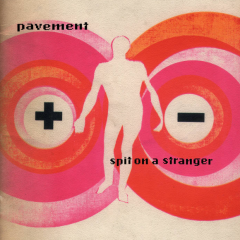
“Harness Your Hopes” was written by Stephen Malkmus and appears as the second song on Pavement’s ninth EP, Spit on a Stranger, which was released in June 1999. In 2017 the song became Pavement’s most-listened-to song on Spotify. The song also appears on the 2008 expanded edition reissue of Brighten the Corners: Nicene Creedence Edition. Having more than 148 million streams on Spotify, it has been certified Gold by the Recording Industry Association of America. Personnel on the record were: Stephen Malkmus (vocals, guitar), Scott Kannberg (vocals, guitar), Mark Ihold (bass, backing vocals), Bob Nastanovick (keyboards, percussion) and Steve West (drums).
The EP, Spit on a Stranger, was a six-song extended play released on the Matador label in June 1999. The title was the first song on Pavement’s fifth and final studio album, Terror Twilight. The band's final-to-date album was recorded between June and December 1998 at RPM Studios in New York City and RAK Studios in London and produced by Nigel Goodrich. Released in June 1999, it went to #95 on the Billboard 200 Albums chart. Two singles were released from the LP.
Pavement is an American indie rock band formed in Stockton, CA, in 1989. They have released five studio albums, two live albums, seven compilation albums, 10 EPs and 13 singles. The group disbanded in 1999, regrouped again in 2010, and have had several successful tours and concert performances since then. Pavement recently played before a capacity crowd at Sao Paulo’s C6 Festival in May 2024. Seven members have passed through the band since its formation. Original drummer Gary Young died in 2023.