There’s a growing acknowledgment in the U.S., Europe and elsewhere that crude oil will remain an important part of our energy future for decades to come. At the same time, however, the drive to decarbonize will continue, and as part of that effort, oil producers will be working to ratchet down their greenhouse gas (GHG) emissions. A lot of that will be achieved through the purchase of carbon offsets or the use of carbon capture and sequestration (CCS), but another approach is for producers to “high-grade” their portfolios by divesting production assets that generate inordinately high volumes of carbon dioxide (CO2) and methane during production and investing instead in assets with much lower carbon intensity. In today’s RBN blog, we discuss the push by some producers to shift to “lower-carbon oil.”
In our recent Drill Down Report on the environmental, social and governance (ESG) movement, we said that while the all-out effort to slash GHGs as quickly as possible is being modulated to some degree to ensure energy security and affordability, there’s little doubt that governments, energy companies and others around the world will stick with their long-term plans to decarbonize. Hydrocarbon producers have a particularly tough row to hoe in that their products — crude oil, natural gas and NGLs — generate significant volumes of CO2, methane and other heat-trapping GHGs during their production, transportation, processing and (most of all) consumption. Still, that’s not stopping at least a few energy giants — companies like Shell, BP and Equinor — from committing to “net-zero” Scope 1, Scope 2 and Scope 3 emissions by 2050. Many others have committed to achieving net-zero emissions for at least their Scope 1 and Scope 2 emissions within that same time frame. [As we said in the Drill Down Report, Scope 1 emissions are GHGs directly caused by the facilities and equipment that a company owns or controls; Scope 2 emissions are “indirect” GHGs from the generation of electricity or steam the company buys from others to power their operations; and Scope 3 emissions are indirect GHG emissions that occur in the company’s entire value chain (including consumption).]
Given that crude oil, natural gas and NGLs are hydrocarbons literally composed of carbon (and hydrogen) atoms, substantial portions of energy companies’ GHG-reduction goals are likely to be achieved either by mitigating some of their emissions through the use of “nature-based” carbon offsets (see our A Matter of Trust blog series for more on those) or by capturing and sequestering CO2 in deep, specially designed wells (see our Way Down in the Hole series.)
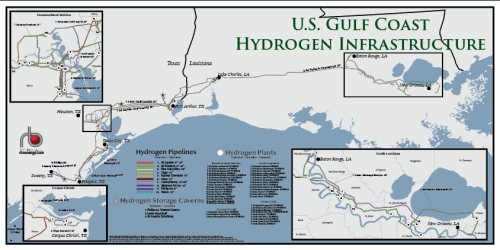
RBN’s U.S. Gulf Coast Hydrogen Infrastructure Map lays out the pipelines and merchant hydrogen plants that make up the gulf coast market, providing an unprecedented snapshot of the region’s hydrogen infrastructure network.
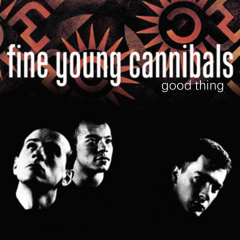
About the song
“Good Thing” was written by Roland Gift and David Steele and appears as the second song on side one of Fine Young Cannibals’ second and final studio album, The Raw & The Cooked. The song made its first appearance in the 1987 film Tin Men, when the Fine Young Cannibals, portraying a nightclub band in the movie, performed the song and three others. Released as the second single from the album in April 1989, “Good Thing” went to #1 on the Billboard Hot 100 Singles chart. Personnel on the record were: Roland Gift (lead, backing vocals), David Steele (bass, organ, synthesizer, drum machine), Andy Cox (guitars), Jools Holland (piano), and Jimmy Helms, George Chandler, Jimmy Chambers (backing vocals).
The Raw & The Cooked was recorded between 1986 and 1988 at Air Studios in London and Paisley Park in Minneapolis. Produced by the Fine Young Cannibals and David Z, the album was released in January 1989. It went to #1 on the Billboard 200 Albums chart and has been certified 2x Platinum by the Recording Industry Association of America. Four songs from the album had previously appeared in film soundtracks during the mid-’80s. Eight singles were released from the LP. In 1990, The Raw & The Remix, a remix LP composed mainly of songs from The Raw & The Cooked, was released.
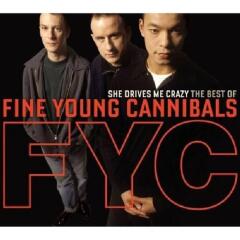
Fine Young Cannibals (FYC) were a British pop band formed in Birmingham, England, in 1984. The group was composed of ex-Beat (English Beat) members bassist David Steele and guitarist Andy Cox, joined by ex-Akrylykz singer Roland Gift. Their name was taken from the 1960 film All the Fine Young Cannibals, starring Robert Wagner and Natalie Wood. They released two studio albums, one remix album, four compilation albums, and 13 singles. They won three ASCAP Pop Music Awards, two Brit Awards, and one Ivor Novello Award. The band officially broke up in 1992, but briefly reunited in 1996 to record a new single, “The Flame,” which appeared on their 1996 greatest hits collection, The Finest. David Steele and Andy Cox have stayed active in the music industry since the band’s breakup. Roland Gift has done the same and expanded his career by becoming an actor and model.