The COVID-19 pandemic has undone a number of long-standing energy-market expectations. Just a few months ago, U.S. crude oil production was hitting new heights, export volumes were rising fast, and producers, shippers, and others were worried whether there would be sufficient marine-terminal capacity in place. Now, crude production is down sharply, and while crude exports have held up during this year’s market turmoil, the old belief that exports would keep rising through the early 2020s is out the window. Where does that change in expectations leave all those crude export terminals along the Gulf Coast, many of which were recently built or expanded to help handle the flood of crude that was supposed to be heading their way? Today, we discuss highlights from RBN’s new Drill Down Report on crude-handling marine facilities along the Texas and Louisiana coast.
Since the ban on most exports of U.S. crude oil was lifted in late 2015, the volumes of mostly light, sweet crude being exported from Gulf Coast terminals has taken off: from about 600 Mb/d in 2016 to 1.1 MMb/d in 2017, 2 MMb/d in 2018 and nearly 3 MMb/d in 2019. Anticipating that exports would as much as double by mid-decade, a number of midstream companies implemented expansions at existing terminals, built entirely new terminals, and/or explored the possibility of developing offshore export terminals in the deep waters of the Gulf of Mexico where they could fully load Very Large Crude Carriers (VLCCs).
Then, a few months ago, the coronavirus went global, leading to stay-at-home orders and a major slow-down in economic activity around the world. Demand for motor gasoline, jet fuel, and diesel fell sharply, and with that, refinery demand for crude oil. Crude prices plummeted, oil stockpiles grew, OPEC+ agreed to production cuts to bring crude oil supply and demand back toward balance, and U.S. producers slashed their planned 2020 drilling-and-completion plans and shut in many of their wells. From an all-time record of just over 13 MMb/d in the first couple of months of this year, U.S. crude oil production fell to less than 11 MMb/d by June and finally showed indications of rising in mid-July.

About the song
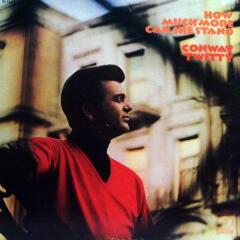
"How Much More Can She Stand" was written by Harry Compton, and was the first single released from Conway Twitty's 1971 album of the same name. The song also appears on the 1973 release, Conway Twitty’s Greatest Hits, Volume I. "How Much More Can She Stand" was recorded at Bradley's Barn in Mt. Juliet, TN, in February 1971, and produced by Owen Bradley. Released as a single in March 1971, the song went to #1 on the Billboard Hot Country Songs Singles chart. It would become Twitty's sixth #1 solo hit single. Personnel on the record were: Conway Twitty (lead vocals), Joe E. Lewis (background vocals), The Jordanaires (background vocals), Harold Bradley (electric six-string bass), Grady Martin (electric guitar), Larry Butler (piano), Jimmy Capps (acoustic guitar), John Hughey (steel guitar), Tommy Markham (drums, percussion), Bob Moore (bass), and Herman Wade (electric guitar).
Conway Twitty (Harold Lloyd Jenkins) was an American country music singer; he also left his mark in the rockabilly, rhythm and blues, and pop genres. Besides his solo work, Twitty had several hits with his duet recordings with Loretta Lynn. As a solo artist, he released 58 studio albums, 20 compilation albums, and 99 singles. With Loretta Lynn, he released 10 studio albums, seven compilation albums, and 13 singles. Twitty has sold more than 50 million records worldwide. He won seven Academy of Country Music Awards, four Country Music Association Awards, and two Grammy Awards, and is a member of the Country Music Hall of Fame and the Rockabilly Hall of Fame. Twitty had just inked a deal to open a new theater in Branson, MO, the day before his death in June 1993. He was 59 years old.