Over the past couple years of energy market turbulence, pretty much everyone has come to acknowledge that the U.S. — and the rest of the world — will continue to require refineries and refined products for decades to come. It’s also likely, though, that U.S. refiners, like their European counterparts, will be required to do more to reduce the volumes of carbon dioxide (CO2) and other greenhouse gases (GHGs) generated during the process of breaking down crude oil and other feedstocks into gasoline, diesel, jet fuel and other valuable products. And, thanks to new federal incentives, it might even make sense for refineries to capture and sequester at least some of the CO2 they can’t help but produce. In today’s RBN blog, we begin a series on refinery CO2 emission fundamentals, the differing policies that are applied here in the U.S. and abroad, and how those policies might ultimately influence refining competitiveness.
It will come as no surprise that the refining industry generates significant volumes of GHGs, including CO2, from both the refining processes themselves and the fossil fuel consumption needed to power them — just consider the vast amounts of heat that need to be generated for distillation and other reactions that need to occur. It’s equally unsurprising that the refining industry — not to mention the separate-but-related transportation sector, which depends heavily on refined fuels — has been coming under increasing scrutiny regarding GHGs.

The Future of Fuels bi-annual report by RBN's Refined Fuels Analytics provides an in-depth analysis of the U.S. and global refinery industries, focusing on crude oil and fuel market dynamics, supply and demand, alternative fuels, refinery capacities, and price forecasts to help stakeholders navigate the evolving energy landscape.
As we’ll discuss in more detail later in this series, the regulation of GHG emissions from refineries is still a work in progress here and in other parts of the world where strategies aimed at mitigating emissions vary widely in scope and efficacy. As we’ve recently detailed in previous blogs on the topic, the U.S. federal government has mainly attempted to reduce GHG emissions through indirect methods: the Renewable Fuel Standard (RFS) and various energy-efficiency programs as well as the adaption of prior legislation — the Clean Air Act and Corporate Average Fuel Economy (CAFE) standards, among them — most of which are aimed at reducing demand for refined products and, by extension, reducing the amount of refined products that need to be produced. The one federal regulation that directly impacts refiners is the GHG Reporting Program (GHGRP), which since 2010 has required about 8,000 industrial and other entities that emit over 25,000 metric tons (MT) annually to report their emissions. This regulation, which helps quantify the scope of emissions, is a likely first step toward more informed rulemaking.
About the song
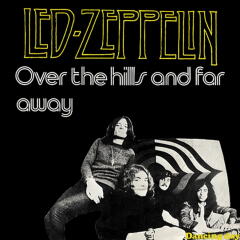
“Over the Hills and Far Away” was written by Jimmy Page and Robert Plant and appears as the third song on side one of Led Zeppelin’s fifth studio album, Houses of the Holy. Page and Plant wrote the song at Bron-Yr-Aur, a small cottage they rented in the Welsh countryside after finishing a massive North American tour with Led Zeppelin in 1970. The tune was originally called “Many, Many Times.” The intro section is played by Page on acoustic guitars, utilizing Eastern-influenced pull-offs in the key of G that Page is fond of. The midsection of the song is led by the band and guitar-driven riffs, followed by a quiet outro featuring Page on guitar and pedal steel guitar. The song was released as the first single from the album in May 1973 and went to #51 on the Billboard Hot 100 Singles chart. Personnel on the record were: Robert Plant (vocals), Jimmy Page (guitars, pedal steel), John Paul Jones (bass, piano, organ, Mellotron, synthesizer), and John Bonham (drums).
Houses of the Holy was recorded between December 1971-August 1972 with The Rolling Stones Mobile Studio at Headley Grange and Stargroves, and at Island and Olympic studios in London, with Jimmy Page producing and Eddie Kramer engineering. The album was released in March 1973 and went to #1 on the Billboard 200 Albums chart. It has been certified 11x Platinum by the Recording Industry Association of America. Two singles were released from the LP.
Led Zeppelin were an English rock band formed in London in 1968 by Jimmy Page, Robert Plant, John Paul Jones, and John Bonham. The iconic band is one of the best-selling bands of all time, with close to 300 million records sold worldwide. They have released eight studio albums, four live albums, 10 compilation albums, and 16 singles. They are members of the Rock and Roll Hall of Fame, UK Music Hall of Fame, and are recipients of Kennedy Center honors. They have Lifetime Achievement Awards from the Ivor Novello Awards and the Grammy Awards. In 2005, Page was appointed an Officer of the Order of the British Empire, and in 2009, Plant was honored as a Commander of the Order of the British Empire. After the death of drummer John Bonham in September 1980, the band broke up. The surviving members of Led Zeppelin have sporadically participated in one-off reunions, most notably in 2007, with John Bonham’s son, Jason, on drums. All three surviving members of the band have gone on to successful solo and collaborative careers. An upcoming documentary film, recently renamed Introducing Led Zeppelin, is awaiting a release date.