As environmental protection and decarbonization efforts have ramped up in the past few decades, policymakers around the world have come up with a variety of schemes to lower industrial emissions. The Kyoto Protocol in 1997 committed developed nations to reduce their greenhouse gas (GHG) emissions by a defined amount from 1990 levels by 2012. The treaty was never brought up for ratification in the U.S. Senate, which unanimously opposed it because developing nations — such as China — weren’t included. Across the Atlantic, the Kyoto Protocol was received much more favorably, with all 15 members (at the time) of the European Union (EU) ratifying the treaty in 2002. In 2005, the EU launched the Emissions Trading System (ETS) as a mechanism to help reduce emissions from power plants, industrial facilities and commercial aviation, covering nearly half of total EU emissions. In today’s RBN blog, we explain the European cap-and-trade system, examine how the ETS is affecting the EU’s refining industry as a whole, and drill down to the refinery level to discuss disparities in carbon-cost exposure from one refinery to the next.

The Future of Fuels bi-annual report by RBN's Refined Fuels Analytics provides an in-depth analysis of the U.S. and global refinery industries, focusing on crude oil and fuel market dynamics, supply and demand, alternative fuels, refinery capacities, and price forecasts to help stakeholders navigate the evolving energy landscape.
This is the second part in our series, which dives into the complex world of oil refining and carbon regulation, and how carbon emissions are likely to increasingly impact the competitive playing field for refiners in the Atlantic Basin. In Part 1, we covered the scope of emissions from refining operations (accounting for 3% of overall U.S. GHG emissions) and how refinery complexity and crude slates play a role in emissions intensity. We delved into where those emissions come from within the refinery and some ways to reduce them, and how, due to the nature of refining, the only way to make drastic reductions to emissions was through costly carbon capture and sequestration (CCS). We also touched on some mechanisms governments can take to “nudge” refiners and other emitters to invest in carbon capture and reduce their overall emissions. Today, we dig into one of the three approaches: cap-and-trade.
In a cap-and-trade model such as the EU’s ETS, the government sets a certain threshold on a regulated activity (the “cap”) and then steps the cap down over time. In this case, annual GHG emissions serve as the regulated activity, with the cap falling by a certain amount each year, usually a couple of percentage points, until the specific emissions target is reached. “Allowances” function as carbon credits in the ETS, with each one representing 1 metric ton of carbon dioxide equivalent (MTCO2e) emissions. They are distributed to emitters in various ways (more on that in a bit) and industries covered by the ETS must surrender an EU allowance every year on April 30 for each metric ton of emissions over the previous year. A secondary market is set up so emitters can freely trade allowances with each other to cover any imbalances between an emitter's emissions and allowances on hand — the “trade” component of the scheme.
About the song
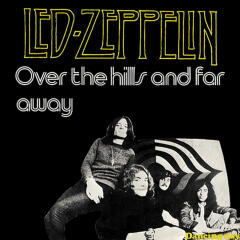
“Over the Hills and Far Away” was written by Jimmy Page and Robert Plant and appears as the third song on side one of Led Zeppelin’s fifth studio album, Houses of the Holy. Page and Plant wrote the song at Bron-Yr-Aur, a small cottage they rented in the Welsh countryside after finishing a massive North American tour with Led Zeppelin in 1970. The tune was originally called “Many, Many Times.” The intro section is played by Page on acoustic guitars, utilizing Eastern-influenced pull-offs in the key of G that Page is fond of. The midsection of the song is led by the band and guitar-driven riffs, followed by a quiet outro featuring Page on guitar and pedal steel guitar. The song was released as the first single from the album in May 1973 and went to #51 on the Billboard Hot 100 Singles chart. Personnel on the record were: Robert Plant (vocals), Jimmy Page (guitars, pedal steel), John Paul Jones (bass, piano, organ, Mellotron, synthesizer), and John Bonham (drums).
Houses of the Holy was recorded between December 1971-August 1972 with The Rolling Stones Mobile Studio at Headley Grange and Stargroves, and at Island and Olympic studios in London, with Jimmy Page producing and Eddie Kramer engineering. The album was released in March 1973 and went to #1 on the Billboard 200 Albums chart. It has been certified 11x Platinum by the Recording Industry Association of America. Two singles were released from the LP.
Led Zeppelin were an English rock band formed in London in 1968 by Jimmy Page, Robert Plant, John Paul Jones, and John Bonham. The iconic band is one of the best-selling bands of all time, with close to 300 million records sold worldwide. They have released eight studio albums, four live albums, 10 compilation albums, and 16 singles. They are members of the Rock and Roll Hall of Fame, UK Music Hall of Fame, and are recipients of Kennedy Center honors. They have Lifetime Achievement Awards from the Ivor Novello Awards and the Grammy Awards. In 2005, Page was appointed an Officer of the Order of the British Empire, and in 2009, Plant was honored as a Commander of the Order of the British Empire. After the death of drummer John Bonham in September 1980, the band broke up. The surviving members of Led Zeppelin have sporadically participated in one-off reunions, most notably in 2007, with John Bonham’s son, Jason, on drums. All three surviving members of the band have gone on to successful solo and collaborative careers. An upcoming documentary film, recently renamed Introducing Led Zeppelin, is awaiting a release date.