U.S. exports of crude oil, LNG, NGLs and refined products have moved into the spotlight on the world stage. Within the past few years, global markets have come to rely on U.S.-sourced hydrocarbons to meet critical needs for energy supplies. But export volume growth has slowed. Demand in the U.S. is ramping up, leaving less available for shipment overseas. And some members of Congress are encouraging the Biden administration to curtail or even ban some exports. What’s next for U.S. hydrocarbon sales to international markets? Will U.S. exports be there to challenge Russia’s use of oil and gas as political weapons? Or could market, logistical and political forces disrupt the flows that are meeting energy needs of the world? Today, we preview the deep dive into these issues on the agenda at RBN’s upcoming xPortCon conference.
Over the past decade, the Shale Revolution vaulted the U.S. into the role of a major exporter of crude oil, petroleum products, natural gas and NGLs. And the world came to depend on those exports to balance the global supply/demand equation. Then a combination of COVID, producer discipline and infrastructure capacity constraints slowed the growth of those supplies just as demand for U.S. exports was skyrocketing due to the combined impact of Russia’s invasion of Ukraine, the West’s sanctions on Russia and a steadily progressing pandemic recovery.
Figure 1 details what has happened to U.S. energy exports in recent years. Crude oil exports (red bar chart to left) soared from 0.5 MMb/d in 2015 (before the crude oil export ban to countries other than Canada was lifted) to 3.0 MMb/d in 2019, but then growth ground to a halt. As shown in the dashed gray box in that chart, crude exports have stayed within a narrow range ever since, mostly due to the COVID-induced production decline and ongoing producer discipline constraints.
About the song
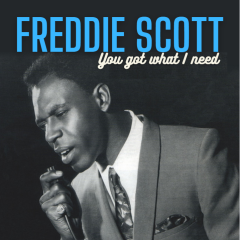
“You Got What I Need” was written by Kenny Gamble and Leon Huff. The pair co-produced Freddie Scott’s version of the song, which was released as a single on the Shout label in 1968. The song went to #27 on the Billboard Hot R&B Singles chart. Three years after the release of this record, Gamble and Huff would form the Philadelphia International Records label, the home for The O’Jays, Harold Melvin and the Blue Notes, and several other groups responsible for what would be known as the “Philly Sound.” The song would appear as the 15th cut on the Freddie Scott hits compilation, Cry to Me – The Best of Freddie Scott, released in late 1968. It was also the 11th song on Celeste & Jesse Forever (Original Motion Picture Soundtrack), the album for the movie of the same name, released in October 2012. Rap artist Biz Markie (Marcel Hall) interpolated the song for his 1989 hit record, “Just a Friend.” This was a common practice at the time, when most sampling and interpolations were not credited to the original composers. In 1991, Gilbert O’Sullivan sued Biz Markie for interpolating his song, “Alone Again (Naturally),” in Markie's song, “Alone Again.” It resulted in a landmark copyright decision that unauthorized samples were considered theft. “You Got What I Need” would later be sampled (and credited to Gamble and Huff) in Ghostface Killah’s single, “Save Me Dear,” released in 2004.
Freddie Scott was an American soul singer and songwriter. He got his start in the music industry at the age of 12, singing in his grandmother’s gospel group, Sally Jones & the Gospel Keyes. He released his first single in 1956 and started writing for other artists around the same time. He hooked up as a songwriter with Al Nevins and Don Kirshner and their Aldon Music publishing company in the Brill Building in New York City in 1961. Scott released five studio albums, one compilation album and 10 singles. His biggest hits were “Hey Girl,” a Top 10 hit in 1963, and “Are You Lonely for Me,” a #1 hit on the R&B charts in 1967. Scott continued to write songs and tour the oldies circuit until his death in New York City in 2007 at the age of 74.