Three years ago, U.S. Lower-48 LNG exports were zero. Today that number is above 3.0 Bcf/d. Three years from now, U.S. exports will make up about 20% of the global LNG trade. Perhaps even more momentous, LNG exports will equal 10% of U.S. gas demand. That’s more than deliveries to the entire residential and commercial market sectors during the six summer/shoulder months each year. All of which means that U.S. LNG exports are quickly becoming a much more important factor in both domestic and international markets. The U.S. gas market is no longer an island. In fact, the long-awaited integration of the U.S. into global gas markets is upon us, with significant implications for infrastructure utilization, trade flows and of course, price. To make sense of these new market realities, it is necessary to assess the gas value chain from U.S. wellhead to global destination — in effect, to follow the molecule from the point of production, through pipeline transportation to liquefaction and export, and from the dock to destination markets. That’s exactly what we will do in the blog series we are kicking off today.
We’ve been talking about the growing influence of LNG exports in the RBN blogosphere for quite some time. Our blogs on the topic have become more frequent since the startup of Sabine Pass Train 1 in 2016. We examined the impact of exports from that Cheniere Energy-owned facility on regional gas flows in Feels Like the First Time, and considered the likelihood LNG would eventually become a major factor in the U.S. supply/demand balance. We chronicled more steps along the way in Train Kept A-Rollin' and Roll With Me Henry. A few weeks back, when the Cove Point LNG export terminal came online, we looked at the logistics of inbound gas flows in What's Going On, and reviewed how local market flows may impact outbound export volumes. That’s a good example of why U.S. LNG will be such a different animal for the global market to handle.

The NATGAS Appalachia weekly report provides the data and insights to monitor the northeast natural gas market’s twists and turns and identify the risks and opportunities along the way, including tracking supply-demand trends, outbound capacity and their impact on takeaway pipeline utilization, and regional prices.
Over the past few decades, most LNG liquefaction plants around the world were built in producing regions where the only viable market alternative for gas production is expensive liquefaction and export. Any gas produced must be exported in the form of LNG, meaning that once the liquefaction plant is built, it is a supply-push market. If the LNG doesn’t move, the gas production must be shut in. Consequently, most LNG commercial deals in the global market are long-term arrangements that guarantee that LNG offtake will happen and will do so at a price high enough to justify investment in the gas production, liquefaction and export facilities.
About the song
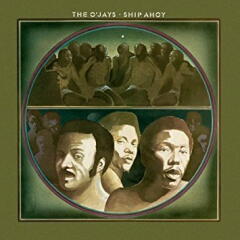
“Ship Ahoy" is the title song from The O'Jay's 1973 album of the same name. Written by the LP’s producers, Kenny Gamble and Leon Huff, "Ship Ahoy” is a sad, poignant song addressing the abomination of slavery in the U.S. The Ship Ahoy album, which reached #1 on Billboard’s Black Albums chart and #11 on Billboards’s Pop Albums chart, was conceived as a theme LP built around the title track. It also spawned the hit singles "For the Love of Money" and "Put Your Hands Together." The album went platinum in 1992.
The O'Jays, a rhythm and blues vocal group that was formed in Canton, OH in 1958, originally consisted of Eddie Levert, Walter Williams, William Powell, Bobby Massey and Bill Isles. The group made its first chart appearance with the single "Lonely Drifter" in 1963. The O’Jays reached worldwide success after hooking up with hit-maker producer/songwriters Gamble and Huff, who signed them to their Philadelphia International label. The hits for The O’Jays –– now a trio after the departure of Massey and Isles –– really started coming in 1972 with "Back Stabbers.” Then came other Top 20 hits like "Love Train," “For the Love of Money," "I Love Music," “Put Your Hands Together," “Livin' for the Weekend" and "Used Ta Be My Girl."
The O'Jays won the NAACP Image Hall of Fame Award in 1992 and the Rhythm and Blues Foundation Pioneer Award in 1998, and were inducted into the Rock and Roll Hall of Fame in 2005. The group received Grammy Hall of Fame awards for "Love Train" in 2000 and for "For the Love of Money" in 2016. Original members Eddie Levert and Walter Williams, with the addition of Eric Nolan Grant, still tour as The O'Jays to this day.