Global gas and LNG prices are currently at record high levels. If we sound like a broken record, it’s because this epic bull run that started in the spring, has been roaring in recent weeks and showing little sign of slowing down. European prices have hit new post-2008 or all-time highs more than 25 times since late June, and prices in Asia, which had been at seasonal all-time highs for most of the spring and summer, finally last week also topped its previous all-time record from last January. A confluence of bullish factors, including high global demand, low storage inventories, weather events, and supply outages, have all contributed to the surge in gas prices. While many of these are near-term drivers and will eventually flip in the other direction, there is one bullish driver of global gas demand — European carbon prices — that will remain a constant in the years to come. That is by design because the carbon market is meant to serve as an incentive for the industry to seek greener solutions over fossil fuels. In today’s RBN blog, we look at the European Union’s Emission Trading System (EU ETS) and how it interacts with the global gas market.
Europe has the world’s oldest and largest carbon trading system. We’ll start with its origins to get a better understanding of how it works. The market, which now covers all the countries in the EU as well as Iceland, Liechtenstein and Norway, was established in 2005 to regulate emissions from power generation, manufacturing and some airline operations. Together, the sectors that fall under the ETS regulations account for about 40% of the EU’s total greenhouse gas (GHG) emissions. The EU ETS is a cap-and-trade system, meaning that there is an annual limit or “cap” on the total allowable GHG emissions from each of the roughly 10,000 installations covered by the ETS regulations. Each of the installations (say, a power plant or factory) receives a certain number of emissions allowances for a year. If an installation emits its exact allowance, then it is all set, but if it has extra allowances or needs more, that’s where the “trade” portion of cap-and-trade comes in. If an installation has extra allowances, it can bank them for the following year or sell them using the ETS and, if it needs more allowances, it has to purchase them. The open trading of emissions allowances provides a financial incentive for participants to go green and does it in a least-cost-first way. Basically, those who can reduce emissions cheaply, do so and then sell credits, and those who can’t, buy them. Either way, the overall market is capped, guaranteeing that the emissions don’t go over that level even though individual participants may emit more or less than what they were allotted.
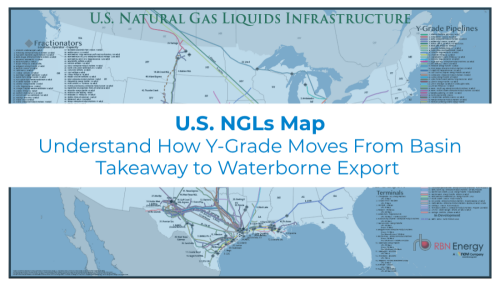
Visualize the infrastructure behind U.S. NGL movement.
The U.S. NGLs Map provides a comprehensive view of the transport, processing, and export networks moving NGLs across the U.S.
The system began with a three-year pilot program, phase 1, which ran from 2005-07. During this time, the emissions caps were based on estimates since reliable data around emissions was not yet available, and it covered only carbon dioxide (CO2) emissions for a subset of the industries and installments that are covered today. Phase 1 established a price for carbon and a trading system and allowed for the infrastructure needed to monitor potential emissions from new installations. Figure 1 below shows the EU ETS prices from the start of the market in 2005 until now, with the system’s phases delineated by the shaded areas.
About the song
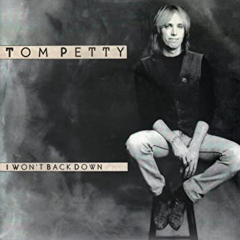
"I Won't Back Down" was written by Tom Petty and Jeff Lynne, and it appears as the second song on side one of Tom Petty's debut solo album, Full Moon Fever. Released as the first single from the album, the song went to #1 on the Billboard Mainstream Rock chart and #12 on the Billboard Hot 100 Singles chart. The video for the song features Petty with fellow Heartbreaker Mike Campbell, album collaborator Jeff Lynne, fellow Wilbury George Harrison, and a drummer named Ringo Starr. Campbell's guitar morphs into Harrison's Magical Mystery Tour Stratocaster during the slide solo of the song. "I Won't Back Down" is the song that Sam Smith's hit, "Stay With Me," lifted the chorus section from, resulting in Petty and Lynne receiving 12.5% royalties from Smith's song. Personnel on the record were: Tom Petty (lead, backing vocals, acoustic guitar), Mike Campbell (slide guitar), George Harrison (acoustic guitar, backing vocals), Jeff Lynne (bass, backing vocals), Phil Jones (Linn LM-1, drums), and Ringo Starr (Linn LM-1, drums).
Full Moon Fever was recorded between 1987 and 1988 at M.C. Studios, Rumbo Studios, Conway Studios, Devonshire Studios, and Sound City in Los Angeles. Produced by Tom Petty, Jeff Lynne, and Mike Campbell, the album was released in April 1989. It went to #3 on the Billboard Top 200 Albums chart, and has been certified 5x Platinum by the Recording Industry Association of America. Five singles were released from the LP.
Tom Petty was an American singer, songwriter, musician, and record producer. He was the lead vocalist, main songwriter, rhythm guitarist, and band leader of Tom Petty and the Heartbreakers. He started his professional career as band leader, bassist, and lead vocalist of Mudcrutch. He was also a member of supergroup, the Traveling Wilburys, a group that also included Bob Dylan, George Harrison, Roy Orbison, and Jeff Lynne. Petty released three studio albums and nine singles as a solo artist. He released 13 studio albums, eight live albums, four compilation albums, and 68 singles with the Heartbreakers. Petty released three studio albums with the Traveling Wilburys, and two studio albums, one live album, one live EP, and five singles with Mudcrutch. Tom Petty and the Heartbreakers are members of the Rock and Roll Hall of Fame. Tom Petty is the recipient of a Gershwin Award, a Billboard Century Award, and an ASCAP Golden Note Award. Petty died in October 2017.