Despite some hints that U.S. exploration and production companies are slowing some of their drilling in high profile shale basins — including last week’s decline of 15 operating rigs in the Baker Hughes count, our analysis of 43 representative E&Ps suggests that more than half expect their upstream capital spending in 2017 to exceed cash flow — a definite sign of optimism — and one fifth of the E&Ps will outspend cash flow by more than 50%. Is this a case of rose-colored glasses? Blind faith? Or have E&Ps’ post-price-crash efforts to high-grade their portfolios and improve their operational efficiency given them well-deserved confidence that if they don’t “back down” on capex things will turn out well? Today, we analyze the cash flow versus the capex of 43 U.S. E&Ps and discuss what it all means.
After weathering the oil price decline in 2014-16, U.S. E&Ps have been repositioning themselves to survive and even thrive in a $50/bbl world by (among other things) focusing on the sweetest of production sweet spots and wringing more oil, gas and natural gas liquids out of each well by drilling longer laterals, using more frac sand and fine-tuning their completion techniques. In late 2016, the 43 E&Ps we’ve been tracking in our recent Piranha report and related blogs announced a 42% increase in 2017 capital spending, and despite oil prices dipping below $50/bbl in the second quarter of 2017, our universe of producers remained committed to their accelerated investment plans (see Rock Steady). But as noted above, there have been indications that E&Ps have started to pull back somewhat, with a 5% decline in the rig count since the end of July cited as evidence.
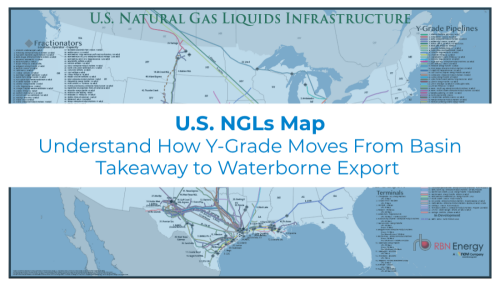
Visualize the infrastructure behind U.S. NGL movement.
The U.S. NGLs Map provides a comprehensive view of the transport, processing, and export networks moving NGLs across the U.S.
A good way to assess what’s really going on is to look at the relationship between E&Ps’ expected cash flow and their capital spending. The collective numbers for our universe of producers indicates that the 43 companies are likely to outspend cash flow by less than 3% — a far cry from the 40% to 50% outspend that was a hallmark of the industry a half-decade ago. As we’ll get to, though, a closer look shows that planned 2017 investments by 24 of the E&Ps in our universe will exceed their cash flow, with one-fifth outspending 2017 cash flow by more than 50%.

About the song
"I Won't Back Down" was written by Tom Petty and Jeff Lynne, and it appears as the second song on side one of Tom Petty's debut solo album, Full Moon Fever. Released as the first single from the album, the song went to #1 on the Billboard Mainstream Rock chart and #12 on the Billboard Hot 100 Singles chart. The video for the song features Petty with fellow Heartbreaker Mike Campbell, album collaborator Jeff Lynne, fellow Wilbury George Harrison, and a drummer named Ringo Starr. Campbell's guitar morphs into Harrison's Magical Mystery Tour Stratocaster during the slide solo of the song. "I Won't Back Down" is the song that Sam Smith's hit, "Stay With Me," lifted the chorus section from, resulting in Petty and Lynne receiving 12.5% royalties from Smith's song. Personnel on the record were: Tom Petty (lead, backing vocals, acoustic guitar), Mike Campbell (slide guitar), George Harrison (acoustic guitar, backing vocals), Jeff Lynne (bass, backing vocals), Phil Jones (Linn LM-1, drums), and Ringo Starr (Linn LM-1, drums).
Full Moon Fever was recorded between 1987 and 1988 at M.C. Studios, Rumbo Studios, Conway Studios, Devonshire Studios, and Sound City in Los Angeles. Produced by Tom Petty, Jeff Lynne, and Mike Campbell, the album was released in April 1989. It went to #3 on the Billboard Top 200 Albums chart, and has been certified 5x Platinum by the Recording Industry Association of America. Five singles were released from the LP.
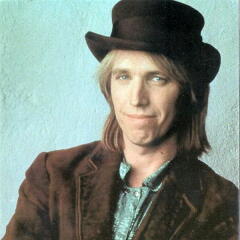
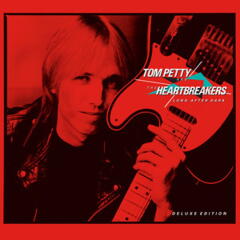
Tom Petty was an American singer, songwriter, musician, and record producer. He was the lead vocalist, main songwriter, rhythm guitarist, and band leader of Tom Petty and the Heartbreakers. He started his professional career as band leader, bassist, and lead vocalist of Mudcrutch. He was also a member of supergroup, the Traveling Wilburys, a group that also included Bob Dylan, George Harrison, Roy Orbison, and Jeff Lynne. Petty released three studio albums and nine singles as a solo artist. He released 13 studio albums, eight live albums, four compilation albums, and 68 singles with the Heartbreakers. Petty released three studio albums with the Traveling Wilburys, and two studio albums, one live album, one live EP, and five singles with Mudcrutch. Tom Petty and the Heartbreakers are members of the Rock and Roll Hall of Fame. Tom Petty is the recipient of a Gershwin Award, a Billboard Century Award, and an ASCAP Golden Note Award. Petty died in October 2017.