Buoyed by record-level feedgas demand and several planned export terminals reaching important development milestones, 2025 was a banner year for U.S. LNG. But while the U.S. has cemented its role as the world’s leading LNG exporter, a position it will likely retain for decades to come, the industry’s rapid growth has given rise to suggestions that it might become a victim of its own success. In today’s RBN blog, we’ll examine these near-term challenges and discuss where demand could increase in the long term to accommodate the additional LNG cargoes expected to hit the global market over the next several years.

The NATGAS Appalachia weekly report provides the data and insights to monitor the northeast natural gas market’s twists and turns and identify the risks and opportunities along the way, including tracking supply-demand trends, outbound capacity and their impact on takeaway pipeline utilization, and regional prices.
In Float On, the first blog in our short series on LNG market conditions, we looked at why some observers have suggested that a massive wave of new LNG supply, emanating primarily from the U.S. and Qatar, could result in economics bad enough to precipitate a pullback in U.S. LNG exports. But we also explained why the fears of oversupply and U.S. cargo cancellations may be exaggerated, with the “great wave” some expect more likely to resemble a gradually rising tide. U.S. LNG export capacity, which now stands at about 15 Bcf/d, is expected to top 30 Bcf/d by the early 2030s, as shown in Figure 1 below. (Also see our weekly LNG Voyager report.)
About the song
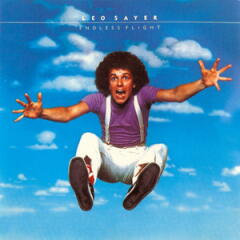
“When I Need You” was written by Albert Hammond and Carole Bayer Sager and appears as the fourth song on side one of Leo Sayer’s fourth studio album, Endless Flight. The romantic love song was released as a single in February 1977 and went to #1 on the Billboard Hot 100 Singles chart and has been certified Gold by the Recording Industry Association of America (RIAA). The song would later be covered by Rod Stewart, Julio Iglesias, Celine Dion and Cliff Richard. Personnel on the record were: Leo Sayer (vocals), John Barnes, Michael Omartian (electric piano), James Newton Howard (synthesizer), Dean Parks (electric guitar), Willie Weeks (bass), Jeff Porcaro (drums) and Bobby Keyes (saxophone).
Endless Flight was recorded in 1976 at Studio 55 in Los Angeles with Richard Perry producing. Released in October 1976, the album went to #10 on the Billboard 200 Albums chart and has been certified Platinum by the RIAA. Three singles were released from the LP.
Leo Sayer (Gerard Hugh Sayer) is an English and Australian singer and songwriter. He began his professional career as a songwriter in England in the early 1970s. He and David Courtney co-wrote most of Roger Daltry’s debut solo album, Daltry, which included the hit single “Giving It All Away.” He signed his first record deal in 1973 with Chrysalis Records in the U.K. and Warner Bros. Records in the U.S. Sayer has released 16 studio albums, four live albums, three soundtrack albums, 15 compilation albums and 64 singles and has sold more than 80 million records worldwide. He won a Grammy Award for “You Make Me Feel Like Dancing” in 1978. Sayer still records and tours and will be doing select dates in Australia in January.
"About the Song" -- written by Mickey McMahan , RBN Director of Musicology