Over the past few years, the simultaneous drives for action on climate change, diversity in the workplace, and corporate accountability have coalesced into the environmental, social, and governance (ESG) movement. The energy industry has been at the center of all this, of course, because significant volumes of greenhouse gases (GHGs) are generated with the production, processing, transportation and –– especially –– consumption of hydrocarbons. But while many energy companies have developed ESG strategies and goals, the ESG movement has also come under increasing scrutiny and criticism –– and from all sides, it seems. So where does the movement stand today, and what are its prospects in a world that is now as focused on energy security and affordability as it is on quickly reining in GHG emissions? In today’s RBN blog, we discuss highlights from our new Drill Down Report on the issues surrounding ESG.
It’s not surprising that ESG came to the fore in the late 2010s, or that players in the energy industry — oilfield service companies, E&Ps, midstreamers and refiners — have taken on central roles in the movement. Back in 2015, the Paris Agreement attracted the world’s attention and made it clear that governments and industries of all stripes would be taking serious steps toward reducing GHG emissions. Also, a new generation of entrepreneurs and investors was eager to take socially responsible investing to the next level with the multifaceted aims of making corporations more open, more diverse in their management and staffing, and more committed to improving their environmental performance.
By 2020 and 2021, most energy companies had developed ESG strategies in which they detailed their efforts to reduce emissions of carbon dioxide, methane and other GHGs and to ramp up their efforts on the social and governance fronts. But there’s been some blowback, especially lately. Advocates of more aggressive climate action have asserted that ESG programs by many hydrocarbon-focused energy companies are little more than greenwashing, a subterfuge designed to soften the skepticism among ESG-minded investors and lenders and the general public about their industry and its activities and products.

About the song
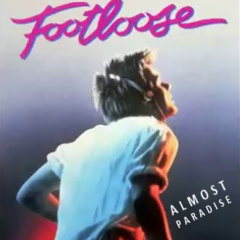
“Almost Paradise (Love Theme from Footloose)” was written by Eric Carmen (music) and Dean Pitchford (lyrics). The song features Loverboy’s Mike Reno and Heart’s Ann Wilson on vocals, and appears as the third song on the album, Footloose: Original Motion Picture Soundtrack. Writer Eric Carmen was the lead singer of the legendary Cleveland power-pop band The Raspberries, which had a Platinum single with “Go All the Way.” He’s also had several hits as a solo artist, including the mega-hit power ballad “All by Myself.” “Almost Paradise” is a classic ’80s power ballad, with ’80s production that includes electronic drums with the kick drum mixed with so much high-end point that it sounds like a basketball on a hardwood floor. The song was released as a single in March 1984 and went to #1 on the Billboard Adult Contemporary chart and #7 on the Billboard Hot 100 Singles chart. Personnel on the record were: Mike Reno, Ann Wilson (vocals), Chas Sandford (electric guitar), Keith Olsen (bass, acoustic guitar, producer), Bill Cuomo (keyboards, synthesizer), and Jim Keltner (drums). In 1989 Eric Carmen, with singer Merry Clayton, released a single of the song.
The album Footloose: Original Motion Picture Soundtrack was recorded at various studios in the Los Angeles area in1983-84. The nine-song album had different producers for each artist’s song. The producers involved were Kenny Loggins, Lee DeCarlo, George Duke, Keith Olsen, Jim Steinman, Bill Wolfer, David Foster, John Boylan and Sammy Hagar. Released in January 1984, the album went to #1 on the Billboard 200 Albums chart and has been certified 9x Platinum by the Recording Industry Association of America. Seven singles were released from the LP, and six of them became Top 40 hits.
Footloose is a 1984 American musical drama directed by Herbert Ross. It starred Kevin Bacon, Lori Singer, Dianne Wiest and John Lithgow. The film grossed over $80 million, making it the seventh highest-grossing film of 1984. A remake of the film, directed by Craig Brewer, was released in 2011.
Mike Reno is a Canadian singer, musician, and the lead singer for the band Loverboy. They have released nine studio albums and 29 singles. He still records and tours with the band.
Ann Wilson is an American singer, musician and songwriter for the band Heart. With Heart, she has released 15 studio albums, nine live albums, nine compilation albums and 64 singles. Wilson continues to record and tour with the band.