


Many of us need a break from natural gas market mayhem, rolling blackouts, and frozen pipes, so we’re turning to a very different topic — at least for a day. ESG, or more specifically the environmental part of the too-important-to-ignore environment/social/governmental movement. The fact is, for many investors, lenders, and others who give heavy weight to ESG in their decisions, the companies that produce, process, transport, refine, and/or export hydrocarbons are automatically suspect. At the same time, though, it is broadly understood that crude oil, natural gas, and NGLs remain essential commodities, and that it could take decades for economies around the globe to significantly reduce their dependence on them. So, where does that leave hydrocarbon-centric companies in 2021’s ESG-conscious world? Today, we continue our series on ESG issues and how they relate to players in the energy industry.
In Part 1, we said that while the energy industry has been rebounding from a mostly dismal 2020, there is still a genuine hesitation (or worse) among many folks to invest in or lend to oil and gas producers and others of their ilk. It’s not just the industry’s historic volatility that’s spooking investors and lenders, it’s the unique social, political and financial pressures that hydrocarbon producers, oilfield service companies, midstreamers, and refiners face in demonstrating that they are addressing environmental, social, and governance issues. Like it or not (and some don’t), ESG has come to the fore in the U.S., Canada, and elsewhere, and will shape activity in the oil patch this decade and beyond. It’s a topic we’ve been digging into for some time — partly in response to the many inquiries we’ve been receiving from clients and subscribers.

As we said earlier, the E in ESG is of paramount importance to energy companies — they need to show investors, lenders, and regulators that their businesses are prepared to adapt to the changing social, political and marketing landscape, and are sensitive to the growing demands for environmental stewardship. By far, the leading environmental issue facing the energy industry today is greenhouse gas (GHG) emissions. We’ll discuss other environmental issues relating to ESG in a future blog. It should come as no surprise that GHGs are generated at pretty much every step in the production, delivery, processing/refining, and (especially) consumption of fossil fuels. To help in the measuring and tallying, many of the powers that be in the ESG world divide a company’s GHG emissions into three buckets:
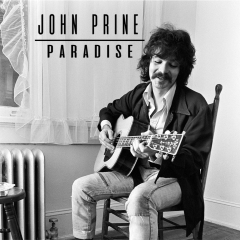
About the song
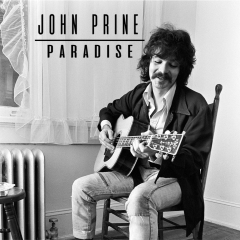
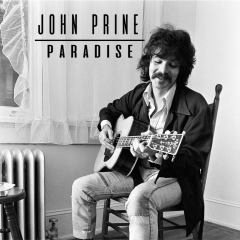
"Paradise" was written by John Prine and appears as the fifth song on his debut album, John Prine. A second version appeared as the 12th song on his ninth studio album, German Afternoons. The song was written for Prine's father about the town where he used to live in Kentucky called Paradise. In the song, Prine requests to have his ashes dispersed in the Green River, which runs through the town. After Prine's death in 2020, his wish was fulfilled. The song was recorded in 1971 at A&R Studios in New York City. Personnel on the record were: John Prine (lead vocal, guitar), Dave Prine (fiddle), Steve Goodman (guitar, backing vocals), and Neil Rosengarden (bass). Many artists have covered the song, including Johnny Cash, The Seldom Scene, and John Denver.
Most of John Prine was recorded at American Sound Studio in Memphis, with only “Paradise” recorded at A&R Studios in New York City. Arif Mardin was the producer. Released in late 1971, the album went to #55 on the Billboard Top 200 Albums chart. Personnel at the parts of the LP recorded at American Sound Studio sessions were: John Prine (lead vocals, guitar), Reggie Young (lead guitar), John Christopher (rhythm guitar), Leo LeBlanc (pedal steel guitar), Bobby Emmons (organ), Bobby Wood (piano), Mike Leach (bass), Gene Chrisman (drums), and Heywood Bishop (percussion).
John Prine was an American country folk singer-songwriter. His songs were known for their humorous takes on life and love, and often included political and social commentary. He released 13 studio albums, five live albums, two compilation albums, and 16 singles, and has won three Grammy Awards and a Grammy Lifetime Achievement Award. A member of the Songwriters Hall of Fame, John Prine died in Nashville in April 2020 from COVID-19. He was 73.




Comments
I find it interesting that there are forces (such as the ESG movement) that cause companies (of all kinds) to creatively innovate. Sometimes there is no reason, '...because things are not broken...' to innovate improvements. Reducing flareing is a great example. Just review how much this will be reduced. And of course, many times there are costs added to the consumer. But added costs for a betterment of life or the planet are good.