The run-up in crude oil prices the past couple of months has supported a rise in energy stock prices — since early November, the S&P 500 Energy Sector Index has increased by more than 40%. Yet, many investors, lenders and others remain wary of oil and gas companies, not only due to the energy industry’s historic volatility but also the unique social, political and financial pressures that hydrocarbon producers, midstreamers, and refiners face in demonstrating that they are addressing environmental, social, and governance issues. ESG has come to the fore in the U.S., Canada, and elsewhere, and will shape activity in the oil patch this decade and beyond, and energy companies that ignore it or only pay lip service do so at their peril. Today, we begin a series on the growing significance of ESG and how upstream, midstream, and downstream players are incorporating it into their strategies and operations.

When Pioneer Natural Resources announced its $7.6 billion acquisition of Parsley Energy in October 2020 and discussed the strategic and financial benefits of the deal, it highlighted the two companies’ “best-in-class” ESG practices, including a combined natural gas flaring intensity that is one-third that of its peers, and aggressive efforts to reduce the use of fresh water in their Permian drilling-and-completion programs. In early December, a month before the Pioneer/Parsley merger closed, Pioneer released one of the most comprehensive sustainability reports ever assembled by an oil and gas company: 61 pages of text, photos, and graphs that discussed almost every imaginable environmental-, social-, and governance-related issue. Pioneer’s message to investors, lenders, and the broader public couldn’t have been clearer. It was telling the world that not only is it aware of the importance of climate change, workplace diversity, and a host of other ESG matters, it was acting to address them and making plans to do more. This included setting goals to reduce its greenhouse gas (GHG) emissions by 25% from their 2019 levels within 10 years; eliminate all routine gas flaring by 2030 at the latest, with an aspiration to reach that goal by 2025; and relying less on fresh water and more on treated effluent water from the cities of Odessa and Midland, TX, for its Permian operations.
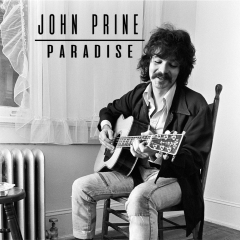
About the song
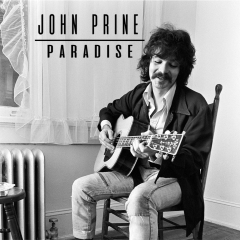
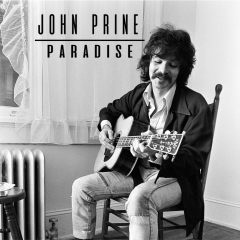
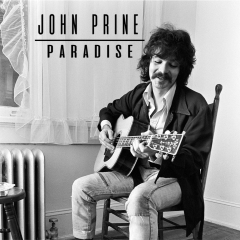
"Paradise" was written by John Prine and appears as the fifth song on his debut album, John Prine. A second version appeared as the 12th song on his ninth studio album, German Afternoons. The song was written for Prine's father about the town where he used to live in Kentucky called Paradise. In the song, Prine requests to have his ashes dispersed in the Green River, which runs through the town. After Prine's death in 2020, his wish was fulfilled. The song was recorded in 1971 at A&R Studios in New York City. Personnel on the record were: John Prine (lead vocal, guitar), Dave Prine (fiddle), Steve Goodman (guitar, backing vocals), and Neil Rosengarden (bass). Many artists have covered the song, including Johnny Cash, The Seldom Scene, and John Denver.
Most of John Prine was recorded at American Sound Studio in Memphis, with only “Paradise” recorded at A&R Studios in New York City. Arif Mardin was the producer. Released in late 1971, the album went to #55 on the Billboard Top 200 Albums chart. Personnel at the parts of the LP recorded at American Sound Studio sessions were: John Prine (lead vocals, guitar), Reggie Young (lead guitar), John Christopher (rhythm guitar), Leo LeBlanc (pedal steel guitar), Bobby Emmons (organ), Bobby Wood (piano), Mike Leach (bass), Gene Chrisman (drums), and Heywood Bishop (percussion).
John Prine was an American country folk singer-songwriter. His songs were known for their humorous takes on life and love, and often included political and social commentary. He released 13 studio albums, five live albums, two compilation albums, and 16 singles, and has won three Grammy Awards and a Grammy Lifetime Achievement Award. A member of the Songwriters Hall of Fame, John Prine died in Nashville in April 2020 from COVID-19. He was 73.