Crude-by-rail has saved the day for Alberta producers before, and it’s about to again. The talk of the Western Canadian province the past few days has been the Alberta government’s October 31 announcement that it will allow incremental crude oil production beyond the province’s 3.8-MMb/d cap — if that crude is transported to market by rail. Within hours of the government’s statement, a trio of major producers indicated that they now expect to ramp up their Alberta output by a total of more than 100 Mb/d over the next few months, with a good bit of the gain occurring by year’s end. Production increases from others are likely to follow, as are parallel plans to load that crude into tank cars and rail it to market. But can Alberta producers really thrive without more pipeline capacity? Today, we review recent developments in “Canada’s Energy Province” and what they mean for producers and Alberta crude prices.

Canadian crude output is rising, requiring new export routes. As traditional pathways face constraints, the U.S. Rockies—especially the Guernsey, WY hub—are emerging as key corridors for moving Canadian heavy crude to downstream markets, including the Gulf Coast.
In the second half of the 2010s, plans for production growth in the oil sands and elsewhere in Alberta have been stymied to varying degrees by the lack of sufficient pipeline capacity. As we said in The Shape I’m In, our spring 2018 Drill Down Report on Western Canadian crude markets, producers and midstream companies responded to these takeaway shortfalls by adding crude-by-rail capacity and by advancing a number of pipeline projects that, over time, would eliminate the constraints and enable production growth to occur pretty much unfettered. By last fall, though, production again was bumping up against, and even exceeding, the combined capacity of pipelines and railroads; crude inventories within Alberta were up sharply; and the price differential between regional benchmark Western Canadian Select (WCS) and West Texas Intermediate (WTI) had widened to an astonishing $50/bbl (navy blue line and dashed yellow oval in Figure 1), putting the cash value of a barrel of WCS at little more than $20.
About the song
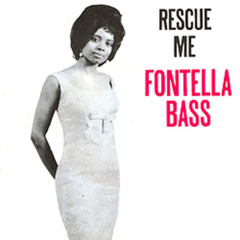
“Rescue Me” was written by Ray Miner, Carl Smith and Fontella Bass. The song was recorded in three takes at Chess Studio in Chicago, with Billy Davis producing. Released as a single in September 1965, the song went to #1 on the Billboard Rhythm and Blues chart, and #4 on the Billboard Hot 100. It would become Fontella Bass’s biggest hit and one of the best-selling singles for Chess Records. Personnel on the record were: Fontella Bass (lead vocals), Minnie Ripperton (backing vocals), Louis Satterfield (bass), Maurice White (drums — later of Earth Wind and Fire), Pete Cosey (guitar), Gerald Sims (guitar), Leonard Caston (piano), Sonny Thompson (organ) and Charles Stepney (percussion). “Rescue Me” would be included on Bass’s first studio album, The New Look, and would go on to be covered by many artists, including Linda Ronstadt, Diane Ross, Cher, Bryan Ferry, Roy Buchanan and Gayle McCormick.
The New Look LP was released in early 1966 and went to #93 on the Billboard Top 200 Albums chart. It was produced by Billy Miller and recorded at Chess/Ter-Mar Studios in Chicago in November 1965.
Fontella Bass was a soul singer from St. Louis. Her mother, Martha Bass, was a member of the Clara Ward Singers, so Fontella was around music from an early age. She started her professional career as a pianist and singer with bluesman Little Milton’s band. Her recording career started in the early 1960s with her singing on singles produced by Ike Turner for his Bobbin, Prann, and Sonja labels. She signed with Chess Records in 1965. Bass released eight studio albums and 10 singles in her career. She passed away in St. Louis in 2012 at the age of 72.