For more than six months now, the provincial government of energy-rich Alberta has been trying to mitigate the sometimes painful effects of having too little pipeline capacity to move crude oil to market. They’ve mandated production cuts by larger producers, contracted for crude-by-rail (CBR) services — then moved to undo those deals — and pressed the Canadian government to help advance long-delayed pipeline projects. Things appear to have reached a semi-happy medium for now: the price spread between Western Canadian Select (WCS) and West Texas Intermediate (WTI) has narrowed, but remains wide enough to justify sending crude out by train. Still, it’s clear that the big tranches of new pipeline capacity many had hoped would be built or at least under construction by now face more hurdles. How long will Alberta producers need to wait for unfettered pipeline access to the U.S. Midwest and Gulf Coast and to Canada’s West Coast? Today, we provide an update on WCS pricing, Alberta crude-by-rail, and the key pipeline projects that never seem to get finished.
It’s been an eventful period in Alberta’s oil patch, and an active time at the provincial government in Edmonton. As we said in Money Changes Everything back in early December 2018, then-Premier Rachel Notley announced that, starting on January 1, 2019, the Alberta Energy Regulator (AER) would institute mandatory production cuts for any producers in the province averaging 10 Mb/d or more of production over their highest six months in the previous year. The mandated reductions, which began at 325 Mb/d (or about 8% of total production) in January and have been ratcheted down since then (to 175 Mb/d — or about 4.5% of total production — in June and July), have had their desired effects, namely (1) to work down the crude oil inventories that had built up in Alberta due to takeaway constraints, and (2) to shrink the spread between WCS (the benchmark Western Canadian crude blend) and WTI, which last fall had ballooned to more than $40/bbl.

Crude Oil TradeView provides up-to-date data and insights into the behavior of differentials for 33 crude assessments across North America. Each week, it also walks you through the reasoning of why differentials widen, narrow, flip (premium vs. discount), or blow out.
In addition to implementing mandated production cuts, the Notley government in February (2019) announced that, in an effort to boost CBR capacity, it had entered into deals to lease 4,400 tank cars and use Canadian National and Canadian Pacific locomotives and tracks to help move crude to market. Under the plan, Alberta would buy crude from producers, then have it loaded onto tank cars at existing CBR terminals in the province and transported to the Gulf Coast and other destinations — the goal was to add 20 Mb/d of CBR capacity starting in July (2019) and 120 Mb/d by mid-2020. However, when Notley’s party was voted out of office in April, the newly elected premier, Jason Kenney, said he would work to cancel the CBR contracts, which he and his party view as boondoggles. Our understanding is that talks are under way to scrap the deals, and that no government-backed CBR activity will be taking place in July.
About the song
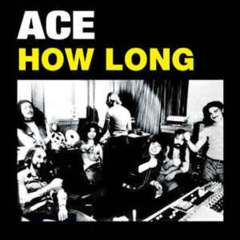
"How Long (Has This Been Going On)" was written by Ace keyboardist and vocalist Paul Carrack when he discovered Ace bassist Terry Comer was secretly working on the side with the band Sutherland Brothers & Quiver. Comer returned to Ace to record their debut album, Five-A-Side, which was released in 1974 and includes the single "How Long." Released in March 1975, the song (which featured Carrack's vocals) rose to #3 on the Billboard Hot 100 chart. Several other artists have covered the song over the years.
Five-A-Side was recorded at Rockfield Studios in Wales, and Trident Studios in London, with John Anthony producing. It went to #11 on the Billboard Top 200 Albums chart. Personnel on the record were: Paul Carrack (keyboards, vocals), Phil Harris (lead guitar, vocals), Alan King (rhythm guitar, vocals), Terry Comer (bass), and Fran Byrne (drums, percussion).
The band Ace was formed in Sheffield, England, in 1972, and disbanded in 1977. The group recorded three studio albums and released six singles. After Ace broke up, Carrack, Comer and Byrne joined Frankie Miller's band for a while. Paul Carrack went on to perform with Roxy Music, Squeeze and Roger Waters before becoming co-lead singer with Paul Young of Mike + the Mechanics. He has had an active solo career, with many artists covering songs he has written. Waters has released 17 solo albums to this day. Carrack's soulful vocalizations can be heard on the hits "Tempted" by Squeeze, and "Silent Running (On Dangerous Ground)” by Mike + the Mechanics.