The Moda Ingleside Energy Center (MIEC) in Corpus Christi, the Enterprise Hydrocarbons Terminal (EHT) in Houston, and the Louisiana Offshore Oil Port (LOOP) have been loading more crude oil than any of their Gulf Coast competitors over the last year. In fact, they accounted for nearly half of the total oil exported. As many of the crude exporters have learned the hard way, leading the pack today is no guarantee you’ll still be out front six, 12, or 24 months from now. Despite the global pandemic and the market disruptions it has caused, a number of new export terminals and expansions to existing terminals are still under development, and all of them hope to draw barrels from their rivals. Today, we conclude our series with a look at planned capacity additions to Gulf Coast export facilities.
As we said in Part 1, U.S. crude oil exports have been rising steadily since the ban on most exports was lifted in December 2015 — even during COVID-impacted 2020, when export volumes for the first time averaged more than 3 MMb/d. However, the volume of oil being exported from the 20-odd crude-handling terminals along the Gulf Coast varies widely, and since the start of last year almost half of those barrels have been loaded at only three facilities: Moda Midstream’s MIEC; Enterprise Products Partners’ EHT; and LOOP, which is co-owned by MPLX, Shell Pipeline, Shell Oil, Marathon Petroleum, and Valero Terminaling & Distribution. Each of these terminals has its unique features, of course, but what they have in common are access to major production areas, ample storage capacity, and the ability to efficiently load the larger vessels favored by shippers — fully loading Suezmaxes and partially loading VLCCs at MIEC (as we discussed in Part 1), fully loading Suezmaxes at EHT, and fully loading VLCCs at LOOP (see Part 2).

The RBN Crude Oil Analytic Suite gives you access to four weekly reports covering crude oil markets, including: Crude Billboard, Crude Permian, Crude TradeView, and Crude Voyager.
The shift in volumes of crude oil being exported from Gulf Coast terminals over the last two-plus years suggests that the competition for barrels is remarkably fluid, not just among individual terminals but among the four major export areas (Corpus Christi, Houston, Beaumont, and Louisiana). For example, in 2019, crude exports out of the broader Houston area (including Freeport, Seabrook, and Texas City; green bar segments in Figure 1) averaged just over 1 MMb/d, followed by Corpus Christi (including Ingleside; yellow bar segments) with about 750 Mb/d, Beaumont (blue bar segments) with about 650 Mb/d, and Louisiana (led by LOOP; orange bar segments) with 225 Mb/d. In 2020, the Corpus Christi area rocketed to the top (with about 1.5 MMb/d of exports, on average), due largely to the start-up of three new Permian-to-Corpus pipelines in late 2019 and early 2020 as well as new storage and dock capacity at a number of export terminals in Corpus and Ingleside. Last year, exports out of the Houston area remained close to flat (at just under 800 Mb/d), while those from Louisiana increased (mostly because of gains at LOOP), and exports from Beaumont plummeted. In 2021 to date, the Corpus Christi area remains on top by a wide margin, with export volumes in the first two-and-a-half months of the year averaging nearly 1.6 MMb/d, or more than double the Houston area’s 740 Mb/d, followed by Louisiana’s 350 Mb/d and Beaumont area’s 170 Mb/d, according to RBN’s weekly Crude Voyager report.
About the song
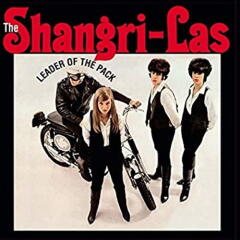
“Leader of the Pack" was written by Shadow Morton, Jeff Barry and Ellie Greenwich. It appears as the second song on side one of The Shangri-Las’ debut album of the same name. Released in September 1964, the song went to #1 on the Billboard Hot 100 Singles chart. The instrumental parts were recorded in July 1964 at Ultrasonic Studios in Hempstead, NY, and the vocals were recorded at Mira Sound Studio in New York City, with Shadow Morton producing. Personnel on the record were: Mary Weiss (lead, backing vocals), Betty Weiss (lead, backing vocals), and Marge and Mary Ann Ganser (backing vocals). Uncredited session musicians played on the record. In 1985, heavy metal band Twisted Sister released a cover of the song from their album Come Out and Play. It went to #53 on the Billboard Hot 100 Singles chart.
The album, Leader of the Pack, was compiled and released in February 1965 to capitalize on the success of The Shangri-Las’ hit singles, “Remember (Walking in the Sand)” and “Leader of the Pack.” Produced by Shadow Morton, the album went to #114 on the Billboard Top 200 Albums chart. Four singles were released from the LP.
The Shangri-Las were an American pop girl group who were popular in the 1960s. The two sets of singing sisters were discovered by Artie Ripp in New York City. The group took its name from the Shangri-La restaurant in Queens, NY. They released four studio albums, nine compilation albums, and 17 singles before officially breaking up in 1968. Mary Weiss served as the front person and main vocalist for the group. All the girls sang backup and were at times featured as the lead vocalist. Betty Weiss retired from the music business and lives on New York’s Long Island. Mary Ann Ganser died in 1970, Marge Ganser in 1996, and Mary Weiss in January 2024.