Production bottlenecks and global energy security concerns stemming from the Ukraine war have flipped the script on various aspects of the U.S. energy markets. One of them is the softening of Wall Street and regulatory resistance to investment in new hydrocarbon infrastructure. That’s been particularly good news for the swarm of LNG export projects looking to move forward. It’s also improved somewhat the prospects for the embattled Mountain Valley Pipeline (MVP), the last major greenfield project for moving natural gas out of the Northeast from the Appalachian Basin. A court vacated three of the project’s key federal authorizations earlier this year, but the project recently got a greenlight when the Federal Regulatory Energy Commission (FERC) approved MVP’s amendment certificate application. Equitrans Midstream said last week that it would pursue new permits and target in-service in the second half of 2023. But the prospect of more legal challenges looms, and the question is, will it get across the finish line before severe constraints arise? In today’s RBN blog, we provide an update on the Appalachian gas market.
The Appalachia production basin has long been bedeviled by midstream constraints, often leading to deep price discounts vs. the national gas benchmark Henry Hub. There have been brief respites when new capacity has come online, allowing more gas to flow out, but if you've been reading our blogs and natural gas reports lately, you know we've been sounding the alarm about the growing specter of constraints reemerging (see our Headed for Heartbreak series). The boom in pipeline reversals, greenfield projects, and pipeline expansions out of Appalachia that characterized much of the 2010s is pretty much over, with just one major takeaway newbuild left in the region: MVP, the 2-Bcf/d greenfield pipeline from northern West Virginia to south-central Virginia.

The NATGAS Appalachia weekly report provides the data and insights to monitor the northeast natural gas market’s twists and turns and identify the risks and opportunities along the way, including tracking supply-demand trends, outbound capacity and their impact on takeaway pipeline utilization, and regional prices.
The Ukraine war, bans on Russian energy supplies, and the related energy security concerns have all renewed political and regulatory support for U.S. gas supply and infrastructure to some extent. But environmental opposition — and the resulting legal actions against new gas infrastructure — haven’t abated, and generally speaking, it’s gotten much harder in recent years for projects offering additional capacity to gain traction, especially in the Northeast. Given that reality, in the latest round of earnings calls over the past few weeks, Appalachian producers have stuck to their disciplined stance, even in the face of the highest gas prices in years — largely opting to stay in maintenance mode until there are clear signals that the infrastructure will be there to support supply growth. That means that as constraints in getting gas out of the Northeast worsen, Appalachian production growth and outflows to growing demand markets, like LNG exports, will be largely paced by new takeaway capacity out of the basin (see Up Around the Bend, Part 3).
About the song
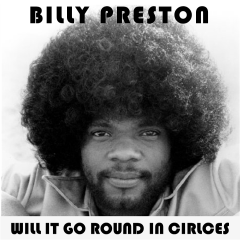
“Will It Go Round in Circles” was written by Billy Preston and Bruce Fisher and appears on Preston’s 1972 album, Music Is My Life. The song was released in March 1973 and became Preston’s first #1 solo single, topping the Billboard Hot 100 singles chart that year. Personnel on the record were: Billy Preston (keyboards, bass guitar, vocals), George Johnson (guitar), Louis Johnson (bass guitar), Hubert Heard (drums), Tom Scott (horn), John Horn (horn, George Bohanon (horn), Buck Monari (horn), and Paul Hubinon (horn).
Music Is My Life was the 7th studio album for Preston and was recorded in 1971-72 and released in 1972.
Billy Preston is an American musician British singer, songwriter, musician, songwriter and producer with works crossing the R&B, rock, soul, funk and gospel genres. He was the only non-Beatle musician to be credited on a Beatles recording, namely the 1969 single “Get Back.” He continued to serve as a member of George Harrison’s band after the Beatles broke up, including performing “Will It Go Round in Circles” on Harrison’s 1974 Dark Horse tour.