During the summer of 2018, crude oil inventories at the trading hub in Cushing, OK, dropped to extreme lows. With estimated tank bottoms around 14.6 MMbbl, Cushing stockpiles hit 21.8 MMbbl for the week of August 3. Traders’ alarm bells were ringing, and upstream and downstream observers were wondering if low storage levels were going to cause significant operational issues. But just when it seemed tanks were nearing catastrophic lows, inventories reversed course and started to climb. Since August, crude stocks have increased by 13.6 MMbbl, or nearly 60%, and there is now talk of potentially too much crude en route to Cushing, maxing out capacity there. There are many contributing factors to this most recent inventory swing, with increased domestic production and the tail end of refinery turnaround season being two of the bigger fundamental drivers. But the main catalyst has been the shift from a backwardated forward curve to a contango forward curve in the WTI futures market. Today, we continue our Cushing series with a snapshot of recent contango markets and the impact those prices have had on stockpiles at the central Oklahoma hub.
Join Backstage Pass, your gateway to exclusive industry insights, connections, and resources across energy markets. Gain direct access to RBN's extensive archive covering crude oil, NGLs, LNG, natural gas, refined products, renewables, and energy transition.
Recently, it seems like every time we stop to take a breath, something substantial changes at Cushing. We are now in our eighth blog on Cushing, and since we started the series, multiple new pipelines into and out of the hub have been announced, prompt-month prices have had their largest drop in three years, and crude inventories at the hub have increased by more than half. Throughout the series, we have highlighted connectivity to upstream and downstream markets, crude characteristics at the hub, and most recently, plans for expansions to existing lines out of Cushing. Today, we look at recent changes in the forward curve and what impact it’s having on storage levels in the area.
In our This Place is Empty blog a few months back, we discussed the difference between contango and backwardated WTI markets — backwardation is when the future price for WTI is lower than the current prompt-month price; contango occurs when the future price for WTI is higher than the current prompt-month price. Figure 1 shows how the forward curve for WTI at Cushing has shifted over the past five and a half months — the colored lines show the forward curve price (y-axis in $/bbl) for the subsequent 29 future months (x-axis) at the first of each month (blue line for June 2018, black line for July 2018, green line for August 2018 etc.) and, in the red line across the bottom of the graph, the forward curve as of November 19, 2018. As you can see, the market was backwardated (forward prices in steady decline) in June, July, August, September and October. But by November 1, the front of the forward curve (orange line) had shifted, putting the market into contango for the first 12 months or so before reverting to backwardation. And as of November 19 (yesterday; red line), the market remained in contango for about a year, with prices holding almost flat thereafter.
About the song
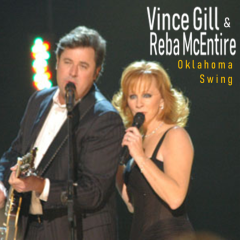
“Oklahoma Swing” was a 1990 hit single for Oklahoma-born country music stars Vince Gill and Reba McEntire. Written by Gill and Tim DuBois, the song was the second single from Gill’s third album, When I Call Your Name, and reached #13 on the Billboard Hot Country Singles chart. The LP was recorded at Emerald Studios in Nashville in early 1989, with Tony Brown producing. When I Call Your Name went to #2 on the Billboard Country Albums chart, and #67 on the Billboard Top 200 Albums chart after its release in November 1989.
Vince Gill has recorded 20 studio albums, has charted over 40 singles on the U.S. Billboard charts, and has sold over 26 million albums worldwide to date. He still tours as a solo artist, and as a member of The Eagles. Reba McEntire has recorded 31 studio albums, has had 42 #1 singles on the U.S. Billboard charts, and has sold over 95 million records worldwide to date. She still tours as a solo artist.