By the middle of the decade, LNG Canada should be sending its first cargoes of Canadian-sourced LNG to Asian markets. More importantly, Canada for the first time will have an alternative export market for its natural gas supplies — for more than 50 years, piping gas south to the U.S. has been its only option. But getting gas from the Montney and Duvernay production areas to the British Columbia coast is no easy task. It requires the construction of an entirely new, 2.1-Bcf/d pipeline — expandable to 5 Bcf/d — much of it over very rugged terrain. Coastal GasLink, as the planned pipe is known, has also faced major regulatory hurdles. Today, we conclude a two-part series with a look at where the pipeline project stands today.
Over the past decade, the Shale Revolution in the U.S. has been placing an ever-tightening squeeze on Canadian gas supplies and exports. With U.S. natural gas production surging through most of that period, Canadian producers saw their market share erode rapidly. These developments — and Canada’s own growing supplies of unconventional gas in plays such as the prolific Montney — meant that other avenues for exporting natural gas had to be developed, a topic we discussed at length in a Drill Down report last year. The next logical step was to consider overseas exports of natural gas in the form of LNG.
In Part 1 of this series, we chronicled the development of LNG Canada, the first — and still only — LNG liquefaction and export terminal currently under construction along the BC coast. The facility is just outside Kitimat, BC, a small town about 400 miles north of Vancouver. After several years of development and evaluation, a final investment decision (FID) was made in October 2018 for what, at C$40 billion (US$30 billion), was billed at the single largest privately backed construction project in Canadian history. The two liquefaction trains now under construction will demand a total of about 1.8 Bcf/d (~0.9 Bcf/d per train). The main equity partners in LNG Canada are Shell Canada Energy, an affiliate of Royal Dutch Shell, as lead operator, along with several major Asian LNG players, all of whom own gas reserves in Western Canada for eventual delivery to the LNG Canada site. As we discussed, COVID-19-related disruptions led to a construction slowdown in March of this year; activity at the site is only now being ramped back up. The delays appear to have added about a year to the construction timeline, delaying the in-service date (ISD) for the project from late 2023/early 2024 to likely late 2024/early 2025.

Join Backstage Pass, your gateway to exclusive industry insights, connections, and resources across energy markets. Gain direct access to RBN's extensive archive covering crude oil, NGLs, LNG, natural gas, refined products, renewables, and energy transition.
About the song
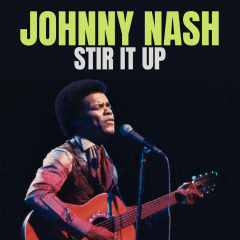
“Stir It Up" was written by Bob Marley in 1967 and was first recorded and issued as a single by Bob Marley & The Wailers. Johnny Nash covered the song on his 1972 album, I Can See Clearly Now. When Nash's version was released as a single, the song rose to #12 on the Billboard Hot 100 chart and #6 on the Billboard Adult Contemporary chart.
The I Can See Clearly Now album also included Johnny Nash’s #1 hit single of the same name, which stayed atop the Hot 100 and Adult Contemporary charts for four straight weeks, also in 1972. A third hit single from the LP was "There Are More Questions Than Answers.”
Johnny Nash, who died in his hometown of Houston (TX) on October 6 at the age of 80, was an American reggae and pop singer-songwriter. He released 17 studio albums, five compilation albums, and 66 singles during his career. His JAD record label produced some of the earliest recordings of Bob Marley & The Wailers.