More than 15 years into the Shale Era, the U.S. refining sector’s response to burgeoning production of light, sweet crude oil continues. Earlier this month, Chevron completed the long-planned, $400 million renovation and expansion of the century-old refinery in Pasadena, TX, which the company acquired from Petrobras in 2019. In today’s RBN blog, we discuss the refinery’s extensive history, why Chevron bought the facility five years ago, and how the just-finished project will enable the integrated oil and gas giant to make fuller use of its Permian oil bounty.

The Future of Fuels bi-annual report by RBN's Refined Fuels Analytics provides an in-depth analysis of the U.S. and global refinery industries, focusing on crude oil and fuel market dynamics, supply and demand, alternative fuels, refinery capacities, and price forecasts to help stakeholders navigate the evolving energy landscape.
Way back in 1917, Crown Oil & Refining Co. struck oil at Well #3 in the Goose Creek Field, just south of what is now Baytown, TX, and two years later it started up a new refinery alongside the Houston Ship Channel in nearby Pasadena (see photo below). After initially focusing on producing lube oil, the company — renamed Crown Central Petroleum — in 1925 expanded into gasoline production and during World War II pioneered the production of 100-octane aviation fuel for warplanes. Fast forward to 2004, when Crown sold the refinery to Astra Oil Trading, a Belgian company, and 2006 and 2008, when Petróleo Brasileiro (aka Petrobras), Brazil’s state-owned oil and gas company, initially purchased a 50% stake in the facility and its 466-acre site and subsequently acquired the entire plant.
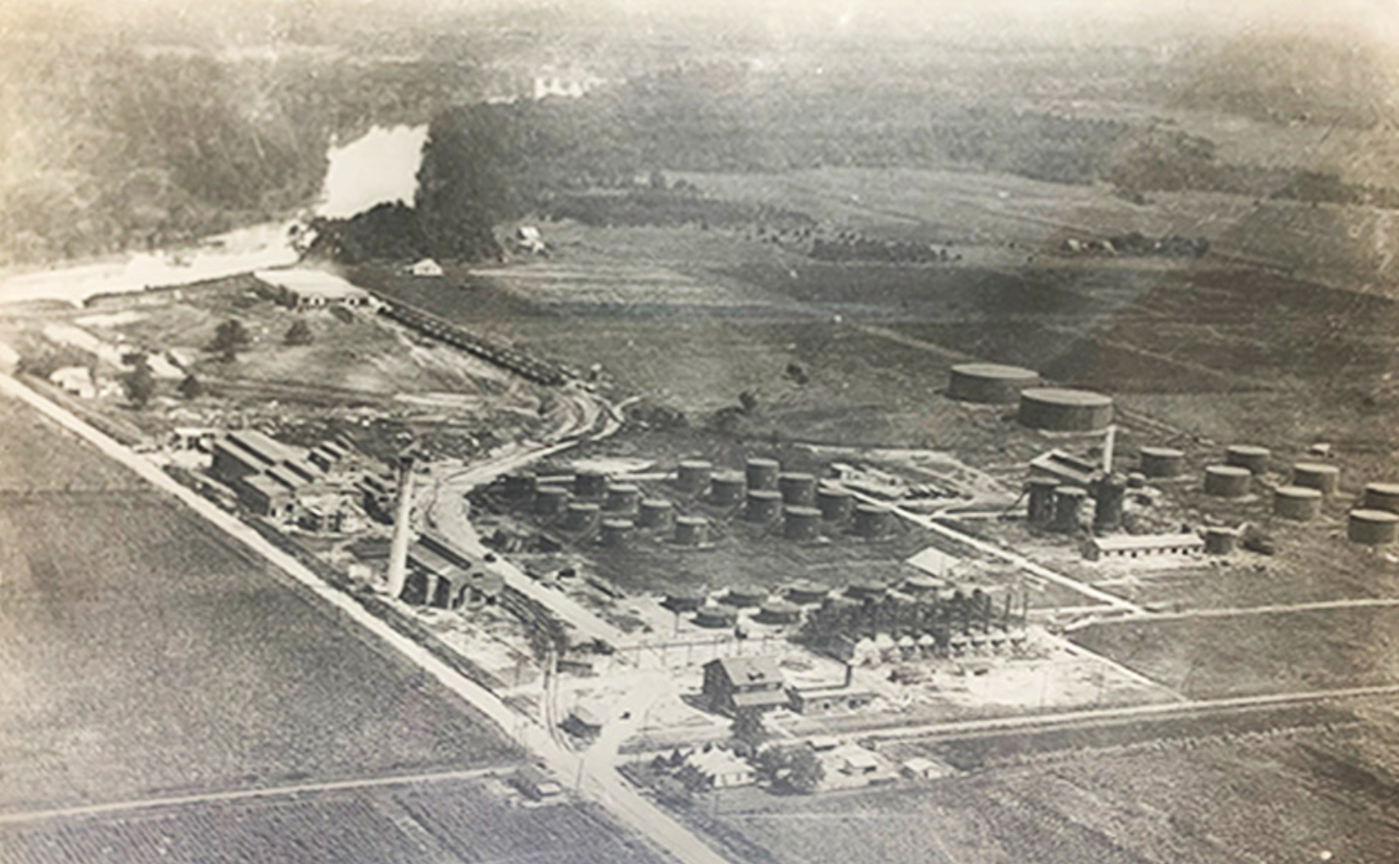
Crown Oil & Refining’s Pasadena Refinery in 1919. Source: Chevron
Petrobras paid a hefty price — just over $1 billion — for the 100 Mb/d, channel-side refinery, more than 5 MMbbl of onsite storage capacity and associated connections to crude oil and refined products pipelines.
As we discussed in Big Time, Chevron in May 2019 bought the Pasadena refinery for only $350 million, a cut-rate purchase price partly attributable to the refinery’s small size (rated at 110 Mb/d at the time of the transaction), its relative lack of sophisticated equipment to process favorably priced heavy crude, its unimpressive economic performance (the lowest refining margins of the five refineries along the Houston Ship Channel), and a history of poor operations, including some notable casualty events. The acquisition gave Chevron a total of five U.S. refineries with a combined capacity of nearly 1.1 MMb/d, the others being Pascagoula, MS (375 Mb/d); El Segundo, CA (291 Mb/d); Richmond, CA (257 Mb/d); and Salt Lake City (58 Mb/d).
Permian Crude Flows to Gulf Coast Dropped in June to Lowest Levels Since November 2023
Chevron’s plan for the then newly acquired Pasadena refinery — aka Pasadena Refining System Inc. (PRSI) — was to (1) refurbish and expand the refinery; (2) use it to process increasing volumes of equity crude from Chevron’s wells in the Permian and the Eagle Ford (though it later sold its Eagle Ford assets); (3) integrate its operations with those of the company’s larger, more complex refinery in Pascagoula; and (4) distribute a portion of the Pasadena facility’s refined products output via the Colonial and Explorer pipeline systems and export the rest. (Figure 1 below — from a 2019 Chevron presentation — illustrates the still-intact plan).
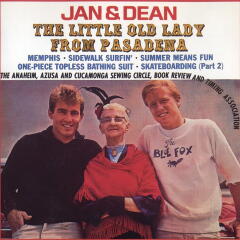
About the song
“The Little Old Lady From Pasadena” was written by Don Altfeld, Jan Berry and Roger Christian. It appears as the first song on side one of Jan & Dean’s seventh studio album, The Little Old Lady From Pasadena. The song’s lyrics were inspired by a popular Dodge ad campaign in Southern California in 1964 featuring actress Kathryn Minner. She appeared as a gray-haired senior citizen speeding down the street or dragstrip in a new, hopped-up Dodge. At the end of the ad she would say, “Put a Dodge on your garage ... HONEY!” At the time, Dodge was at the top of the heap in the Super Stock NHRA dragstrip wars. Factory-sponsored, lightweight, Hemi-powered cars with drivers like Dick Strickler and Bill Jenkins were racking up the wins. Released as a single in March 1964, the song went to #3 on the Billboard Hot 100 Singles chart. Personnel on the record were: Jan Berry, Dean Torrence (lead vocals), P.F. Sloan (falsetto harmonies), Leon Russell (piano), Tommy Tedesco, Bill Pittman, Billy Strange (guitar), Ray Pohlman, Jimmy Bond (bass), Hal Blaine, Earl Palmer (drums), Tommy Morgan (harmonica), and The Honeys (backing vocals).
The album, The Little Old Lady From Pasadena, was recorded at United Western Studios in Hollywood in March 1964. Produced by Jan Berry, it was released in September 1964 and went to #40 on the Billboard 200 Albums chart. The album cover featured “The Little Old Lady From Pasadena” model Kathryn Minner, surrounded by Jan & Dean (in a Blue Fox sweatshirt advertising the legendary Tijuana nightclub). Two charting singles were released from the LP.
Jan (Jan Berry) & Dean (Dean Torrence) were an American rock vocal duo and proponents of the Southern California surf music sound. They began singing together while attending University High School in West Los Angeles in 1958. In 1959, after a short stint in the U.S. Army Reserve by Torrence, the duo came to the attention of Herb Alpert and Lou Adler. They made their first record, “Baby Talk,” under the moniker Jan & Dean for the Dore label. It went to #10 in the Los Angeles market. As their careers began, remarkably both singers were still attending college, Barry at UCLA and Torrence at USC. After meeting Brian Wilson in 1963, their professional career started taking off. They released 15 studio albums, three live albums, eight compilation albums and 48 singles. In April 1966, Berry was driving his Corvette down Sunset Boulevard to Whittier Drive when he smashed into a parked truck at a high rate of speed. His resulting injuries left him in a coma for two days with brain injuries and partial paralysis. Torrence carried on as a solo artist and graphic designer. His Kittyhawk Graphics did album covers for artists during the 1970s. Jan & Dean would reunite and tour some in the late 1970s and early 1980s with the band Papa Do Run Run backing them up. Dean Torrance still does an occasional show with the Surf City All-Stars. Jan Berry died in Los Angeles in March 2004 at the age of 62. Dean Torrence resides with his wife and family in Huntington Beach, CA, which is nationally recognized as “Surf City USA.”