The multibillion-dollar acquisitions that have become almost routine in the upstream sector the past few years are typically accompanied by asset rationalization — in other words, a thoughtful look at which elements of the pro forma company make sense followed by the divestiture of those that don’t. In many cases, a key aim of that rationalization process is trimming any debt associated with the acquisition itself. In today’s RBN blog, we’ll discuss the big steps Chevron has been taking to rework its portfolio — and sell off up to $15 billion in assets — as it inches toward closing on its $60 billion purchase of Hess Corp.
ExxonMobil’s $64.5 billion acquisition of Pioneer Natural Resources ($59.5 billion in stock plus the assumption of $5 billion of Pioneer debt), which closed in May, may be the biggest individual upstream deal ever. But when you add ’em up, Chevron’s M&A hat trick — Noble Energy ($13 billion; closed in October 2020), PDC Energy ($7.6 billion; closed in May 2023) and, most recently, Hess Corp. ($60 billion; closing sometime next year) — gives the second-largest descendant of Standard Oil bragging rights as the #1 upstream acquirer in recent history, with deals totaling more than $73 billion, including the assumption of a combined $17.5 billion of debt.

Canadian crude output is rising, requiring new export routes. As traditional pathways face constraints, the U.S. Rockies—especially the Guernsey, WY hub—are emerging as key corridors for moving Canadian heavy crude to downstream markets, including the Gulf Coast.
The Noble deal gave Chevron 92,000 net acres and 67 Mboe/d of production in the Permian’s Delaware Basin, but the crown jewel was Noble’s international assets, especially the Leviathan project offshore Israel, the largest natural gas field in the Eastern Mediterranean, and the Alen gas project offshore Equatorial Guinea. Noble’s major U.S. asset was its holdings in the Denver-Julesburg (DJ) Basin in Colorado, where Noble was the second-largest producer. The PDC Energy deal gave Chevron additional heft in the DJ — another epicenter of M&A activity — where Chevron is now the #1 producer, with output averaging more than 165 Mboe/d so far this year.
As for the Hess acquisition — whose major prize for Chevron is a 30% ownership interest in the Stabroek crude oil project off the coast of Guyana — it’s still a work in progress. (Figure 1 below shows the core assets that Chevron and Hess bring to the deal.) When Chevron announced the agreement last October, it said it expected to close the transaction in the first half of 2024. But ExxonMobil, the operator and 50% owner of the Stabroek project, and China’s CNOOC, which owns the remaining 20%, asserted that they hold rights of first refusal (ROFRs) for Hess’s 30% stake, throwing Chevron’s acquisition of that asset into doubt. (As we noted in Break My Stride, a three-person arbitration panel will hear the matter in May 2025 and likely issue a ruling two or three months later.) Also, there were delays in securing the Federal Trade Commission’s (FTC) blessing for the Chevron/Hess deal, though that finally came in late September — albeit with a requirement that Hess CEO John Hess not be appointed to Chevron’s board of directors.

Figure 1. Chevron’s and Hess’s Core Assets Around the World. Source: RBN
About the song
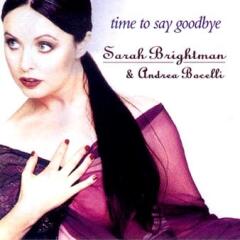
“Time to Say Goodbye” was written by Francesco Sartori, Lucio Quarantotto and Frank Peterson. It appears as the 12th song on Sarah Brightman’s fifth studio album, Timeless, which was titled Time to Say Goodbye in the U.S. and Canada. The song is a duet with Andrea Bocelli, featuring soaring vocals in English and Italian and supported by the Ravel-like bolero flourishes from the London Symphony Orchestra. The song was used as the theme song for the final match of famed German heavyweight boxer Henry Maske. Released as a single in Europe in November 1996, it topped the charts in many European countries, with sales of over 3 million records. Personnel on the record were Sarah Brightman (vocals), Andrea Bocelli (vocals), and the London Symphony Orchestra (orchestrations).
The album, Time to Say Goodbye (and Timeless outside the U.S. and Canada), was recorded between November 1996 and March 1997. Described as classical crossover music, the album was produced by Frank Peterson. The album was released in the U.S. in September 1997 and went to #1 on the Billboard Top Classical Albums chart and #71 on the Billboard 200 Album chart. It has been certified Platinum by the Recording Industry Association of America.
Sarah Brightman is an English classical crossover soprano singer and actress. In 1981 she made her musical theatre debut in Cats in London. Under the tutelage of producer Frank Peterson, she has focused her music career on being a classical crossover artist. She has released 12 studio albums, three live albums, six compilation albums, six cast recordings and 40 singles, Brightman continues to record, act, and perform live. She is currently starring in Andrew Lloyd Webber’s Sunset Boulevard in Sydney, Australia, and will be performing a series of Winter Wonderland concerts in the U.S. during the 2024 holiday season.