Progress in the carbon-capture industry can be slow, given the extended permitting process for sequestration wells, uncertain long-term outlook and skepticism about the real-world effectiveness in reducing carbon dioxide (CO2) emissions. The past several weeks have been a better-than-usual period for advocates of carbon capture and sequestration (CCS), with significant milestones reached for a trio of important projects under development, but not all the news was positive. In today’s RBN blog, we’ll look at what’s happening with a handful of key CCS projects.

The Natural Gas Master Class is a one-day online event focusing on understanding flow analysis, interpreting pipeline data and forecasting future flows. This course is designed to equip you with the knowledge and skills to effectively analyze the complexities of natural gas markets, flow analysis, and pipeline modeling. Join us online
October 21 | Online
Let’s start with a quick refresher on carbon capture. When CO2 is captured and then permanently stored, that’s CCS, which requires a Class VI injection well (see Figure 1 below) for long-term storage in deep geologic formations. If the CO2 is used for some other process before it’s stored, it is called carbon capture, use and sequestration (CCUS) — the most common example being enhanced oil recovery (EOR), which requires a Class II injection well. Permitting for Class VI wells is typically handled by the Environmental Protection Agency (EPA), although three states (Louisiana, North Dakota and Wyoming) have control over that process, something referred to as primacy. (For more, see Take Control.)
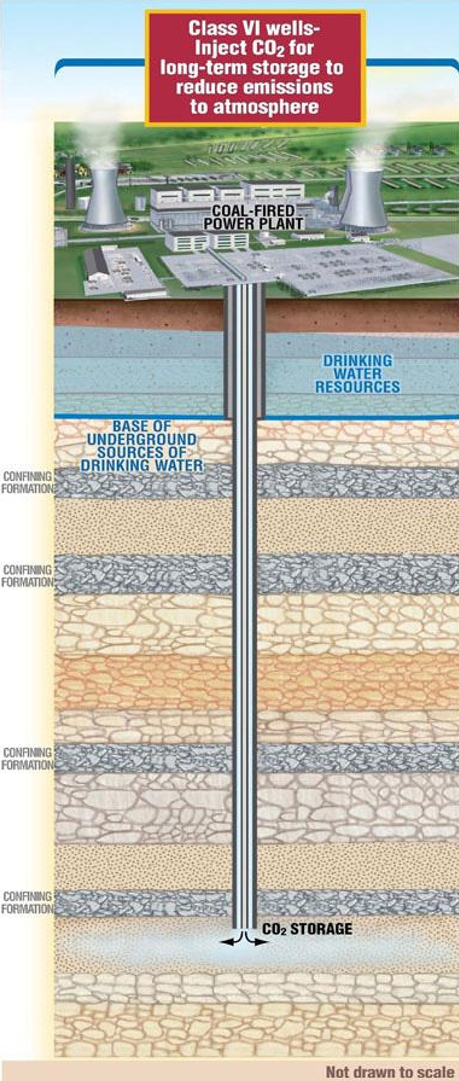
Figure 1. Class VI Injection Well. Source: EPA
In our first blog on the bottleneck around carbon-capture projects, The Waiting, we noted that relatively few applications for Class VI wells have been approved by the EPA, even though the regulations around them were established back in 2010. There are plenty of CCS projects in the works, however, driven by improvements made to the 45Q tax credit for permanent CO2 sequestration as part of the Inflation Reduction Act (IRA). A fresh look at the EPA’s online dashboard for Class VI well permitting shows that activity has picked up since June. There are 150 total wells under review, up from 139 in June, with 38% of those applications filed within the last 12 months, up from 35% in June. (Those figures do not include projects seeking approval in the three states with Class VI well primacy.) Of the 150 wells under review as of September 27 (orange bars in Figure 2 below), the latest data available, there are four wells in the first phase of the approval process (completeness review), 139 in the second phase (technical review), zero in the third phase (draft permit), three in the fourth phase (public comment; more on those below) and four in the final phase (permit decision). Let’s look next at two projects that have reached significant milestones.
About the song
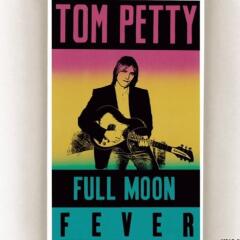
“Love is a Long Road” was written by Tom Petty and Mike Campbell and appears as the third song on side one of Tom Petty’s debut solo studio album, Full Moon Fever. Even though the song was not released as a stand-alone single, it received enough airplay as the B-side to the hit single “Free Fallin’” that it went to #7 on the Billboard Album Rock Tracks Singles chart. The song was used in the first ads for the video game Grand Theft Auto VI in 2023. Personnel on the record were: Tom Petty (lead, backing vocals, guitar, keyboards, percussion), Mike Campbell (lead guitar, slide guitar, bass, keyboards), Jeff Lynne (bass, guitar, keyboards, backing vocals), Jim Keltner (drums, percussion), and Howie Epstein (backing vocals).
Full Moon Fever was recorded in 1987-88 at M.C. Studios, Rumbo, Sunset Sound, Devonshire, Conway, and Sound City in Los Angeles and produced by Jeff Lynne, Tom Petty and Mike Campbell. It was released in April 1989 and went to #3 on the Billboard 200 Albums chart. It has been certified 5x Platinum by the Recording Industry Association of America. Five singles were released from the LP.
Tom Petty was an American singer, songwriter and guitarist. He was the leader and frontman for Tom Petty and the Heartbreakers, and Mudcrutch, and was a member of the supergroup the Traveling Wilburys. He released 16 studio albums and 68 singles. He has sold over 80 million records worldwide. He has won three Grammy Awards, three MTV Video Music Awards, and has received a Gershwin Award, and has a star on the Hollywood Walk of Fame. In December 2001, Tom Petty and the Heartbreakers were inducted into the Rock and Roll Hall of Fame. Tom Petty died in Los Angeles in October 2017 at the age of 66.