The U.S. and Canada make quite a team. Friends for most of the past century and a half — and best buddies since World War II — the two countries have highly integrated economies, especially on the energy front. Large volumes of crude oil, natural gas, NGLs, and refined products flow across the U.S.-Canadian border, and a long list of producers, midstreamers, and refiners are active in both nations. One more thing: since the mid-2000s, the development of U.S. shale and the Canadian oil sands in particular has enabled refiners in both countries to significantly reduce their dependence on overseas oil — a big victory for North American energy independence. However, due to its smaller population and economy, Canada typically gets far less attention than its southern neighbor, so in today’s blog we try to right that wrong by discussing highlights from a new, freshly updated Drill Down Report on Canada’s refining sector.
Refiners in both the U.S. and Canada have been adjusting to big changes over the past few years. First came rising domestic crude oil production and, with it, a declining need for imported oil. There also have been rounds of ever-tightening environmental regulations, which required billions of dollars of investment. And, most recently, refineries on both sides of the U.S.-Canada border experienced a period of severe refined-product demand destruction caused by the COVID-19 pandemic. There has been another related change too: U.S. refiners, particularly those in the Midwest, have become increasingly dependent on Western Canadian crude, and Canadian refiners, especially those in Quebec and the Canadian Maritimes, have turned to U.S. producers for a much larger share of their oil imports.
Canada’s refining sector started out small, of course. Seventy-five years ago, its combined oil throughput capacity totaled only 264 Mb/d (blue bars and left axis in Figure 1) and its refineries were small –– there were 32 of them (red diamonds and right axis), with an average capacity of less than 9 Mb/d. Since then, the number of refineries has declined by almost half to 17, but with a much larger combined throughput capacity of 2 MMb/d — and an average capacity of about 116 Mb/d. Canada’s refining capacity has actually held fairly steady near the 2-MMb/d mark since 1983. (Over that same period, refining capacity in the U.S. increased by 20%, to about 19 MMb/d today.)
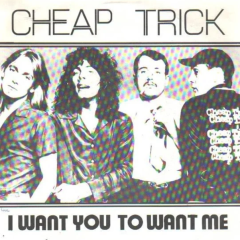
About the song
"I Want You to Want Me" was written by Rick Nielsen and appeared originally as the fourth song on side one of Cheap Trick's second album, In Color. Released as the first single from the album in September 1977, it failed to chart in the U.S. However, when the song was released as a single in Japan, it went to #1 there, and paved the way for CBS to release the live album Cheap Trick at Budokan in 1979 in the states. When the live version of the song from that album was released as a single in April 1979, it went to #7 on the Billboard Hot 100 Singles chart and has been certified Gold by the Recording Industry Association of America (RIAA). Personnel on the record were: Robin Zander (lead vocals, rhythm guitar), Rick Nielsen (lead guitar, backing vocals), Tom Petersson (bass, backing vocals), and Bun E. Carlos (drums).
Cheap Trick at Budokan was recorded live in Japan in April 1978; the album was produced by Cheap Trick. Released in the U.S. in February 1979, the LP went to #4 on the Billboard Top 200 Albums chart. It has been certified 3X Platinum by the RIAA. Two singles were released from the album.
Cheap Trick are an American rock band formed in Rockford, IL, in 1973. Eight members have passed through the band since its inception, with Robin Zander and Rick Nielsen being in the fold from the start. The band has released 19 studio albums, six live albums, 17 compilation albums, four EPs, and 64 singles. Cheap Trick has sold more than 20 million records worldwide and was inducted into the Rock and Roll Hall of Fame in 2016. The band continues to record and tour, with a North American tour scheduled to begin in late April.