


After 19 years of natural gas production from the waters off the Canadian Maritime provinces, ExxonMobil, operator of the Sable Offshore Energy Project, shut down production there effective January 1, 2019. Though the closure had been announced well in advance, the end of SOEP output has left the two natural gas-consuming provinces in the region, New Brunswick and Nova Scotia, without any indigenous gas supplies. It’s also made them fully reliant on either pipeline gas from the U.S. Northeast and Western Canada or imported volumes of LNG into the Canaport Energy terminal in New Brunswick. Will the shutdown put even more stress on the already overtaxed gas pipeline system in New England? And will it spur increased flows of Western Canadian gas into northern New England and the Maritimes? Today, in Part 1 of this blog series, we begin an examination of the potential impacts of SOEP’s demise on New England and Eastern Canadian gas markets.
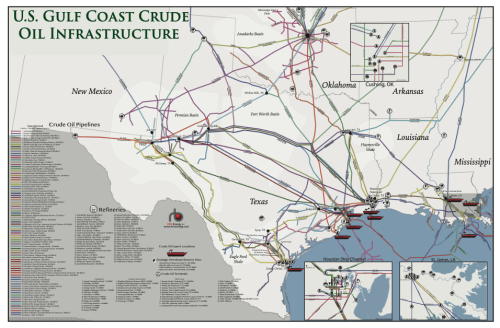
RBN’s US Gulf Coast Crude Oil Infrastructure Map - is up-to-date and provides a clear and comprehensive view into North America’s most dynamic and important crude oil market landscape.
Background
Since 1999, natural gas has been produced just offshore Canada’s Nova Scotia province, tapping into gas deposits around Sable Island (see Figure 1). SOEP was developed with the original purpose of not only creating new homegrown gas demand in Nova Scotia and New Brunswick, but exporting natural gas to feed a rapid buildout of gas-fired power generation in the U.S. Northeast and New England markets via the Maritimes and Northeast Pipeline (MNP; green line in Figure 1). MNP, which came online in December 1999, is owned by Enbridge (~77.5%), Emera (~12.9%) and ExxonMobil (~9.6%).
About the song
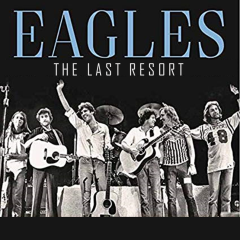
Written by Glenn Frey and Don Henley, “The Last Resort” is the ninth and final track on The Eagles’ 1976 studio album, Hotel California, which was released in December of that year. Recorded at the Criteria Studios in Miami, and produced by Bill Szymczyk, the song had to be re-recorded several times due to noise interference from an adjacent studio where British heavy metal band Black Sabbath were recording an album. Hotel California went on to become one of the best-selling LPs of all time. Henley recalled the song as being of one his favorites from the album.
The Eagles are an American rock band formed in Los Angeles in 1971 by founding members Glenn Frey, Don Henley, Bernie Leadon, and Randy Meisner. Combining a range of styles from rock, folk rock, and country music, the Eagles have gone through several personnel changes over the years and two break-ups. After the death of founding member Glenn Frey in 2016, the band reformed in 2017 and continues to tour to this day.





Comments
Great post... really highlights some of the challenges we're facing in the Canadian Maritimes these days. One comment/question for you. You say that "gas sent north through Maine on MNP can either be fed onto that pipeline from Kinder Morgan’s Tennessee Gas Pipeline (TGP) or Enbridge’s Algonquin Gas Transmission (AGT)." My understanding is that due to the pressure differentials between the pipes, currently gas can't flow north into M&NP US from either TGP or AGT. AGT would require the completion of the Atlantic Bridge project including the very controversial compressor station in Weymouth, and there are no plans on TGP that would facilitate the northward flow of gas into M&NP US. This makes M&NP (Canada and US) entirely reliant on supply from PNGTS and Canaport. If I have this wrong, please let me know... otherwise this just reinforces your message about the challenging situation in the region.
Looking forward to the rest of the series!
In reply to AGT/TGP flows into M&NP US? by Brendan Chard
After some additional digging, the comment from this reader is correct. The gas flowing into Canada on MNP is coming via PNGTS and/or Canaport, and only northward of the Westbrook compressor station (i.e. right where PNGTS connects to MNP).