Northeast natural gas production in 2021 to date has averaged 34 Bcf/d, up 1.4 Bcf/d year-on-year, and the higher gas price environment currently is signaling more upside to production in the years to come. At the same time, downstream feedgas demand from LNG export facilities is at a record high and also headed higher as more liquefaction capacity is set to come online in the coming months. So, despite lower-than-normal inventory levels in the Northeast, outflows from the Appalachian basin have soared to new highs this year, and utilization of outbound pipeline capacity is up to an average 90%, a level we haven’t seen since the 2016-17 timeframe. Unlike 2016-17, when there was a slew of major pipeline projects to expand egress, now there are just two or three at most — and two of those are greenfield projects that face an uncertain future. As such, spare exit capacity is getting increasingly sparse, and Appalachian producers are bound to hit the capacity “wall” in the next two years. When will the Northeast run out of exit capacity and how bad could constraints get? Today, we provide highlights from our new Drill Down report, which brings together our latest analysis on Northeast gas takeaway capacity and flows.

In recent months, we have spent many a blog discussing the changing dynamics in the Northeast gas market, including production and pipeline flow trends (see the Flick of the Switch and Headed for Heartbreak blogs) and providing updates on key expansion projects vying to add egress out of the Appalachia basin (see the Slippin’ and Slidin’ blog on the Mountain Valley Pipeline project and Movin’ On Up blog discussing the latest on the PennEast Pipeline). Given that the Northeast gas market is approaching another major inflection point, last month, we also launched a weekly report — the RBN NATGAS Appalachia — to track developments in real time and provide weekly updates on our fundamental and basis outlooks for the region. And today, we’re launching our “Back to Zero” Drill Down report for Backstage Pass subscribers, which pulls together and updates our analysis on production, takeaway capacity and outflows from Appalachia, and how these components will evolve and impact regional prices in the coming years as production and downstream demand grow but supply takeaway capacity remains relatively stagnant.
Appalachian natural gas producers are no strangers to pipeline constraints, having dealt with them for the better part of a decade or more. The U.S. Northeast has been a year-round net gas supply region (i.e., a net exporter of gas to other U.S. regions and Canada) for only about six years, and it has been sending gas to other regions for longer than that on a seasonal basis. As such, the Northeast market’s ability to balance is highly dependent on its ability to flow any surplus gas — after in-region demand and storage needs are met — to downstream markets in other regions. The region’s production growth has faced a number of hurdles in recent years, including shrinking capital budgets, lower rig counts, a prolonged period of low prices and, last year, also pandemic-related demand destruction and the resulting price-driven shut-ins at the wellhead during the shoulder months. Nevertheless, Northeast supply has still managed to climb to new highs.
About the song
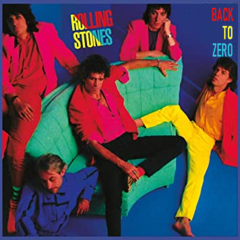
"Back to Zero" was written by Mick Jagger, Keith Richards, and Chuck Leavell. The song appears as the second cut on side two of The Rolling Stones' 20th American studio album, Dirty Work. Jagger wrote the lyrics to the song, which is about his fear of a nuclear war. Personnel on the record were: Mick Jagger (lead, backing vocals, harmonica), Keith Richards (guitars, backing vocals, piano), Ronnie Wood (guitars, backing vocals), Bill Wyman (bass), Charlie Watts (drums), and Bobby Womack (guitars, backing vocals).
Dirty Work was recorded between April and August 1985 at Pathé Marconi in Paris, along with RPM and Right Track in New York City. Produced by Steve Lilywhite and The Glimmer Twins (Jagger and Richards), the album was released in March 1986. It went to #4 on the Billboard Top 200 Albums chart, and it has been certified Platinum by the Recording Industry Association of America. The LP was recorded at a time when all the members of the group were not getting along, and it was rare to see all five band members in the same room at the same time. Two singles were released from the album. It would be more than three years before The Stones released their next studio album, Steel Wheels.
The Rolling Stones are a British rock band formed in London in 1962 with Mick Jagger, Keith Richards, Brian Jones, Bill Wyman, and Charlie Watts. Eight members have passed through the band since its formation. Brian Jones left the band and died in 1969. He was replaced by Mick Taylor, who left the band in 1974 to be replaced by Ronnie Wood. Bassist Bill Wyman retired from the band in 1993, and The Stones have used bassist Darryl Jones on tour and in many of their recordings since. They have released 30 studio albums, 33 live albums, 29 compilation albums, three EPs, and 121 singles. They have won one Billboard Music Award, four Grammy Awards, three MTV Video Music Awards, and one World Music Award. They are members of the Grammy Hall of Fame and the Rock and Roll Hall of Fame. The Rolling Stones continue to record and tour, and they will be resuming their No Filter tour in St. Louis in September. Drummer Steve Jordan will be filling in for Charlie Watts, while Watts recovers from an undisclosed surgical procedure. The tour has 13 dates and will conclude in Austin in November.