It’s been a while since the Appalachian natural gas market has looked this bullish. Outright cash prices at the Eastern Gas South hub are at multi-year highs. Regional storage inventories are sitting low, setting the stage for supply shortages and still higher prices this winter. But the potential for severe takeaway constraints and basis meltdowns are lurking, and by next year, they could become regular features of the market again like they were in the 2016-17 timeframe, or worse — at least in the spring and fall when Northeast demand is lowest. Regional gas production is still being affected by maintenance and has been somewhat volatile lately as a result, but it averaged 34.5 Bcf/d in June, just 300 MMcf/d shy of the December 2020 record. What’s more, at current forward curve prices, supply output could surpass previous highs by next spring and grow by ~ 5 Bcf/d (15%) by 2023. Outbound flows set their own record highs this spring, running at over 90% of takeaway capacity, and will head higher, which means that spare exit capacity for supply needing to leave the region is shrinking. The handful of planned takeaway expansions that remain are facing environmental pushback and permitting delays, and the few that are targeting completion in the next year may not be enough. Today, we provide the highlights of the latest forecast from our new NATGAS Appalachia report.
The U.S. Northeast has only been a year-round net gas supply region to the U.S. for about six years now, though it has been sending gas to other regions for longer than that on a seasonal basis. But for much of that time, Appalachian gas production was constrained and growth was wholly dependent on the next takeaway capacity expansion. As such, regional gas producers were vulnerable to severe price discounts whenever production growth outpaced capacity additions, and it wasn’t unusual to see outright prices devolve to a fall nadir below $1/MMBtu (dashed-red ovals in Figure 1). That changed in 2018, however. After a slew of expansion projects came online in the 2016-18 timeframe, producers had some running room for the first time in a long while. Capacity was finally outpacing supply leaving the region — as we discussed in our Dog Days Are Over blog series and Drill Down report — and basis (the local price vs. national benchmark Henry Hub) at Eastern Gas South (EGS; formerly Dominion South), Appalachia’s gas benchmark hub, strengthened.
Regional gas producers didn’t catch much of a break, however. Gas-weighted producers, including in Appalachia, began tightening their belts and pulling back rigs in 2019 in response to overall bearish fundamentals for gas, an extended period of lower gas prices, and shrinking appetite for capital investment. Then came the COVID-19 pandemic and the resulting demand destruction, including LNG export demand. For Appalachian gas producers, that meant still more belt-tightening, laying down more rigs (and shifting the remaining rigs to more efficient, liquids-rich areas), and, as we discussed in Flick of the Switch, low price-driven shut-ins of existing production in the shoulder months to ride out the low pandemic prices. In spite of all that, according to pricing data from our friends at NGI, outright prices at EGS averaged just $1.40/MMBtu last year — the lowest annual average we’ve seen in the Shale Era for the hub — and they bottomed out at a single-day record low of $0.28/MMBtu on November 9, 2020 (dashed orange oval), back into the “danger zone.”
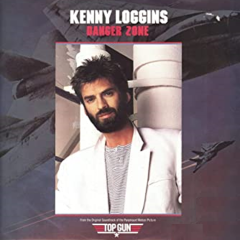
About the song
“Danger Zone” was written by Giorgio Moroder with lyrics by Tom Whitlock. It was the first track on the bestselling soundtrack album for the motion picture Top Gun. Sung by Kenny Loggins and produced by Giorgio Moroder, the song was released as a single in May 1986 and went to #2 on the Billboard Hot 100 Singles chart. Personnel on the record were: Kenny Loggins (vocals, rhythm guitar), Dann Huff (lead guitar), Tom Scott (sax), Giorgio Moroder (synthesizers, sequencer, drum machine) and Tom Whitlock (synthesizer).
The album Top Gun was recorded during 1986 at various studios, with different artists and producers. The album’s production was overseen by Don Simpson and Jerry Bruckheimer. Kenny Loggins, Cheap Trick, Berlin, Teena Marie, Miami Sound Machine, Loverboy, Larry Greene, Marietta, Harold Faltermeyer and Steve Stevens were the featured artists on the LP. Released in May 1986, the album went to #1 on the Billboard Top 200 Albums chart and has been certified 9x Platinum by the Recording Industry Association of America. It was the best-selling soundtrack album of 1986. Six singles were released from the LP.
Kenny Loggins is an American singer, songwriter and guitarist. His early songs were recorded by the Nitty Gritty Dirt band, which led to the founding of the rock duo Loggins and Messina in the ’70s. The duo released seven studio albums, three live albums, four compilation albums, and 10 charted singles. They have sold more than 6 million records worldwide. As a solo artist, Loggins has released 14 studio albums, two live albums, two compilation albums and 31 singles. He is also a member, along with Gary Burr and Georgia Middleman, of the country trio Blue Sky Riders. The trio has released two studio albums. Loggins continues to record and play an occasional live performance. He will be appearing July 25-27 at the Newport Folk Festival in Newport, RI.