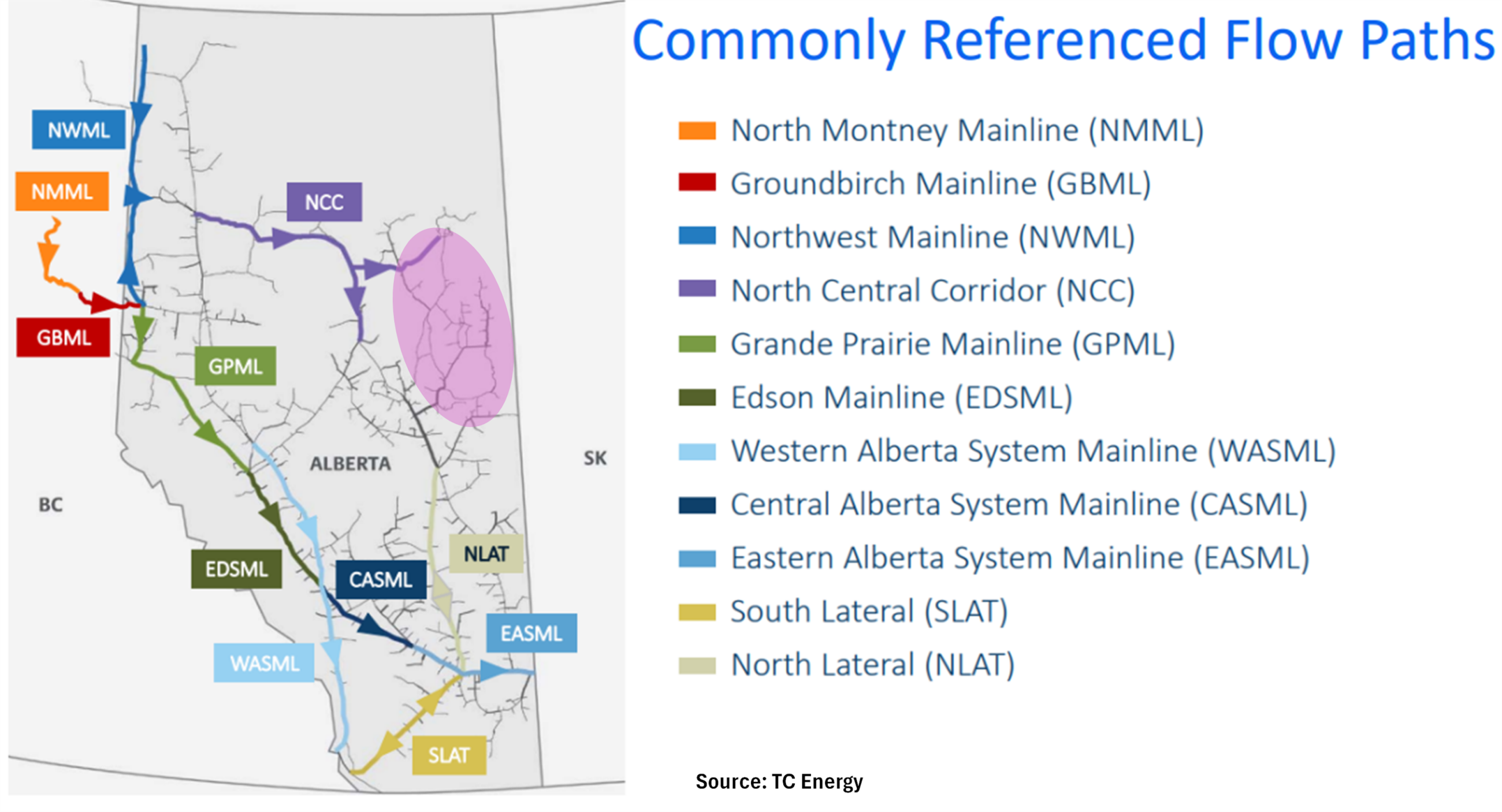
TC Energy announced on November 16 that it was initiating a proposal to expand part of its gas pipeline system that spans Alberta and northeast British Columbia (BC), referred to as Nova Gas Transmission Limited, or NGTL, that will involve a new 48-inch ~370 kilometer (~230 mile) pipeline with an initial capacity of 1 Bcf/d that will directly connect gas supplies in northwest Alberta and northeast BC to the oil sands region in northeast Alberta (purple shaded region in map below). Dubbed the Alberta Growth Connector (AGC), the company has not yet publicly released a detailed map that outlines the path for the new pipeline but could involve a line that roughly parallels its existing North Central Corridor (NCC, purple line and arrows) or another separate corridor from the primary gas supply regions of Alberta and BC to the oil sands region. At this stage, the company is soliciting interest for AGC’s capacity and securing additional commercial agreements with shippers and stakeholders, developing regulatory submissions and working through an internal sanctioning process. AGC is planned to be part of a broader suite of upgrades to the NGTL system over the next five years that could potentially be in service by 2031-32 to meet additional export needs and Alberta demand growth.
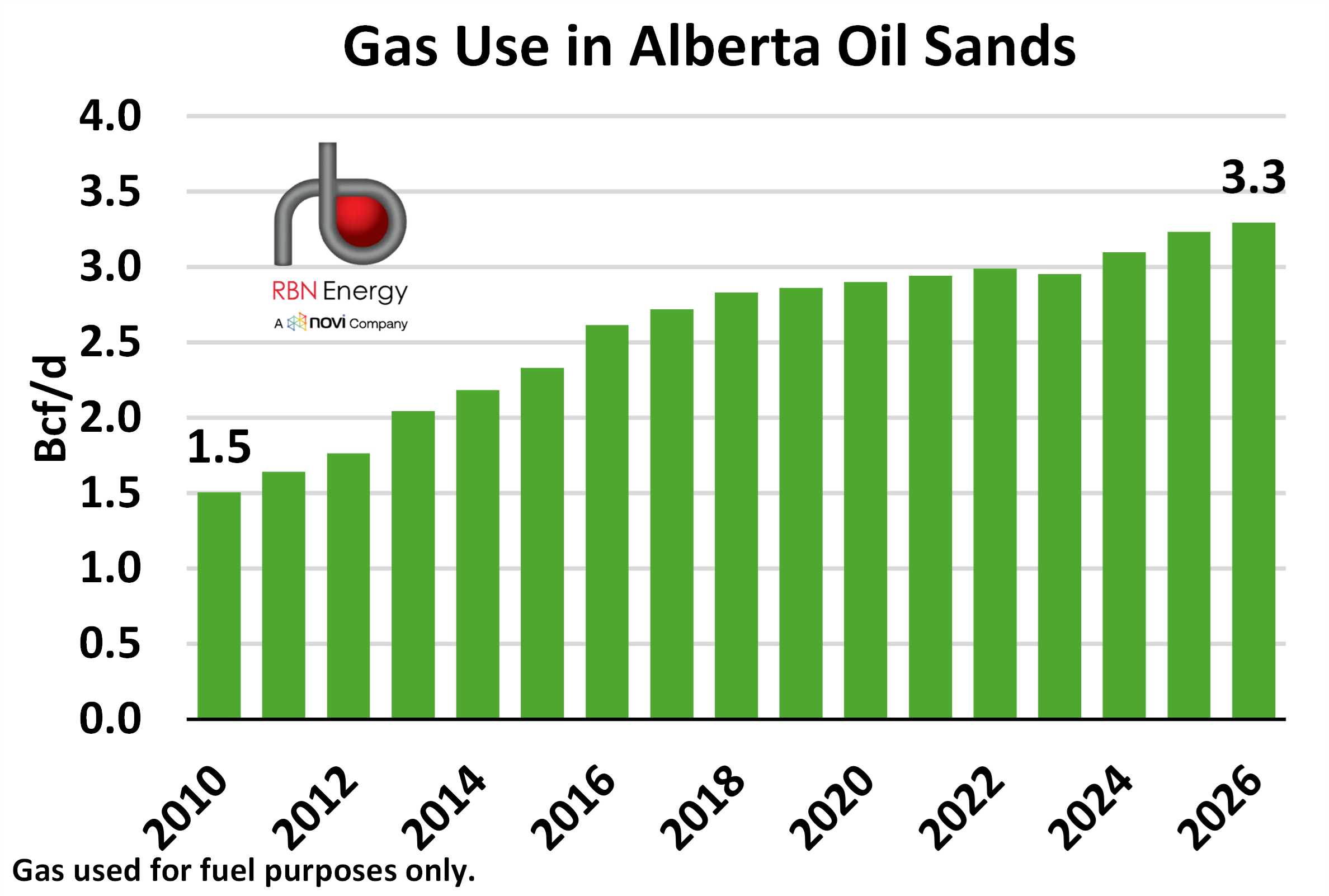
Gas used in the oil sands is partly related to the process of steam assisted gravity drainage (SAGD), a method by which gas is combusted to heat water into steam, with the steam injected into bitumen bearing reservoirs. The heated bitumen, a form of very heavy viscous crude oil, is then more easily pumped to the surface so that it can be mixed with diluent for shipping on pipelines or sent to specialized upgraders in Alberta where it is converted into a lighter form of crude oil. The other major use for gas in the oil sands is for onsite power generation at various oil sands sites. Gas used as fuel for SAGD and power generation has more than doubled from 1.5 Bcf/d in 2010 to 3.3 Bcf/d on average in 2026 (green columns in chart below). With a capacity of 1 Bcf/d, the AGC could accommodate an increase in oil sands gas use to north of 4 Bcf/d and would be tied to current government and industry initiatives that are working toward an increase in oil sands output in the range of 1 MMb/d by the early to mid-2030s.