


A framework agreement signed in November between Canada’s federal government and the province of Alberta, the source of most of the nation’s crude oil production, aims to kickstart a process to construct a new oil pipeline from Alberta to the country’s west coast. The goal would be to expand direct crude oil exports to Asia and further reduce Canada’s reliance on the U.S. as an export customer. In today’s RBN blog, we examine the agreement, what pitfalls might be in store, and what can be learned from prior pipeline proposals.

Western Canada’s crude oil production has been in near-steady ascension since 2010, when major oil sands projects that produce bitumen in the energy powerhouse of Alberta began to really ramp up. The result has been a literal doubling of oil production in Alberta from just under 2 MMb/d in 2010 to just north of 4 MMb/d to date in 2025 (rightmost stacked bar in Figure 1 below), with more increases expected in 2026 and beyond. With Alberta’s 2025 share of Western Canadian crude oil production averaging 88% (and 82% of all Canadian crude output, don’t forget about East Coast oil!), the real growth focus has been on Alberta and ways to expand the customer footprint for all those barrels.
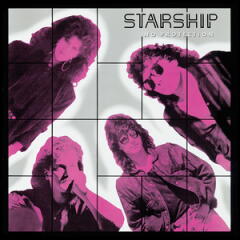
About the song
“Nothing’s Gonna Stop Us Now” was written by Diane Warren and Albert Hammond. It appears as the second song on Starship’s second studio album, No Protection. The song is a power ballad featuring a duet with Starship vocalist Grace Slick and Mickey Thomas. It was the theme song to the 1987 romantic comedy Mannequin. Released as a single in January 1987, the song went to #1 on the Billboard Hot 100 Singles chart and has been certified Gold by the Recording Industry Association of America (RIAA). Personnel on the record were: Grace Slick and Mickey Thomas (vocals), Craig Chaquico (guitar), Pete Sears (bass), Donny Baldwin and Narada Michael Walden (drums), Robert Smith (drum sampling, percussion), Walter Afanasieff (keyboards, synth bass), Corrado Rustici (MIDI guitar), and Karen Brewington, Jim Gilstrap and Donny Baldwin (backing vocals).
No Protection was recorded in 1986-87 at Washington Monument in San Rafael, CA; Lighthouse, Goodnight L.A., and Soundcastle Recording in Los Angeles; Fantasy in Berkeley, CA; and Manzanita in Arrington, TN. Produced by Keith Olsen, Narada Michael Walden and Peter Wolf, the album was released in July 1987. It went to #12 on the Billboard 200 Albums chart and has been certified Gold by the RIAA. This would be the band’s last LP for Grunt Records, the RCA custom label that dates back to Jefferson Airplane and was founded in 1971. Grace Slick left Starship after this album. Four singles were released from the LP.
Starship is an American rock band from San Francisco formed as a continuation of Jefferson Starship in 1985. Jefferson Starship is a band that evolved from Jefferson Airplane, a band that was formed in San Francisco in 1965. Grace Slick was the only member of Starship with roots that go back to the beginning of Jefferson Airplane. After leaving Starship, Slick rejoined Jefferson Airplane for a reunion album and tour in 1989. Slick retired from the music business in 1990 at the age of 49 stating, “All rock and rollers over the age of 50 look stupid and should retire.” Slick is now a painter and visual artist living in the Bay Area of California. Starship has released four studio albums, six compilation albums and 16 singles. Twenty-eight members have passed through the group since its formation. The group still tours under the moniker of “Starship featuring Mickey Thomas.” Thomas is the only member of the group with roots dating back to Jefferson Starship. Music fans may also remember Thomas as the vocalist on Elvin Bishop’s 1976 hit single, “Fooled Around and Fell in Love.”
"About the Song" -- written by Mickey McMahan , RBN Director of Musicology





Comments
I think ENB is also working with ET to bring Canadian crude into North Dakota connecting up with the DAPL pipeline to ship Canadian crude into the Midwest.
No major project has been proposed by industry since 2012. The major growth you detail was all projects too far along to cancel once the industry understood the implications of the fracking revolution in the US. Low cost debottlenecks and efficiencies have created the recent growth but a million barrel a day pipeline would require a belief in oilsands economics that is truly fantastical. It ain’t going to happen.