BP, which saw its earnings more than double to $3.2 billion in Q1 2026 due in large part to a spike in crude oil prices as a result of the war in Iran, said in its quarterly earnings call April 28 that the full effect of those higher prices on earnings and refinery margins won’t be felt until the second quarter.
BP’s upstream production held steady at 2.3 MMboe/d in the first quarter, as decreased output in the Middle East was offset by increased offshore U.S. volumes. BP said it had been exporting about 100 Mb/d through the Strait of Hormuz, including barrels from Iraq and Abu Dhabi. In addition, about 5%-10% of its LNG portfolio had been sourced from the Middle East. BP said it was working with customers to manage the impacts of the supply disruptions.
Refining availability remained above BP’s target rate of 96% for the fifth consecutive quarter and its refining throughput of 1.5 MMb/d was its highest quarterly figure in four years. BP said its refining segment has no direct exposure to operations in the Middle East.
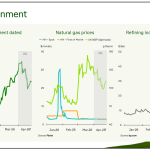
BP said it was seeing refining margin dislocations — a breakdown in the relationship between crude oil and refined product prices — driven by three main factors: crude differentials, product yields and freight costs. Assuming current conditions persist, BP said it expects the difference between its refining indicator margin (see right side of chart below) and its realized margin to be greater than $5/bbl, depending on how the situation unfolds. BP’s refinery indicator margin moved sharply higher at the end of Q1.