BP has undergone a series of significant strategic transformations since the Deepwater Horizon oil spill in 2010 tarnished its reputation and nearly crippled its balance sheet. Over the past 16 years, the company has undergone multiple restructurings of its upstream portfolio, interrupted by a shift to — and then away from — one of the sector’s most ambitious energy transition strategies. In today’s RBN blog, we chronicle the upstream evolution of one of the oil and gas industry’s most significant integrated companies.

Join industry leaders in Calgary on October 29 for market insights, technical presentations, Duvernay inventory analysis, an expert panel, and networking focused on the next chapter of Canadian energy.
The Deepwater Horizon oil spill, the most consequential disaster in the history of the oil and gas industry, imposed enormous financial, legal, operational and reputational consequences that lasted more than a decade. The April 2010 blowout killed 11 workers and triggered the largest offshore oil spill in U.S. history, releasing an estimated 134 million gallons of crude into the U.S. Gulf. BP’s financial position and strategic direction were severely challenged as it ultimately faced a combined cost of $61.6 billion in cleanup, settlements, fines and compensation — one of the most expensive corporate disasters ever. The company paid a $20.8 billion civil settlement, a $4 billion criminal penalty, and billions more through private claims programs and restoration funding. Equally important, the company faced a loss of confidence by investors, regulators and other industry participants.
Survival required significant strategic restructuring that continued over the next decade and a half. We should begin by noting that BP announced in July 2010 — three months after the Deepwater Horizon spill — that CEO Tony Hayward would be replaced by Bob Dudley, a Mississippi native who had already been put in charge of handling the spill as president of the newly created Gulf Coast Restoration Organization. Dudley, the first American to lead BP, focused on stabilization: restoring trust, managing the legal fallout, and rebuilding the company’s reputation. BP concentrated capital in a smaller number of high‑quality developments capable of generating durable returns. By the end of the decade, BP had strengthened positions in the offshore Gulf, Azerbaijan, Oman, Egypt, Trinidad & Tobago, and the Lower 48 — assets that now anchor its upstream portfolio.
BP’s evolution can be summarized in three phases, as shown in Figure 1 below.
About the song
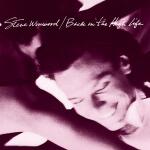
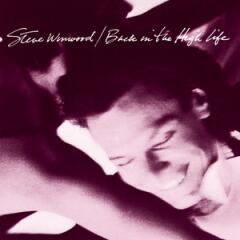
“Back in the High Life Again” was written by Steve Winwood and Will Jennings. It appears as the fourth song on Steve Winwood’s fourth studio album of the same name. The song is about overcoming hardships and finding renewed hope for the future. It was released as the fifth single from the album in November 1986 and went to #1 on the Billboard Adult Contemporary and #13 on the Billboard Hot 100 Singles charts. Personnel on the record were: Steve Winwood (lead vocals, keyboards, mandolin, Moog bass, drum programming), Jimmy Bralower (drum programming), Rob Mounsey (synthesizer), John Robinson (drums) and James Taylor (backing vocals).
The album, Back in the High Life Again, was recorded between August 1985 and May 1986 at Unique Recording, Power Station, Right Track, and Giant Sound in New York City, and Netherturkdom in Turkdean, England. It was produced by Russ Titelman and Steve Winwood. Released in June 1986, it went to #3 on the Billboard 200 Albums chart and has been certified 4X Platinum by the Recording Industry Association of America. Six singles were released from the LP.
Steve Winwood is an English rock vocalist, multi-instrumentalist and songwriter. He started his professional career as the vocalist and organist for The Spencer Davis Group, which had its first hit, “Gimme Some Lovin’,” when Winwood was 16 years old. He was a founding member and vocalist in Traffic and Blind Faith before pursuing a solo career in 1977. He has a long history of session work with successful artists, including The Rolling Stones, appearing on their recent album, Foreign Tongues. He has released nine studio albums, two live albums, two soundtrack albums, nine compilation albums, and 29 singles. He has sold over 50 million records worldwide. He was inducted into the Rock and Roll Hall of Fame as a member of Traffic in 2004. He won a BMI Icon Award in 2005. He has received two Grammy Awards and an Ivor Novello Award for Outstanding Song Collection. He received an MBE in 2025. Winwood continues to record and tour and will be appearing at various U.S. venues beginning in September.
"About the Song" -- written by Mickey McMahan , RBN Director of Musicology