


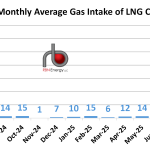
Natural gas intake at the LNG Canada liquefaction site in Kitimat, BC pushed higher in July, averaging 468 MMcf/d (green column in chart below) based on publicly available data released by the British Columbia Energy Regulator (BCER), and just slightly above our previous estimate of 448 MMcf/d. With the site’s Train 1 having a nameplate gas intake capacity estimated at 1 Bcf/d, this would place the July utilization rate close to 50%. Moreover, based on daily gas pipeline flow balances posted in RBN’s Canadian NatGas Billboard and the recent frequency of tanker loadings, we estimate that August average gas intake (red column) has been around 550 MMcf/d, or just slightly better than 50% utilization.
Featured Articles
- Analyst Insight
LNG Canada August Gas Intake Hits 60% Utilization for Train 1
LNG Canada gas intake hit just north of 600 MMcf/d in August or 60% utilization rate for Train 1.
- Analyst Insight
LNG Canada Gas Intake Finally Ramping Higher
LNG Canada's gas intake is averaging about 450 MMcf/d in July as Train 1 slowly ramps toward full capacity in the next month or two.


- Blog
Thinking Out Loud - What Might Be the Timing and Scope of the Ramp Up of Gas into LNG Canada?
LNG Canada, under construction for nearly six years on Canada’s West Coast, is rapidly approaching the time when first gas will be entering the plant for testing and calibration of equipment, marking an important transformation for the Western Canadian natural gas market. This will kick off what will likely be about a yearlong testing process before officially entering commercial service in mid-2025. In today’s RBN blog, we consider daily gas flow data from the startup of similar-sized LNG plants on the U.S. Gulf Coast and develop a conjectural timeline for LNG Canada to help assess how much gas will flow to the site — and how soon — and when LNG exports might begin.
