Hurricane Milton’s Florida landfall left millions without power, disrupted fuel availability and ripped through part of the fabric roof on the Tampa Bay Rays’ baseball stadium as it plowed through the state late Wednesday (10/9).
Milton came ashore as a Category 3 storm with 120 miles per hour (mph) winds about 70 miles south of Tampa on Florida’s west coast. The storm had weakened from Category 5 strength with winds topping 157 mph.
The storm’s path eastward across the Gulf of Mexico toward Florida’s peninsula had some impact on offshore oil and gas output, as Chevron evacuated and shut in production at its Blind Faith platform about 160 miles southeast of New Orleans. However, the U.S. Bureau of Safety and Environmental Enforcement (BSEE) did not report significant shut-ins.
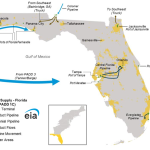
Because Florida lacks significant above-ground energy infrastructure like refineries, Milton’s energy fallout largely stems from power outages and fuel stations that ran dry as residents rushed to get out of the storm’s path. Port closures, including Port Tampa Bay on the state’s west coast and Port Canaveral on the east coast, have interrupted fuel deliveries via ship and barge. Florida receives fuel via vessel, truck and pipeline (see map below). More than 43% of Florida’s petroleum products, including gasoline, diesel and jet fuel, move through Port Tampa Bay, according to the Energy Information Administration (EIA).