Storms that form in the Gulf of Mexico (GOM) during hurricane season don’t just dissipate once they make landfall and can inflict havoc on onshore assets. Storm damage and flooding can delay plant restarts, but so can power outages, as we saw when Hurricane Beryl hit the Texas/Louisiana region in July. And while there were no major refining or production assets in the path of Hurricane Helene, which slammed into the Florida Panhandle on September 26, widespread damage illustrated the potential risk to onshore infrastructure. In today’s RBN blog, we will examine how hurricanes have disrupted onshore assets and explain why power restoration is often the Achilles’ heel in plans to resume normal operations.
The replay of our Fall 2026 School of Energy (September 9 & 10, Houston) is now available online!
Learn from RBN experts, participate in hands-on Excel modeling, connect with industry peers, and gain a stronger understanding of today's interconnected energy markets.
We will start today’s blog by acknowledging the scope of the devastation caused by Hurricane Helene, which flooded towns and killed scores of people across six states. Areas along the U.S. Gulf Coast are always at risk of severe weather but Helene has shown that even areas far inland and well above sea level — such as the mountainous areas of western North Carolina — can suffer severe storm damage. On the energy side of things, the storm knocked out power to millions of homes and businesses and made finding gasoline difficult, if not impossible, because roads and bridges were washed out and gas station pumps can’t operate without electricity. However, the storm missed some other critical pieces of infrastructure, such as the Elba LNG terminal in Georgia (about 250 miles northeast of where Helene made landfall) and the bulk of U.S. refining and LNG assets a few hundred miles to the west in Texas and Louisiana. About 24% of offshore crude oil production and 18% of natural gas production was shut in by the storm but nearly all of that was back online by September 30, according to the U.S. Bureau of Safety and Environmental Enforcement (BSEE).
We’ve written a lot about GOM output and storm risks in recent months, starting with its production history. In Riders On The Storm, we noted that GOM production has nearly tripled since the government started collecting data in the 1980s, peaking at just under 2 MMb/d in 2019 as discoveries in the deeper waters of the Gulf more than offset receding production from shallower areas near the coast. It’s a trend that is expected to continue. That said, the region’s productivity has seen its share of setbacks from events like the Great Recession, BP’s Macondo blowout disaster and the pandemic (see Figure 1 below), as well as changes to federal U.S. regulations that oversee offshore E&P activity. Then there’s the Atlantic hurricane season, which can also cause major disruptions to offshore production.
About the song
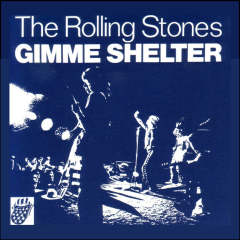
“Gimme Shelter” was written by Mick Jagger and Keith Richards and appears as the first song on side one of the Rolling Stones’ eighth studio album, Let It Bleed. The song is a rocking lament about the brutality of war. Keith Richards’ guitar tone and playing elevates the song and perfectly sets up Mick Jagger’s harp playing and great vocal interplay with singer Merry Clayton. Richards used a cheap Maton SE777 hollow body guitar on “Gimme Shelter” (also used on “Midnight Rambler”). On the very last note of the song, the neck snapped in two. Released as a single in the UK in December 1969, “Gimme Shelter” went to #23 on the U.K. charts. It received massive airplay in the states on progressive underground FM radio stations where albums, not singles, were the preferred format. Personnel on the record were: Mick Jagger (lead, backing vocals, blues harp), Keith Richards (guitars, backing vocals), Bill Wyman (bass), Charlie Watts (drums), Nicky Hopkins (piano) and Merry Clayton (vocals).
Let It Bleed was recorded between November 1968 and November 1969 at Olympic in London and Sunset Sound in Hollywood. It was recorded during a tumultuous time in the band with founding member Brian Jones being edged out of the group due to erratic behavior and absenteeism. He was fired during the recording of this album and replaced by Mick Taylor. Jones died within a month of his firing. Produced by Jimmy Miller, the album was released during the Rolling Stones’ 1969 U.S. tour in November 1969. It went to #3 on the Billboard 200 Albums chart and has been certified 2x Platinum by the Recording Industry Association of America. One single was released from the LP.
The Rolling Stones are an English rock band formed in London in 1962 by Mick Jagger, Keith Richards, Brian Jones, Bill Wyman and Charlie Watts. Their career has spanned over six decades. Eight members have passed through the band since its formation, with Jagger and Richards being the only remaining original members. They have released 31 studio albums, 13 live albums, 28 compilation albums, three EPs, and 122 singles. They have sold over 250 million records worldwide. They have won three Grammy Awards, a Grammy Lifetime Achievement Award, and are members of the Rock and Roll Hall of Fame and the UK Music Hall of Fame. They continue to record and tour and recently completed their successful Hackney Diamonds Tour ’24.