


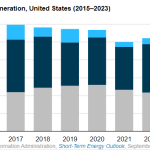
Power generation from solar and wind resources can vary widely — the sun doesn’t always shine and the wind doesn’t always blow — but weather factors can impact the availability of hydropower as well. Weather conditions in the Northwest over the spring and summer have caused the Energy Information Administration to lower its forecast for hydropower generation by 6% this year compared with last year.
Featured Articles


- Blog
Hot Fun in the Summertime - Texas, California Summertime Power Prices Moving in Opposite Directions
Texas and California are opposites in many ways, including their expectations for power prices in the summer ahead. Texas set single-day demand records several times last year and is anticipating more sizzling temperatures — and higher power prices — this year with demand expected to be near available supply. It’s the opposite for California, where the state’s extensive renewable buildout and higher-than-normal hydropower resources are helping keep a lid on power costs. In today’s RBN blog, we’ll examine the factors impacting Texas and California that are causing these polarizing power conditions.


- Blog
You Got Lucky - Mild Summer Saves West Coast Gas Market ... This Time
Six months ago, the U.S. West Coast natural gas market looked like it was in dire straits. A harsh winter had depleted stocks to the lowest level in over a decade and it seemed like the region would be hard-pressed to refill storage to a reasonable level, given limited and constrained pipeline options to flow incremental gas west. Instead, a combination of mild weather and operational changes eased demand and pipeline constraints, and Pacific Region storage staged a remarkable comeback this summer. In today’s RBN blog, we delve into how the region escaped a worst-case scenario heading into the heating season.


- Blog
Rocky Mountain Breakdown - Western Natural Gas Markets Whack Rockies Producers
Efforts to increase natural gas production in the Rockies are running into a brick wall — make that several brick walls. To the east, burgeoning gas production in the Marcellus/Utica region is surging into Midwest markets, pushing back on Rockies gas supplies. To the south, Permian gas production is ramping up toward 8 Bcf/d, most of it associated gas from crude-focused wells — volumes that will be produced even if gas prices plummet. To the west, Rockies gas faces an onslaught of renewables in power generation markets, where wind and solar are increasingly replacing gas fired and coal generation, especially during non-peak periods when the sun is shining and the wind is blowing. To the north, Western Canadian producers facing a where-do-we-send-our-gas problem of their own are only days away from having expanded pipeline access to U.S. West Coast markets — access likely to displace some of the Rockies gas which has been flowing west. Today, we discuss highlights from a new report by our friends at Energy GPS that assesses these developments and explores their implications.
