
- Blog

Even Flow - How Operational Flow Orders Help the Natural Gas Market Stay in Balance

Natural gas prices remain at near-record lows, but with so much production being driven by still-favorable crude oil economics there’s a distinct possibility — especially given the warm winter we’re in — that gas inventories may test storage capacity this year, perhaps as early as Labor Day. Of course, there are many market factors that might prevent this outcome, including lower production, a scorching-hot summer, and gas-to-coal fuel switching. But it could happen. And whenever we approach the limitations of natural gas infrastructure, we’ve seen time and again the disruptions and dislocations the market must deal with. The most obvious market signals are prices. But when it comes to gas flows another important barometer is the use of operational flow orders (OFOs). In today’s blog, we update one of RBN’s Greatest Hits and take a deep dive into the world of OFOs and what they can reveal about the state of the gas market. 

- Blog

We Just Disagree, Part 3 - Local Issues Also at Play in Questar Pipeline Sale

Plato may have said it, Shakespeare wrote about it, and anyone who has engaged in a friendly debate about the best classic car, hunting rifle, or wristwatch knows it to be true: beauty lies in the eye of the beholder. Of course, not everyone sees value the same way, or value in the same things. That’s at the heart of the dispute over the recently announced acquisition of Questar Pipeline LLC by Southwest Gas Holdings. The prospective buyer sees Questar as a picture-perfect addition, while an activist investor sees it as a butt-ugly mistake. In today’s RBN blog, we continue an examination of the Southwest Gas/Questar deal with a look at Questar’s relationship with its local distribution companies, potential competition with the nearby Kern River Pipeline, and challenges Questar may face in serving power generators and direct industrial load.

- Blog

Polar Vortex Spurs Catch-22 Workaround - Getting New England Gas Pipeline Capacity Built

Author Housley Carr

This year’s polar vortex winter has once again demonstrated how New England power generators suffer from the region’s shortage of natural gas pipeline capacity during peak demand periods. The Catch-22 to-date has been that new pipelines won’t get built without firm, long-term commitments for pipeline capacity, which the New England power market doesn’t compensate generators for. Faced with rising demand and few alternatives to gas fired generation, the six state governments in the region are now proposing a novel fix: an electric-rate surcharge that would help guarantee pipeline developers the steady revenue they need to justify new projects.  Today we examine the states’ plan and its prospects.

- Blog

Fuel for the City – Replacing Northeast Oil Demand With Natural Gas Alternatives

As North American supplies of natural gas continue to grow, more industrial, commercial, institutional and residential customers who do not burn natural gas for heating or process use want to participate in the economic savings associated with natural gas versus alternate fuels such as heating oil or propane. Complications in the process of installing pipeline infrastructure are slowing the rollout of direct gas line service. Today we describe natural gas distribution alternatives.

- Blog

Catch a Hydrocarbon, Put it in Your Cavern, Save it for a Wintry day! Natural Gas Storage

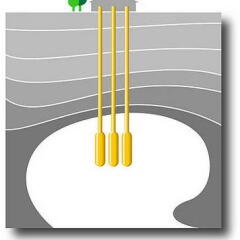
Storage, the great balancing mechanism of the natural gas market in North America is heading toward another evolution in its usage, flow patterns and economics.  Not too many years ago, natural gas storage was the hottest midstream investment opportunity going, expected to synchronize inbound flotillas of LNG imports with seasonal domestic demand.  Winter vs. summer price differentials were wide, prices were volatile and storage economics looked great.  When shale gas happened, those differentials evaporated along with storage economics.  Today another phase looms for natural gas storage as Marcellus and now Utica production ramp up on top of (or more accurately, underneath) the largest storage region in the world – the Northeast U.S.  This is a big topic with big implications.  So rather than jumping into the middle of the upcoming gas storage transformation, we will walk through a multi-part North America natural gas storage blog series -  its history and status, its challenges, who’s involved, and finally what could be in store going forward.  Today we’ll start with some natural gas storage basics.

- Blog

As Time Goes By - The long Gestation for Gas Pipeline Projects

The gestation period from concept to in-service for a new natural gas pipeline can take at least 3-4 years. A significant number of these projects are underway today in the Northeast US in response to dramatic increases in local production. Today we continue our series on changes in the Northeast with a look at the process required to develop pipeline infrastructure.

In our previous posting we talked about the dramatic changes in strategies, infrastructure and operations in the Northeast resulting from the successful development and growth of Marcellus natural gas production.  Some of these investments by pipelines, and shipper commitments for transportation agreements, are quite sizable and can cause a high degree of angst.  One of the factors that makes this so difficult for everyone is that the timeline for an interstate pipeline to place new capacity into service can typically take three to four years from conception to in-service.  That’s a long time in a dynamic industry and as we have seen, significant changes can take place in that long a period. Before we drill down to the strategic and 'operational aspects, it would be helpful to understand why it takes so long and what is involved in the development process to bring new pipeline capacity on stream.