

- Blog

I Want to Take You Higher - How Much Will the Midland-Houston WTI Price Spread Widen as Oil Flows Shift?

Author Housley Carr

Over the past three-plus years, Corpus Christi has dominated the U.S. crude oil export market, largely because of the availability of straight-shot pipeline access from the Permian to two Corpus-area terminals at Ingleside — Enbridge Ingleside Energy Center (EIEC) and South Texas Gateway (STG) — that can partially load the huge 2-MMbbl VLCCs (Very Large Crude Carriers). But capacity on the pipes to Corpus is now nearly maxed out and, with Permian production rising and exports strong, an increasing share of West Texas crude output is instead being sent to Houston on pipelines with capacity to spare. The catch for Permian shippers with capacity on Permian-to-Houston pipes is that the Midland-to-MEH (Magellan East Houston) price differential for WTI has been depressingly low —$0.22/bbl on average this year, compared to almost $20/bbl for a few months in 2018 and averaging $5.50/bbl as recently as 2019. However, the Midland-to-MEH WTI price spread looks to be on the verge of a rebound of sorts, as we discuss in today’s RBN blog.

- Blog

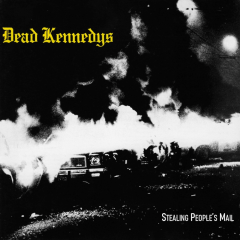
Stealing People's (R)ail - Disappearing Arbitrage Opportunities For Canadian Crude-by-Rail

Author John Zanner

Crude-by-rail (CBR) has been a saving grace for many Canadian oil producers. With extremely limited pipeline takeaway capacity, rail options from Western Canada to multiple markets in the U.S. have acted as a relief valve for prices — there for producers when they need it, in the background when they don’t. In 2018, we saw a major resurgence in CBR activity from our neighbors to the north, with volumes reaching an all-time high of 330 Mb/d just this past November. But just as quickly as CBR seemed ready for takeoff, the rug got pulled out from underneath those midstream rail providers and traders who had lined up deals and railcars to take advantage of wide price spreads. When Alberta’s provincial government announced its 325-Mb/d production curtailment beginning at the start of 2019, many midstream/marketing and integrated oil companies bemoaned what it could potentially do to market opportunities. And they were spot-on. Wide price differentials for Canadian crudes to WTI disappeared quickly and eliminated most, if not all, of the economic incentive to move crude via rail, and even by pipeline. In today’s blog, werecap the recent move away from crude-by-rail by some of Canada’s largest CBR players, and discuss the risks of long-term CBR commitments in volatile times.

- Blog

Money Changes Everything - Major Fundamental Shifts Swing Crude Oil Prices in Canada

Author John Zanner

For months, the crude oil market had Canada figured out. Production was growing, bit by bit. Pipelines were maxed out. Railcars were hard to come by but were providing some incremental takeaway capacity. Midwest refineries, a big destination for Canadian crude, went in and out of turnaround season, moving prices as they ramped up runs. Overall, the supply and demand math was straightforward also, tilted towards excess production. Canadian crude prices were going to continue to be heavily discounted for the next year or two, until one of the new pipeline systems being planned was approved and completed. Western Canadian Select (WCS) a heavy crude blend and regional benchmark was averaging at a discount to West Texas Intermediate (WTI) near $40/bbl in November, dragging down Syncrude prices with it. As the market was settling in for a long, cold winter in Canada, a bombshell dropped: Alberta’s premier announced on December 2 (2018) that regulators would institute a mandatory production cut, taking 325 Mb/d of production offline, and that the government would invest in new crude-by-rail tankcars. That announcement has had a massive impact on prices, with WCS’s differential narrowing to $18.50/bbl most recently. In today’s blog, we look at several catalysts for the recent swing in Canadian prices, and how the recent governmental intervention will impact differentials.

- Blog

Train in Vain - Why New Rail Car Specs are Creating Obstacles for Crude-by-Rail

Author John Zanner

It’s been well-reported that crude oil pipeline capacity is getting maxed out in many basins across the U.S. and Canada. From Alberta, through the heart of the Bakken, all the way down to the Permian, pipeline projects are struggling to keep up with the rapid growth in some of North America’s largest oil-producing regions. Crude by rail (CBR) has frequently been the swing capacity provider when production in a basin overwhelms long-haul pipelines. While it is more expensive, more logistically challenging, and more time-intensive, CBR capacity is typically able to step in and provide a release valve for stranded volumes. But recently, CBR capacity has been tougher to come by and has taken longer than expected to ramp up. A key aspect of this issue is a new requirement for up-to-date rail cars. Today, we look at how new rail demands and uncertainty in domestic oil markets are combining to create a major hurdle for new CBR capacity.

- Blog

Push Me, Pull Me, Part 2 - Is The Bakken Facing Another Round of Crude Takeaway Constraints?

Author John Zanner

Pipeline capacity constraints are nothing new to producers in the Bakken. Prior to the completion of the Dakota Access Pipeline (DAPL) in mid-2017, market participants had been pushing area pipeline takeaway to the max. When DAPL finally came online following a lengthy political and legal battle, producers and traders were able to breathe a sigh of relief. But with Bakken production steadily increasing over the past 18 months and primed for future growth new constraints are on the horizon. Over the next year or so, Bakken output could overwhelm takeaway capacity and push producers to find new market outlets. The questions now are, which midstream companies can add incremental capacity, how much crude-by-rail will be necessary, and is there a chance a major new pipeline gets built? Today, we forecast Bakken supply and demand, discuss some upcoming projects and lay out the possible headaches for Bakken producers heading into 2019.

- Blog

Push Me, Pull Me - What's Going On With Bakken Prices? And Are Constraints on the Horizon?

Author John Zanner

The discount for Bakken crude prices at Clearbrook to WTI at Cushing has been on a rollercoaster in recent weeks, widening from $1.30/bbl at the beginning of September 2018 to over $10/bbl in mid-October and narrowing again most recently. There are several factors at play here. Canadian production has overwhelmed area pipelines and prices are being heavily discounted. These cheap Canadian barrels are creating oversupply issues at markets that Bakken barrels also trade into. On the demand side, Midwestern refiners are in the middle of seasonal turnarounds, reducing the demand for both Bakken and Canadian grades. Meanwhile, Bakken production growth continues to steadily chug along, increasing by over 150 Mb/d since the beginning of the year. And while this recent Bakken price angst is cause for concern, there is a looming bottleneck for pipeline space that could really shake things up sometime next year. Today, we examine the recent price phenomenon, the relationship between Canadian crude differentials and Bakken prices, and why producers should be concerned about future pipeline shortages.

- Blog

Don't Play No Game That I Can't Win - Lotteries, Shippers and Trends in Midland Price Differentials

Author John Zanner

Since early this year, the Midland crude differential has continued to widen, trading one day last week at a discount of $15.75/bbl to West Texas Intermediate (WTI) at Cushing, the widest spread since August 2014 before settling back to $11.25/bbl on Monday. The wide price differential is a result of fast-growing production in the Permian and bottlenecked takeaway pipelines. But the trajectory of this increasing price spread has been anything but smooth. Lately, we have seen a blip in the price differentials right around the 19th or 20th of the month. In each of the last three months, for a short-lived 24 to 48 hours, the Midland-Cushing price differential has narrowed by $2/bbl or more as Permian shippers have gone on feeding frenzies. Today, we look at these brief upticks in pricing and the pipeline and trader mechanics behind them.