The discount for Bakken crude prices at Clearbrook to WTI at Cushing has been on a rollercoaster in recent weeks, widening from $1.30/bbl at the beginning of September 2018 to over $10/bbl in mid-October and narrowing again most recently. There are several factors at play here. Canadian production has overwhelmed area pipelines and prices are being heavily discounted. These cheap Canadian barrels are creating oversupply issues at markets that Bakken barrels also trade into. On the demand side, Midwestern refiners are in the middle of seasonal turnarounds, reducing the demand for both Bakken and Canadian grades. Meanwhile, Bakken production growth continues to steadily chug along, increasing by over 150 Mb/d since the beginning of the year. And while this recent Bakken price angst is cause for concern, there is a looming bottleneck for pipeline space that could really shake things up sometime next year. Today, we examine the recent price phenomenon, the relationship between Canadian crude differentials and Bakken prices, and why producers should be concerned about future pipeline shortages.
Join Backstage Pass, your gateway to exclusive industry insights, connections, and resources across energy markets. Gain direct access to RBN's extensive archive covering crude oil, NGLs, LNG, natural gas, refined products, renewables, and energy transition.
Historically, a major pricing hub for Bakken barrels is the sales point at Clearbrook, MN, accessible by Enbridge’s North Dakota Pipeline system (brown line in Figure 1). From Clearbrook, traders can take barrels further east into Midwest markets. As we discussed in Take My Crude Away, Bakken producers also have a few other options for downstream pipes, including takeaway to Wyoming (and eventually Cushing) via Kinder Morgan’s Double H Pipeline (orange line) and True Companies’ Bridge and Butte systems (light pink line). Energy Transfer Partners provides access to Patoka, IL, and on to the Gulf Coast by way of the Dakota Access Pipeline (DAPL, blue line).
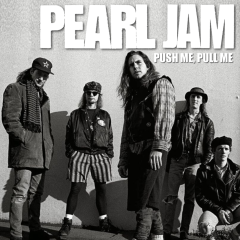
About the song
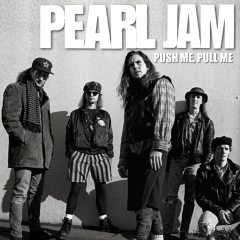
"Push Me, Pull Me," written by Jeff Ament and Eddie Vedder, is the twelfth cut on Pearl Jam's fifth studio album, Yield. Yield represented a more collaborative approach to the group's songwriting, and a return to the more basic rock sound of their earlier efforts. The LP was recorded during 1997 at Studio X and Studio Litho in Seattle, with mixing done at Southern Tracks and Doppler Studios in Atlanta. Production duties were by Brendan O'Brien and Pearl Jam. The album was released in on February 1998, and debuted on the Billboard Top 200 Albums chart at #2. The LP has been certified platinum by the Recording Industry Association. Personnel on the record were: Jeff Ament (bass and vocals), Stone Gossard (guitar and vocals), Jack Irons (drums), Mike McCready (lead guitar), and Eddie Vedder (lead vocals and guitar). This would be the last album with Jack Irons on drums.
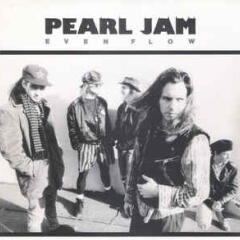
Pearl Jam is an American rock band formed in Seattle in 1990 after Jeff Ament and Stone Gossard's band, Mother Love Bone, lost their lead singer, Andrew Love, to a drug overdose on the eve of their debut album's release. With a new band, originally called Mookie Blaylock (after the NBA star), they forged on, landing a new record deal that resulted in their debut album, Ten (named after Mookie's jersey number), being released under their new name, Pearl Jam, in 1991. Known as one of the progenitors of the Seattle grunge sound, Pearl Jam has sold over 85 million records worldwide, and more than 32 million in the U.S. They have won two Grammy Awards, four MTV Video Music Awards, and five American Music Awards. The band was inducted into the Rock and Roll Hall of Fame in 2017, their first year of eligibility. There are rumors of a new album and tour from the band coming in 2019.