Over the past three-plus years, Corpus Christi has dominated the U.S. crude oil export market, largely because of the availability of straight-shot pipeline access from the Permian to two Corpus-area terminals at Ingleside — Enbridge Ingleside Energy Center (EIEC) and South Texas Gateway (STG) — that can partially load the huge 2-MMbbl VLCCs (Very Large Crude Carriers). But capacity on the pipes to Corpus is now nearly maxed out and, with Permian production rising and exports strong, an increasing share of West Texas crude output is instead being sent to Houston on pipelines with capacity to spare. The catch for Permian shippers with capacity on Permian-to-Houston pipes is that the Midland-to-MEH (Magellan East Houston) price differential for WTI has been depressingly low —$0.22/bbl on average this year, compared to almost $20/bbl for a few months in 2018 and averaging $5.50/bbl as recently as 2019. However, the Midland-to-MEH WTI price spread looks to be on the verge of a rebound of sorts, as we discuss in today’s RBN blog.
A few months ago, in Calling the Shots, we said that exports are, well, calling the shots in the U.S. crude oil market. Lower 48 oil production now averages about 12.5 MMb/d — Alaska adds another 400 Mb/d — the highest level in three and a half years and only a tiny 1.5% away from where production peaked pre-COVID. And exports out of the Gulf Coast? They’ve averaged nearly 3.7 MMb/d so far this year, according to RBN’s weekly Crude Voyager report, a gain of about 500 Mb/d over 2022 (which was no slouch). With WTI prices now flirting with $90/bbl and OPEC+ keeping a lid on its output, continued growth in both U.S. production — the vast majority of it in the Permian — and export volumes are definitely in the cards.

Join Backstage Pass, your gateway to exclusive industry insights, connections, and resources across energy markets. Gain direct access to RBN's extensive archive covering crude oil, NGLs, LNG, natural gas, refined products, renewables, and energy transition.
It also seems likely that Corpus’s share of export volumes may have topped out, at least for now. Don’t get us wrong, Corpus is still the big dog. It handled 60% of Gulf Coast export volumes last year (see Sooner or Later) and has accounted for about the same proportion of exports so far in 2023. Shippers love the benefits that come from piping neat barrels of Midland WTI to EIEC and STG at Ingleside, where the crude can be directly loaded onto VLCCs that can be filled to capacity with only a one-tanker reverse lighter just offshore. It’s hard to beat that situation or those economics in Houston or even the Inner Harbor Corpus terminals, and Ingleside’s magnet-like pull on Permian barrels has left many of the pipes from West Texas to Houston running well below capacity.

About the song
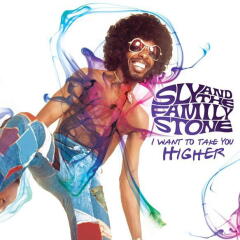
“I Want to Take You Higher” was written by Sly Stone and appears as the third song on Sly and the Family Stone’s fourth album, Stand. The song has deep roots in the fact that it is a remake of “Higher” from the group’s Dance to the Music LP. “Higher” has its origins in the song “Advice,” which Stone co-wrote and arranged for Billy Preston’s 1966 album, The Wildest Organ in Town. “I Want to Take You Higher” is the B-side to the group’s hit single “Stand,” which was released in March 1969. It became a hit of its own in 1970, largely due to the performance of it at the Woodstock Music Festival and being prominently featured in the film of that festival that followed. The song went to #38 on the Billboard Hot 100 Singles chart. Ike and Tina Turner released their version later in 1970 — that went to #25 on the same chart. Sly and the Family Stone’s version starts with Freddie Stone’s bluesy guitar intro riff, progressing into a heavy funk jam featuring Larry Graham’s overdriven bass line, with shared vocals from Sly Stone, Rose Stone, Freddie Stone, and Larry Graham. Personnel on the record were: Sly Stone (lead vocals, keyboards), Freddie Stone (guitar, backing vocals), Rose Stone (keyboards, backing vocals), Larry Graham (bass, backing vocals), Greg Errico (drums), Jerry Martini (tenor sax), and Cynthia Robinson (trumpet).
Stand was recorded in 1968-69 at Pacific High Studio in San Francisco with Sly Stone producing. Released in April 1970, the album went to #13 on the Billboard 200 Albums chart and has been certified 3x Platinum by the Recording Industry Association of America. In 2015 the album was selected for inclusion in the National Recording Registry of the Library of Congress. Four Top 30 singles were released from the LP.
Sly Stone (Sylvester Stewart) is an American singer, songwriter, musician and record producer. He started his professional career as a rhythm and blues performer who moonlighted as a DJ at San Francisco’s KSOL radio station. He started working as a talent scout for Tom Donahue at Autumn Records, where his first production was Bobby Freeman’s hit record, “C’mon and Swim.” He formed Sly and the Family Stone in San Francisco in 1966 and remained with the group until 1975, when various drug and internal problems caused the band to break up. The band released 10 studio albums, two live albums, six compilation albums, and 19 singles. They are members of the Rock and Roll Hall of Fame and Vocal Group Hall of Fame and have been awarded an R&B Foundation Pioneer Award. Founding member Cynthia Robinson died in San Francisco in November 2015 at the age of 71. Sly Stone was last seen in public in 2015 and his current residence is unknown. Thank You (Falettinme Be Mice Elf Agin), a Sly Stone memoir written with Ben Greenman, is scheduled to be released in October 2023.