Edgewater Midstream, a relatively new player in the refined products storage and delivery space, acquired a pair of potentially valuable assets from Shell in the Deer Park, TX, area in December. It now owns the Colex terminal, the starting point of the all-important Colonial Pipeline system, and the Sinco products pipe network, which could offer another pathway to Desert Southwest markets served by a dwindling number of California refineries. In today’s RBN blog, we will examine Edgewater’s new assets and the market opportunities they may open up.

Let’s start with a short primer on Edgewater Midstream, which private equity firm EnCap Flatrock Midstream owns. The Houston-based company was created in 2019, just before the pandemic. Throughout that period, the company sought potential assets to buy, including those focused on crude oil and refined products, to underpin its business. Negotiations for Shell’s Colex terminal and Sinco pipeline system began in Q2 2024, culminating in a deal that would give Edgewater its first physical assets. The Colex terminal on the Houston Ship Channel (HSC) and the Sinco system were historically operated in conjunction with the 340-Mb/d Deer Park refinery, once a joint venture (JV) between Shell (operator) and P.M.I. Comercio Internacional S.A. de C.V. (PMI), a subsidiary of Mexico’s state-owned PEMEX. That changed in 2022 when Shell sold its 50% stake in the refinery to PMI for $596 million, although it retained the Colex and Sinco assets.
Let’s look next at Edgewater’s new acquisitions, starting with the Colex complex (see Figure 1 below), which includes both an East and West terminal. The complex is the starting point of the 2.5-MMb/d Colonial product pipeline system (blue lines), which transports products from Gulf Coast refineries to markets across the Southeast and East Coast. The Colonial network culminates at New York Harbor, a major market for refined products and delivery point of the NYMEX RBOB gasoline and ultra-low-sulfur diesel (ULSD) futures contracts. A ransomware attack on the Colonial system nearly four years ago disrupted supply for retail businesses, for weeks in some states, and triggered panic buying across the Eastern Seaboard, underscoring how important the network is for the region’s fuel needs. Besides Colonial, the Colex site feeds directly into the Explorer system (pink lines), which serves the Midwest products market. An interesting tidbit: The facility got its name from cobbling together the first three letters of Colonial (Col) Pipeline and the first two letters of Explorer (Ex) Pipeline. The Colex site is also directly connected to the ITC Pasadena terminal (blue tank icon) along the HSC, which handles waterborne, railed, trucked and piped supplies of petroleum products, NGLs, LPG and liquid chemicals.

Figure 1. Colonial Pipeline, Explorer Pipeline and Related Infrastructure. Source: RBN

About the song
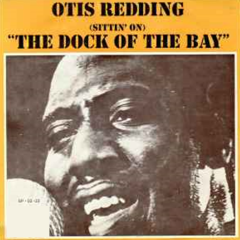
“Open the Door” was written by Otis Redding and appears as the fourth song on side one of his seventh studio album, The Dock of the Bay. Released as the B-side of the single “The Happy Song (Dum-Dum)” in April 1968, it went to #10 on the Billboard Hot Rhythm & Blues and #25 on the Billboard Hot 100 Singles charts. The soul-shouting love ballad is superbly accompanied by Booker T and the MGs and the Memphis Horns. Personnel on the record were: Otis Redding (vocals), Steve Cropper (guitar), Donald "Duck" Dunn (bass), Booker T. Jones (Hammond organ), Al Jackson Jr. (drums), Wayne Jackson (trumpet), and Joe Arnold (tenor saxophone).
The Dock of the Bay was recorded between July 1965 and December 1967 at Stax Recording Studio in Memphis with Steve Cropper producing. It was the first of the posthumous albums released after Otis Redding died in a plane crash outside Madison, WI, along with members of the Memphis soul band The Bar-keys in December 1967. Redding had finished recording “(Sittin’ On) The Dock of the Bay” just two days before the crash. The album was composed of singles and B-sides, some dating back to 1965. Released in February 1968, the album went to #1 on the Billboard Hot R&B Albums chart and #6 on the Billboard 200 Albums chart. Three singles were released from the LP.
Otis Redding was an American soul music singer and songwriter from Macon, GA. He got his start in the music business in his teens working for fellow Macon performer Little Richard and The Upsetters. He began singing professionally with Johnny Jenkins’s band, the Pinetoppers. After he was heard playing piano and singing at Stax Records in Memphis, Redding signed a recording contract with the label. He released his first single, “These Arms of Mine,” in 1962. He released 10 studio albums, nine live albums, 15 compilation albums, and 48 singles. Redding won two Grammy Awards, has a Grammy Lifetime Achievement Award and is a member of the Rock and Roll Hall of Fame, Songwriters Hall of Fame and Georgia Music Hall of Fame. Redding died in a plane crash in December 1967 at the age of 26.