


Refineries in Washington state have been reliable buyers of Bakken-sourced crude oil during the Shale Era, receiving an average of about 145 Mb/d — all of it by rail — over the past two-plus years. But a newly approved Washington law slashing the allowable vapor pressure limit for crude being unloaded from rail tank cars could hinder future growth in crude-by-rail shipments from North Dakota to the Evergreen State, or force Bakken producers to remove more butane and other “light ends” from the crude oil they rail west. It’s such a big deal that the state of North Dakota has indicated it will file suit to kill the new law. Today, we discuss Washington’s new law and its potential effects on Bakken crude oil producers.

The Crude Oil Billboard keeps readers at the forefront of the U.S. crude oil market by offering access to data and information moments after its release. Say goodbye to PDF reports that come out after the market has already moved on.
Besides long borders with Canada, the states of Washington and North Dakota don’t have a heck of a lot in common. Washington is known for its high technology (Boeing, Microsoft and Amazon) and coffee (Starbucks, and Seattle has one of the highest coffee-shops-per-capita ratios of any city), while North Dakota’s claims to fame are its wheat fields, “Fargo” (the movie, not the city) and, yes, the Bakken — one of the nation’s largest oil and gas producing areas. Still, there’s been a consistent link between the two states in recent years: Since the mid-2010s, Washington’s refining industry (combined capacity, about 660 Mb/d) has been counting on Bakken crude for more than one-quarter of its needs. As we said in The End of the Line, until the Shale Era, Washington’s five refineries (red dots in Figure 1) relied primarily on Alaska North Slope (ANS) crude oil shipped down from Valdez, AK, as well as waterborne imports, and piped-in crude from Western Canada. The Western Canadian crude is sent from Edmonton, AB, via the Trans Mountain Pipeline (hot-pink line) and the connecting Puget Sound Pipeline (green line) to four refineries in the Puget Sound area.
About the song
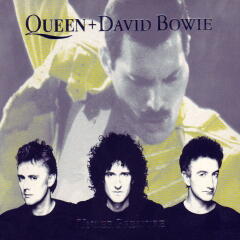
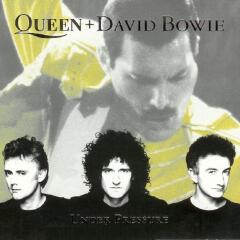
“Under Pressure,” a hit single for Queen, was written by Freddie Mercury, Brian May, Roger Taylor, John Deacon and David Bowie. It was released as a single in October 1981, reaching #29 on the Billboard Hot 100 and #1 on the UK singles chart, making the song Queen‘s second #1 hit in their homeland. The song featured David Bowie sharing lead vocals with Freddie Mercury. It was recorded at Mountain Studios in Montreux, Switzerland, and appears as the last cut on side two of Queen’s 10th studio album, Hot Space, which was released in May 1982. The song was produced by Queen and David Bowie. Personnel on it were: Freddie Mercury (lead and backing vocals, piano, organ, hand claps, finger snaps), Brian May (electric guitars, hand claps, finger snaps), Roger Taylor (drums, backing vocals, hand claps, finger snaps), John Deacon (bass, hand claps, finger snaps), and David Bowie (lead and backing vocals, synthesizer, hand claps, finger snaps).
The Hot Space LP sold more than 3.5 million copies. It went to #22 on the Billboard Top 200 Albums chart. The 1982 Hot Space Tour was the last American tour with Freddie Mercury as Queen's lead singer.
Queen is a British rock band formed in London in 1970. The group has released 15 studio albums, 10 live albums, 15 compilation albums and 72 singles. Queen is a member of the Rock and Roll Hall of Fame, Songwriters Hall of Fame and Grammy Hall of Fame. The band has won a Grammy Lifetime Achievement Award, four Brit Awards, and four Ivor Novello Awards. Freddie Mercury passed away in 1991, and John Deacon retired from the band in 1997. Brian May and Roger Taylor have continued to tour under the Queen banner with vocalists Paul Rodgers and Adam Lambert. “Bohemian Rhapsody,” a 2018 biopic about the life of Freddie Mercury, earned more than $900 million at the box office and four Oscars, including a Best Actor nod for Rami Malek, who played Freddie in the film.





Comments
I heard that it was a number proposed by New York state a couple of years ago. No scientific basis whatsoever.