The competition among midstream companies to transport light, sweet U.S. crude to Louisiana refineries and to the Louisiana Offshore Oil Port (LOOP) is heating up. On April 1, Energy Transfer and Phillips 66 Partners finally started up the Lake Charles-to-St. James portion of their Bayou Bridge pipeline, which is designed to move light oil to the heart of Louisiana’s refining country. Two weeks later, Shell initiated an open season for newly available space on its Zydeco Pipeline from Houston to the St. James and Clovelly hubs, the latter of which can send crude to either local refineries or LOOP — the only Gulf Coast port currently able to fully load Very Large Crude Carriers (VLCCs). Then, earlier this week, Bayou Bridge’s co-owners launched an open season of their own, this one to gauge shipper interest in joint-tariff transportation service on certain connecting pipes that haul light crude from the Bakken, the Niobrara, the Cushing crude hub and the Permian. The fight for barrels doesn’t end there — don’t forget plans for the Capline reversal and the Seahorse, ACE and Swordfish pipelines, all of which also are targeting Louisiana refineries and/or the export market. Game on! Today, we update midstreamers’ efforts to transport more high-API-gravity oil to Louisiana refineries and LOOP.
Back in the Pre-Shale Era, U.S. crude oil production was on a decades-long decline, increasing volumes of foreign oil were being imported to fill the supply gap, and the general direction of flows on U.S. crude pipelines was northbound from the Gulf Coast to inland refineries. In the past 10 years or so, these trends and flows have been reversed: U.S. production is up sharply; crude imports to the U.S. are down (but leveling out); and crude is being pulled toward the Gulf Coast and its array of refineries and export terminals, not away from it. We’ve discussed this tectonic shift in oil-pipeline flows in a number of recent blogs, including ones focused on the Cushing and St. James crude hubs, on Permian takeaway capacity, and on new export capacity being developed along the Texas and Louisiana coasts.
An interesting sub-theme in all this is that while many Texas refineries and export terminals (e.g. Corpus Christi, Houston, and Beaumont/Port Arthur) now benefit from direct pipeline access to light, sweet crudes from a variety of U.S. shale plays, the availability of shale crude by pipeline to refineries and export docks in neighboring Louisiana has lagged. But that’s about to change as producers in the Bakken, the Niobrara’s Powder River and Denver-Julesburg (D-J) basins, the Permian and the Eagle Ford seek new outlets for their crude and midstream companies compete to provide the best pipeline access to a wide range of Bayou State destinations.

To truly understand Cushing — what it does and how it works — you need to know the hub’s assets and how they fit together. RBN’s Cushing Crude Oil Playbook provides the first one-stop, comprehensive guide to the hub’s assets.
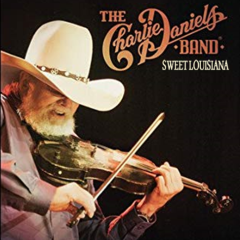
About the song
“Sweet Louisiana” was written by Charlie Daniels and appears as the third cut on side one of The Charlie Daniels Band's seventh studio album, Saddle Tramp. The LP was produced by Paul Hornsby, and released in March 1976. A single of "Sweet Louisiana" was released and failed to chart. Saddle Tramp went to #5 on the Billboard Top Country Albums chart, and #35 on the Billboard Top 200 Albums list. The personnel on "Sweet Louisiana" were: Charlie Daniels (lead vocals, guitar, fiddle), Charlie Hayward (bass), Don Murray (drums), Fred Edwards (drums), Tom Crain (guitar, backing vocals), Taz DiGregorio (keyboards, backing vocals), and Paul Hornsby (organ).
The first line in "Sweet Louisiana" — "Well, I thought I'd go to Tulsa and ride in a rodeo" — is probably a reference to the time from 1964 to 1967 that Daniels lived in Tulsa while fronting his band The Jaguars, who were the popular house band at Tulsa’s infamous Fondalite Club at 11th and Denver. An aside: Daniels’s first release was a 1959 single instrumental called "Jaguar," by Charley and The Jaguars. It seemed to be an answer to The Champs’ 1958 hit, "Tequila." Daniels' record is more Link Wray meets surf in a British spy movie groove, with a crazy-sounding sax. At the end of the instrumental, the band shouts "Jaguar" in a mode similar to The Champs shouting "Tequila" in their hit. Interestingly, Daniels never refers to this early period in his music career. Most of his bios start in 1964 with him co-writing the Elvis Presley B side to the "Kissin' Cousins" single, entitled “It Hurts Me.”
Charlie Daniels is an American singer, songwriter, and multi-instrumentalist known for his contribution to Southern rock and country music. His professional career started in the late 1950s in Texas. He has made 30 studio albums, eight live albums, and 56 singles. Daniels has also appeared in numerous movies, television shows, and commercials. He is a member of the Grand Ole Opry and the Country Music Hall of Fame. He still records and tours to this day.