In just a few months, heavy crude from Western Canada will start flowing south on the Capline pipeline from the Patoka, IL, hub to the one at St. James, LA. While the initial volumes will be modest, Capline’s long-awaited reversal will provide Louisiana refineries and export terminals with easier, lower-cost access to oil sands and other Alberta production. Flipping the pipeline’s direction of flow also means more changes for the St. James storage and distribution hub — one of the U.S.’s largest — which has already seen more than its share of evolution during the Shale Era. Today, we continue our Capline/St. James blog series with a look at St. James’s terminals and pipelines, the Louisiana refineries they supply, and the changes coming with the Capline reversal.
Located 60 miles up the Mississippi River from New Orleans, the St. James crude oil hub has a lot going for it, including more than 36 MMbbl of storage capacity and a number of fantastic Cajun and Creole restaurants. What really sets it apart, however, is its connectivity: by pipeline, by rail, and by water. St. James’s inbound pipes include the mammoth LOOP-to-Capline Pipeline (LOCAP), which can transport up to 1.7 MMb/d of crude from the 72-MMbbl crude hub in Clovelly, LA (pronounced “klow·veh·lee” if you don’t want to sound like a tourist) — the receiving point for oil offloaded at the Louisiana Offshore Oil Port (LOOP), as well as for significant volumes of offshore Gulf of Mexico (GOM) production via the Mars and Endymion pipelines. Other GOM oil flows to St. James via the Bonefish and Ship Shoal pipeline systems, and crude from U.S. shale plays in Texas and the Midcontinent, comes in on the Zydeco Pipeline and Bayou Bridge (check out Louisiana Rain for maps and details on those systems). Additionally, a Department of Energy-owned pipeline leased to ExxonMobil provides bidirectional service between St. James and the Bayou Choctaw Strategic Petroleum Reserve (SPR) site, which DOE also leases to Exxon. As we said in Part 1, these inbound pipelines will soon be joined by the 40-inch-diameter Capline pipeline, which for nearly a half-century transported oil north from St. James to the crude oil hub in Patoka, IL, but is now being reversed to enable southbound flows starting late this year.
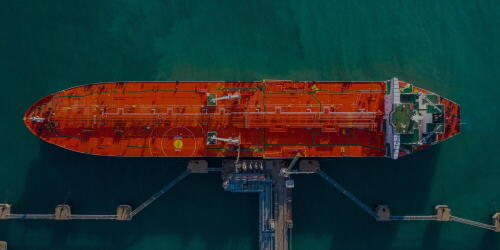
The Crude Voyager is a weekly analysis of U.S. Gulf Coast loading activity that explains the ebbs and flows of crude loadings, destinations, and geopolitical issues impacting U.S. exports. It outlines the major paths for laden tankers hauling U.S. crude all over the world and reflects the change in tanker departures to the main regions that consume U.S. crude.
Initially, Capline’s co-owners — Plains All American (with a ~54% ownership interest), Marathon Petroleum Corp. (MPC; ~33%) and BP (~13%) — had also expected the southbound Capline to receive light, U.S.-sourced crude oil via a planned extension of Plains and Valero Energy’s Diamond Pipeline from the pipe’s current terminus at Valero’s Memphis refinery to a connection with Capline in Byhalia, MS. The proposed Diamond extension (a.k.a. the Byhalia Pipeline) ran into strong local opposition, however, and Plains announced on July 2 that the project had been scrapped.
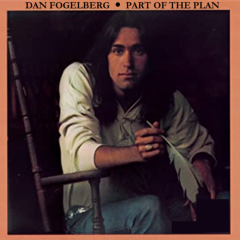
About the song
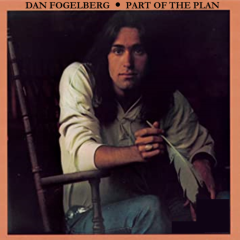
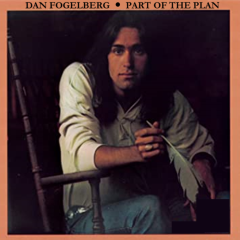
"Part of the Plan" was written by Dan Fogelberg and appears as the first song on Fogelberg's second studio album, Souvenirs. Released as a single in early 1975, it went to #31 on the Billboard Hot 100 Singles chart, making it Fogelberg's first charting single. Personnel on the record were: Dan Fogelberg (lead vocals, acoustic, electric guitar, piano), Joe Walsh (acoustic guitar, electric 12-string guitar), Russ Kunkel (drums), Joe Lala (congas, timbales), Kenny Passarelli (bass), and Graham Nash, Randy Meisner (backing vocals).
Souvenir was recorded at The Record Plant and Elektra Sound Recorders in Los Angeles during the summer of 1974, with Joe Walsh producing. Released in October 1974, the album went to #17 on the Billboard Top 200 Albums chart. It has been certified 2x Platinum by the Recording Industry Association of America. Two singles were released from the LP.
Dan Fogelberg was an American singer, songwriter, and musician from Peoria, IL. He was discovered by Irving Azoff, who sent him to Nashville to hone his skills and record his debut album, which was released in 1972. Fogelberg released 16 studio albums, three live albums, seven compilation albums, and 21 singles. Garth Brooks has stated: "Fogelberg was an artist who changed my life, who made me change where I wanted to go, and the music I wanted to play." Fogelberg died at his home in Maine in December 2007.