



Four midstream companies are building or planning condensate splitter capacity to process at least 400 Mb/d of Eagle Ford production by 2016. These facilities will join BASF/Total, who have been operating a 75 Mb/d splitter at Port Arthur since 2000. Gulf Coast refiners are also increasing their capacity to process lighter crudes. These infrastructure developments are being made in response to a flood of condensate range material coming out of the Eagle Ford into Houston and Corpus Christi. Today we detail these plans.
This blog is an excerpt from our newest RBN Drill Down report titled Like a Box of Chocolates – The Condensate Dilemma which examines the major developments in the world of condensates for the past few years and looks forward through 2018. The analysis begins with an overview of the condensate family, including field condensate, natural gasoline and naphtha. The remainder of the report then reviews (a) field condensate production forecast by major basin, (b) the supply/demand balance for natural gasoline, (c) Gulf Coast condensate splitter infrastructure and projects, and (d) a special spotlight on Utica condensate supply and infrastructure development. More information on this report is available here. Drill Down reports are part of the RBN Backstage Pass premium services package.
Today we are continuing our recent series on infrastructure being developed to process and transport increasing volumes of condensate produced in the Ohio Utica. In that series we described how refiner Marathon Petroleum (MPC) plans to handle more light condensate in their refineries in Canton, OH and Catlettsburg, KY and to construct condensate splitters at both facilities that will process 60 Mb/d between them (see Whole Lotta Splittin’ Going On). This time we turn our focus to similar plans to construct condensate splitters and specialized processing capacity to handle very light crude at Gulf Coast refineries and terminals.
We start with a recap on condensates – a topic that we have discussed frequently over the past two years. Condensates are light hydrocarbons containing a significant percentage of naphtha range materials. There is no universal standard for what defines a condensate, but 50 degrees API gravity is typically used to differentiate condensates from light crude oil (see Fifty Shades of Condensate Which One Did You Mean?). Lease condensate is produced at or near the wellhead, typically from stabilizer units. Plant condensates, more commonly known as natural gasolines, are part of the NGL stream from natural gas processing plants and produced from fractionation facilities as a ‘purity’ NGL product (a.k.a., pentanes plus or C5) - (see Like A Box of Chocolates – The Condensate Dilemma).
The challenge for US midstream and refining companies is to find markets for growing volumes of condensate materials being produced– not just in the Utica – but in many of the US shale plays, in particular in the Eagle Ford in South Texas (see The Eagle Ford Condensate Challenge) but also in the West Texas Permian Basin and in the Anadarko. We have written about the market for condensates to be used as diluent for heavy crude in Western Canada (see Fifty Shades of Eh). But that Canadian market is a long way from Texas, they generally prefer processed natural gasoline to field condensate and more heavy crude is being moved by rail on heated cars that require a lot less diluent – or none.
And it is field condensate production that is growing in Texas and headed to Gulf Coast refineries by pipeline and by boat (see Too Much Too Soon). RBN Energy expects total field condensate production from Texas to reach 900 Mb/d by the end of 2016. Trouble is Gulf coast refiners need condensate like a hole in the head. They are already getting more light sweet crude from the Bakken and the crude oil side of Eagle Ford than they can use. Their lack of respect for condensate led to $20/Bbl discounts for condensate purchases at the wellhead a few weeks back (see Knocking on Heaven’s Door Part I), and condensate prices remain at least $10-12/bbl below Light Louisiana Sweet (LLs) crude oil. Which leaves a challenge for Texas producers trying to find a home for their condensate barrels – especially since they can’t be exported because they fall under the terms of the US ban on crude oil exports (see Fifty Shades Lighter - The Export Problem).
So if not Canada and not exports and if refineries are already overwhelmed by too much light crude, then where can condensate find a home on the Gulf Coast? The most obvious answer is to increase the capacity to process condensate into refined products that can legally find a home in the export market even if they are not in demand domestically. As a result, refiners and midstream companies are starting to invest in that capacity and we expect that trend to continue.
There are three related but different processes that will help Gulf Coast refiners consume more condensate. The first is to simply add more stabilizers in the field, which basically flashes off lighter hydrocarbons (methane and NGLs) so that the condensate barrels can meet the shipping specifications of long-haul pipelines, trucks and rail transportation. Condensate stabilizers do not transform condensate into refined products but they do make it less volatile and easier for refineries to handle. We described how stabilizers work in our “Like a Box of Chocolates” blog series. Many smaller condensate stabilizers are already in place at or near the wellhead in the Eagle Ford. The picture below shows a 2 Mb/d stabilizer manufactured by Exterran. Larger units stabilize condensate before it is shipped on a pipeline – for example the Plains All American condensate stabilizer complex in Gardendale, TX that can currently process 80 Mb/d of Eagle Ford condensates and will be expanded to 120 Mb/d during 2014.
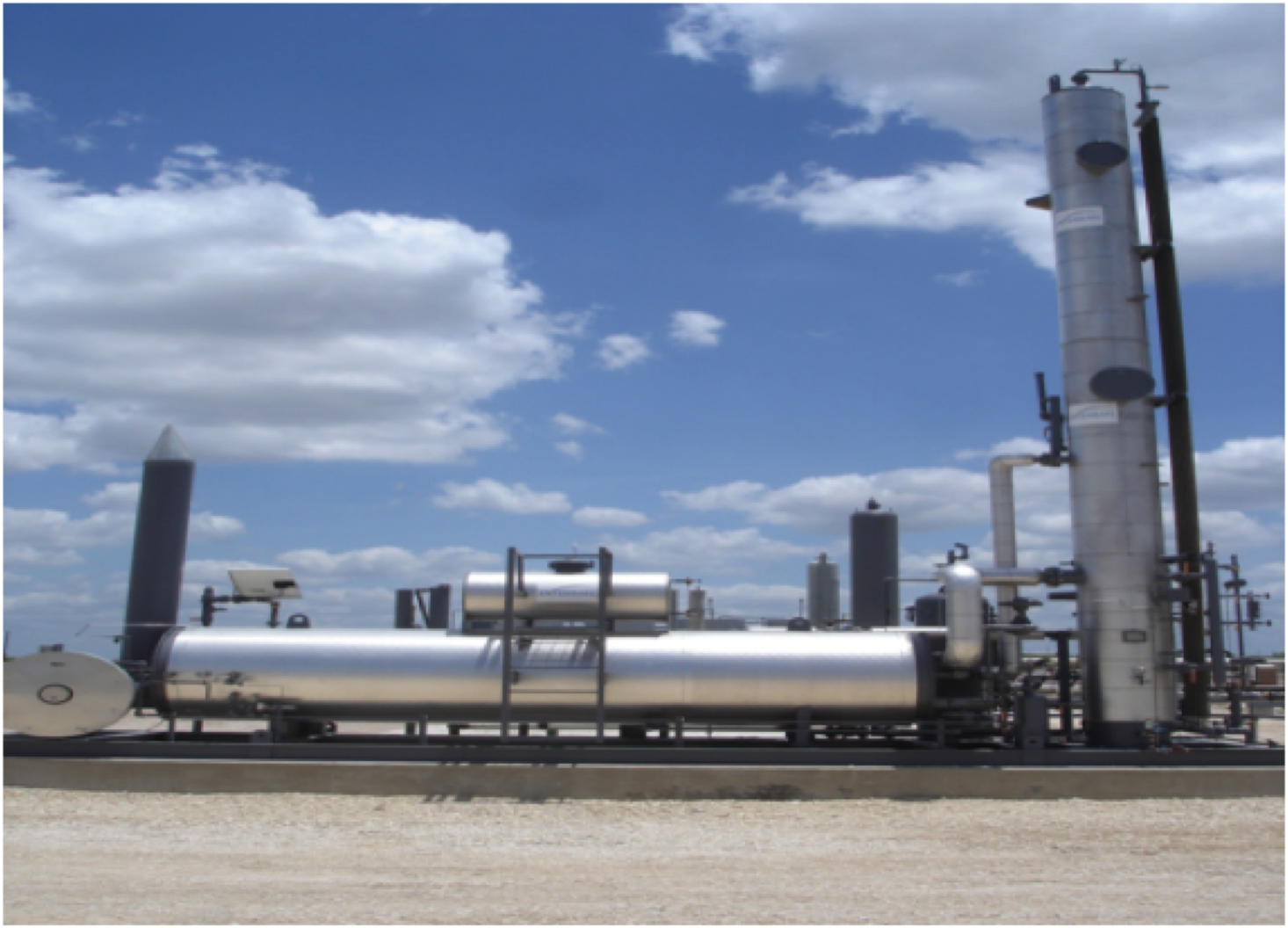
Source: Exterran www.exterran.com







Comments
One Trader is loading LP in Houston 15-16 FEB 80,000 cbm.
If I look at LPG rates outside U.S and shipping rates $40/pmt
NWE $850/pmt
Japan $975/pmt
Mt. Belvieu $500/pmt
I would export it too.