The price of the D4 Renewable Identification Number (RIN) has increased by 130% so far in 2026. The jump in the price of this RIN — a federal environmental credit that functions as a subsidy for the production of diesel made from soybean oil and other renewable feedstocks, but also as a tax on the production of conventional diesel made from crude oil — has been accompanied by a 60% increase in the price of soybean oil. Today’s RBN blog gives a high-level view of what is behind this year’s bull run in the D4 RIN and related commodities.
In 2026 and 2027, U.S. refiners and importers are obligated to supply nearly 6 billion gallons per year of diesel made from feedstocks like soybean oil to the U.S. market. That’s 10% of all diesel to be consumed in the U.S. This obligation stems from the Renewable Fuel Standard (RFS), which we’ve written about for years, going all the way back to 2012’s A Market of Contradictions. The RFS is administered by the U.S. Environmental Protection Agency (EPA) and includes mandates for minimum annual production volumes of four different categories of renewable fuels: Cellulosic Biofuel, Bio-Based Diesel, Advanced Biofuel and Total Renewable Fuel.
Through the credit trading system created with the RFS, refiners who don’t have the capability to produce diesel from renewable feedstocks can effectively borrow that capability from others who do. You can do that by buying D4 RINs, reporting that transaction to the government, then “retiring” the RINs (see dashed red box in Figure 1 below). By paying for and retiring those RINs, you have effectively rented the capacity to produce your government-mandated quota of renewable diesel, while some other biofuel producer has fulfilled your obligation to supply it to the U.S. market. Many refiners produce renewable diesel — the common name for the product made in petroleum refineries — at facilities modified to convert soybean oil into diesel. They include Calumet Inc., Chevron, HollyFrontier, Marathon Petroleum, Par Pacific Holdings, PBF Energy, Phillips 66 and Valero.
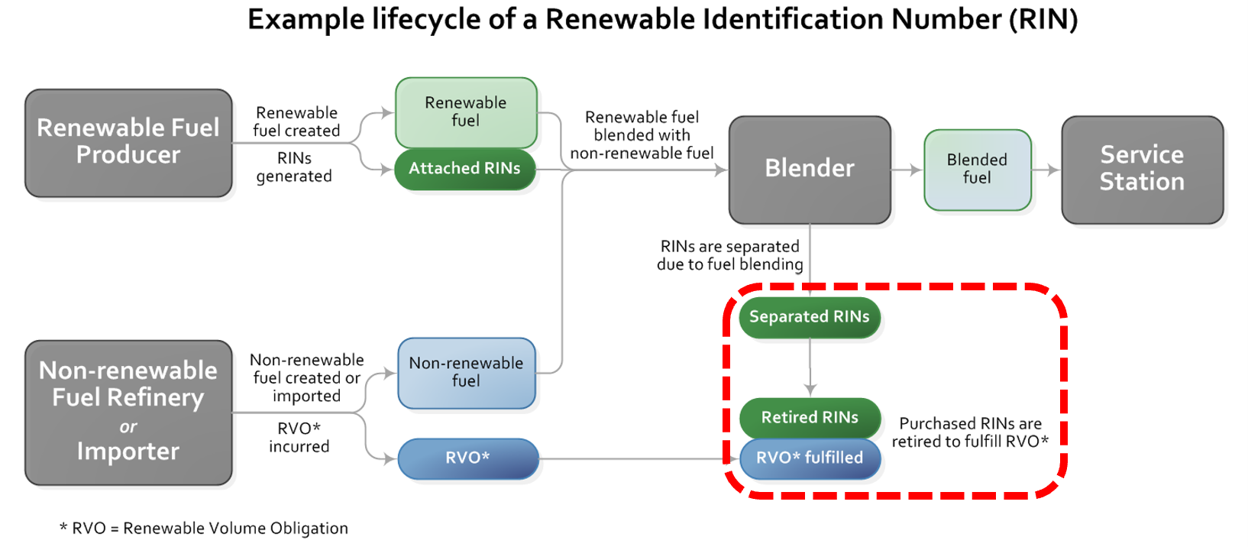
Figure 1. Example Lifecycle of a Renewable Identification Number. Source: EPA
About the song
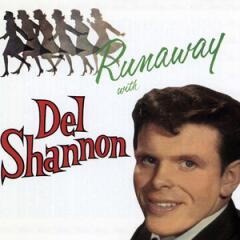
“Runaway” was written by Del Shannon and Max Crook, and appears as the sixth song on side one of Shannon’s 1961 debut studio album, Runaway with Del Shannon. Singer/guitarist Charles Westover and his keyboardist, Max Crook, were playing together in a band featured at the Hi-Lo Club in Battle Creek, MI, called Charlie Johnson and the Big Little Show Band. Ann Arbor deejay Ollie McLaughlin helped them secure a record deal with Bigtop Records in New York in 1960. Westover changed his name to Del Shannon, and Crook, who had invented a new electronic keyboard he called a Musitron, changed his name to Maximilian Crook. The recording of Runaway took place at Bell Sound in New York City in January 1961 and features Crook soloing on his Musitron keyboard. Released as a single in February 1961, it went to #1 on the Billboard Hot 100 Singles chart and has been certified Gold by the Recording Industry Association of America. Personnel on the recording were: Del Shannon (vocals), Max Crook (Musitron solo), Moe Wechsler (piano), Al Caiola, Al Casamenti, Bucky Pizzarelli (guitars), Milt Hinton (bass), Joe Marshall (drums) and Bill Ramall (baritone sax). Producer Harry Balk sped up the recording a half-step before it was pressed to vinyl. As a side note, Crook’s Musitron was also used on Shannon’s “Hats off to Larry” and “So Long Baby.” It remained in Crook’s possession until he died in Deming, NM, in July 2020 at 83. The Musitron remains with Crook’s family.
The album, Runaway with Del Shannon, was recorded in January 1961 at Bell Sound in New York City and was produced by Harry Balk. Released on Bigtop Records in June 1961, it went to #32 on the Billboard 200 Albums chart. The album features the first recording of the Doc Pomus and Mort Shuman song “(Marie’s the Name) Latest Flame,” made popular by Elvis Presley. One single, the #1 hit “Runaway,” was released from the LP.
Del Shannon (Charles Weedon Westover) was an American singer, songwriter and musician best known for his signature song and #1 hit single, “Runaway.” He released 15 studio albums, two live albums, five compilation albums and 39 singles. He later worked with Dave Edmunds, and Tom Petty produced his 1982 studio album, Drop Down and Get Me. Shannon died at his home in Santa Clarita, CA, in February 1990 at 55. He was posthumously inducted into the Rock and Roll Hall of Fame in 1999.
"About the Song" -- written by Mickey McMahan , RBN Director of Musicology