Two factors — public concern about soaring utility bills and President Trump’s strong opposition to offshore wind — are forcing New England to rethink its once-ambitious plans for a renewables-heavy electric grid and reassess how to meet its power-generation needs in the late 2020s and early 2030s. One possibility would be to expand the region’s access to piped-in natural gas, but midstreamers’ previous efforts to add pipeline capacity were beaten back time and again. In today’s RBN blog, we discuss New England’s ongoing debate about what to do next.

The Natural Gas Master Class is a one-day online event focusing on understanding flow analysis, interpreting pipeline data and forecasting future flows. This course is designed to equip you with the knowledge and skills to effectively analyze the complexities of natural gas markets, flow analysis, and pipeline modeling. Join us online
October 21 | Online
As we said in Part 1, New England’s energy reality today is an electric grid that functions very well most of the time, primarily dependent on a mix of gas-fired power, nukes, solar, wind and hydroelectricity (some within the region and some imported from Quebec), solar and onshore wind — plus a heavy dose of energy efficiency. But for at least a few days each winter — and sometimes a couple of weeks — the situation gets dicey during polar vortex events when most of the gas flowing into New England is used for space heating, leaving many gas plants with only a fraction of what they need to run flat-out. That’s led to the widespread stockpiling of backup fuel oil (at dual-fuel plants) or LNG (at gas-only plants) that operators can turn to when pipeline gas is in short supply.
New England’s plan the past few years has been to (1) keep its two remaining nuclear plants running, (2) quickly add a slew of offshore wind, solar and battery storage capacity and (3) build more transmission capacity to move hydropower south from Eastern Canada, all so the six-state, enviro-conscious region can gradually wean itself off natural gas, which generated just over half of New England’s power last year.
The problem is that the effort to develop large offshore wind projects — most of which are located off the coasts of Rhode Island and southeastern Massachusetts, where sustained winds are epic — has hit a wall of sorts. First, the relatively high cost of adding renewables to the regional grid, combined with the high cost of generating gas-fired power (especially during high-demand winter months, when gas supplies are often constrained), has sparked a customer revolt of sorts, and government officials are taking notice. (More on all that in a moment.) Second, as we noted last time, on Day 1 of his second administration, President Trump ordered a halt to new leases and permits for offshore wind projects and directed his Interior Secretary to review existing permits. That’s put the kibosh (at least for a while) on offshore wind projects that are not already approved and under construction. (Again, details to follow.)
Figure 1 below helps to explain why many New England electric and gas customers are up in arms. In January, when the region experienced an extended cold snap, wholesale power prices (left axis and yellow line and dot to far right in Figure 1 below) averaged a staggering $135.08 per megawatt hour (MWh), or more than 2.5X the going rate in the Electric Reliability Council of Texas (ERCOT) the same month. Wholesale natural gas prices (right axis and blue line and dot to far right) — a big contributor to wholesale power costs — averaged an even scarier $16.92/MMBtu, or more than 4X the average Henry Hub price in January.
About the song
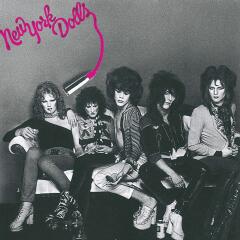
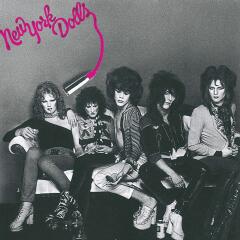
“Personality Crisis” was written by David Johansen and Johnny Thunders and appears as the first song on side one of The New York Dolls’ eponymous debut album. The song is a paean to outsiders, weirdos and artists trying to make it in New York City, a subject The Dolls were very familiar with. Released as a double A-side single with “Trash” on the flip side in August 1973, the single failed to make the charts. Personnel on the record were: David Johansen (lead vocals), Sylvain Sylvain (rhythm guitar, piano, backing vocals), Johnny Thunders (lead guitar, backing vocals), Arthur “Killer” Kane (bass), Jerry Nolan (drums), and Dave O'Grady (makeup).
The album, New York Dolls, was recorded in April 1973 at The Record Plant in New York City and produced by Todd Rundgren. The LP featured tunes written by the band and a cover of Bo Diddley’s “Pills.” Revved up by the energy of the band’s fondness for Brill Building pop and ’50s rock and roll, The Dolls made an album that became the precursor for the punk rock movement in the mid-’70s and a cult favorite. Released in July 1973, the album peaked at #116 on the Billboard 200 Albums chart. Two singles were released from the LP.
The New York Dolls were an American rock and roll band formed in New York City in 1971. They made a huge impact on the underground rock scene in the early 1970s, attracting a cult following of hardcore fans that dressed in similar flamboyant androgynous fashions as the band. They never achieved much commercial success, but the fact that their two studio albums have never gone out of print says a lot about the staying power of the group. The Dolls released two studio albums with the original lineup and three studio albums with the reformed band with original members Johansen and Sylvain. Several live albums, compilations and bootlegs of the band have been issued over the years. None of the group’s original members are still living. Singer David Johansen was the last man standing and passed away in February 2025. Drummer Billy Murcia died in 1972, guitarist Johnny Thunders in 1991, drummer Jerry Nolan in 1992, bassist Arthur “Killer” Kane in 2004, and guitarist Sylvain Sylvain in 2021.
We at RBN are saddened by the recent passing of David Johansen. In addition to his work with The New York Dolls, he had a successful solo career as a singer and actor. He released four studio albums, two live albums, and 10 singles under his own name. He released four studio albums as Buster Poindexter, and two studio albums as David Johansen and the Harry Smiths. He appeared in several television shows and seven motion pictures, most notably playing the Ghost of Christmas Past in Scrooged, the 1988 film starring Bill Murray. Our condolences to all of David Johanson's fans, friends and family on his death. He was 75.